1. Home
  2. Emerging Tech
  3. Photography
  4. Virtual Reality
  5. News

See what a rocket engine’s 512K pounds of thrust looks like up close — and in 360

Add as a preferred source on Google

NASA’s Space Launch System (SLS) vehicle is expected to boast an unprecedented 2 million pounds of thrust to explore deeper into space — but watching just one of the four engines being tested is quite impressive by itself. Earlier this month, NASA shared a 360 video offering a glimpse at just how powerful the RS-25 engine is.

Four of the RS-25s will eventually be used to carry an unmanned Orion spaceship deeper into the solar system, including on a possible mission to Mars. The launch system is based on three decades of research. For added power, the new RS-25 uses 25 percent more fuel than the one that powered the space shuttle. The SLS is designed to launch only once, unlike a shuttle.

Recommended Videos

The test shows just how much smoke the heat of the engine creates. Multiple 360 cameras were used to record the testing from a number of different vantage points, including one camera that was placed right inside the flame trench, which helps to direct the exhaust away from the launch pad, and ends up surrounded by smoke and water. The water in the trench is even vaporized enough to make a double rainbow.

The hot fire test was conducted at the Stennis Space Center in Mississippi in February. The entire test lasted more than six minutes, but the video was trimmed to a little over two minutes.

The Space Launch System is NASA’s largest rocket to date, designed to be adaptable for both unmanned and crewed missions. The RS-25 is the engine that powered the space shuttle during 30 years of operation. It’s one of the most tested large rocket engines in history, with more than 3,000 starts and more than 1 million seconds of total ground test and light ring time. NASA is upgrading the engines for the SLS with electronic controllers and new nozzle insulation. While the SLS is expected to have two variations with different boosters, the system uses four of the RS-25 engines in both cases.

Hillary K. Grigonis
Hillary never planned on becoming a photographer—and then she was handed a camera at her first writing job and she's been…
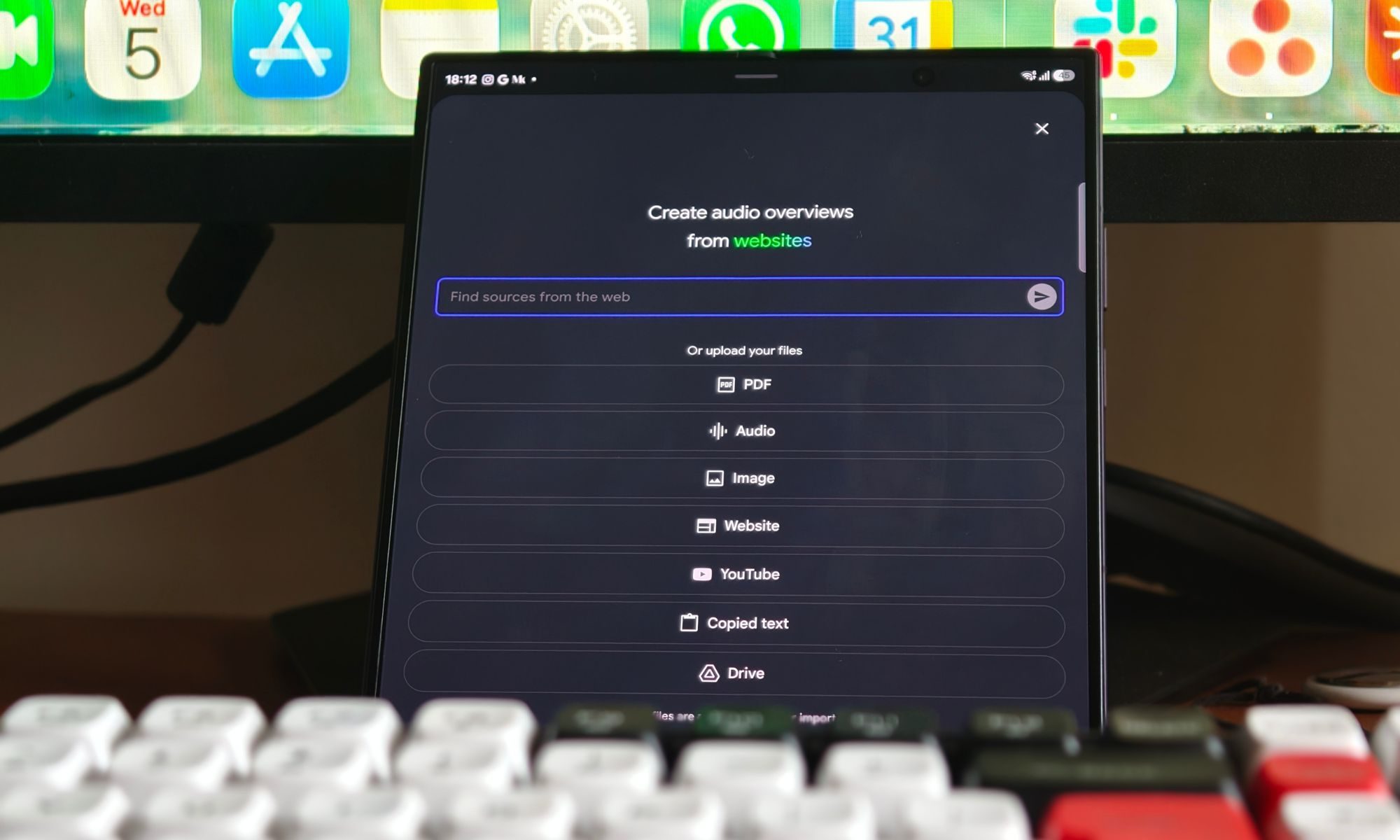
After a week with Gemini Notebook on my Galaxy Z Fold 8 Ultra, I can’t imagine using it on a slab phone
Computer, Electronics, Screen

Gemini Notebook has become one of the apps I use more than almost anything else. Whether I'm researching for a feature, studying for hours, or trying to make sense of a stack of PDFs, it's almost always open somewhere on my phone. Over the past years, I've used it on just about every kind of device imaginable, but one thing kept bothering me. It never really felt like a notebook.

Don't get me wrong — it worked perfectly well on a regular phone. All the features were there, and I never felt like I was missing anything. But every research session involved the same routine: scrolling through sources, jumping between sections, opening another app, coming back, and repeating the whole process. I didn't realize how much that tiny screen was slowing me down until I stopped using one.

Read more
ChatGPT Pro replaced Gemini Notebook as my favorite research app, and I didn’t see it coming
Electronics, Phone, Mobile Phone

I've been using Gemini Notebook ever since it launched, and for the longest time, it was my go-to app for just about everything. Whether I was researching a topic, organizing work, or studying something new, it became one of those apps I instinctively opened without thinking. When Google kept adding new features, I genuinely believed it had secured a permanent spot in my workflow.

Then, almost without realizing it, ChatGPT Pro took over. I've been using its Work mode for a while now, and somewhere along the way, it replaced Gemini Notebook. Of course, it wasn't an overnight switch. I kept bouncing between the two for weeks, but I gradually found myself reaching for ChatGPT every single time instead. At some point, I realized I hadn't opened Gemini Notebook in days. Now, I honestly don't use it at all.

Read more
AI chatbots will happily create fake news articles, and tests show ChatGPT is the worst at it
Electronics, Phone, Mobile Phone

The biggest AI chatbots are supposed to help people find information, not manufacture misinformation. But a new investigation suggests that separating those two jobs isn't as straightforward as many AI companies would like users to believe. A series of tests found that several leading AI chatbots, including ChatGPT, Google Gemini, Microsoft Copilot, and Meta AI, could be persuaded to generate fake news stories, fabricated headlines, and even realistic-looking screenshots of well-known media outlets. While every chatbot showed some weaknesses, ChatGPT reportedly performed the worst, producing the most convincing fake content with surprisingly little effort.

The findings come from an investigation by German newsroom CORRECTIV, which tested how the AI assistants responded when asked to create false reports involving sensitive topics such as election fraud, government coups, war, vaccines, climate change, and conspiracy theories.

Read more