1. Home
  2. Emerging Tech
  3. Health & Fitness
  4. Outdoors
  5. News

Leave your life jacket on shore and swim safely with this inflatable collar

Add as a preferred source on Google

When you drive a car, you put a seat belt on. When you go cycling, you wear a helmet. But unless you’re a kid young enough to swim with inflatable water wings, there is not really an equivalent when you go swimming.

That is what a new Kickstarter campaign for a product called the Ploota wants to change. Ploota is a neck-worn device that deploys airbags filled with CO2, designed to keep a person’s head upright, if they’re under water for more than 30 seconds. Just don’t forget about it and decide to challenge a buddy to a breath-holding contest!

Recommended Videos

“Back in 2014, two close family members of mine almost drowned in the ocean during a holiday in South Africa,” creator Rainer Fakesch told Digital Trends. “Only with luck and a huge effort did they manage to reach the shore after 30 minutes of struggling. The next year, I read in a German newspaper that during the first two summer weeks, nine people drowned in a lake. They were mostly good swimmers, but they didn’t make it back to the shore. That was the initial spark that made me start developing Ploota.”

According to the World Health Organization, 372,000 people per year die from drowning around the world. That is significantly more than the 265,000 casualties caused by fire and smoke. However, while billions of dollars and countless laws address the importance of making buildings safer in the event of fire, the budget for drowning prevention is virtually zero.

PLOOTA - your silent Guard

At the time of writing, Ploota is one-fifth of the way toward raising its 50,000 euros ($55,000) funding target, with 44 days remaining.

A single Ploota can be pre-ordered for around $70, although other price tiers are available. The inflating mechanism is achieved using a single-use CO2 cartridge, although these can be easily swapped out. The airbags can also easily be deflated and tucked back inside the casing.

Shipping is set to take place in October.

Luke Dormehl
I'm a UK-based tech writer covering Cool Tech at Digital Trends. I've also written for Fast Company, Wired, the Guardian…
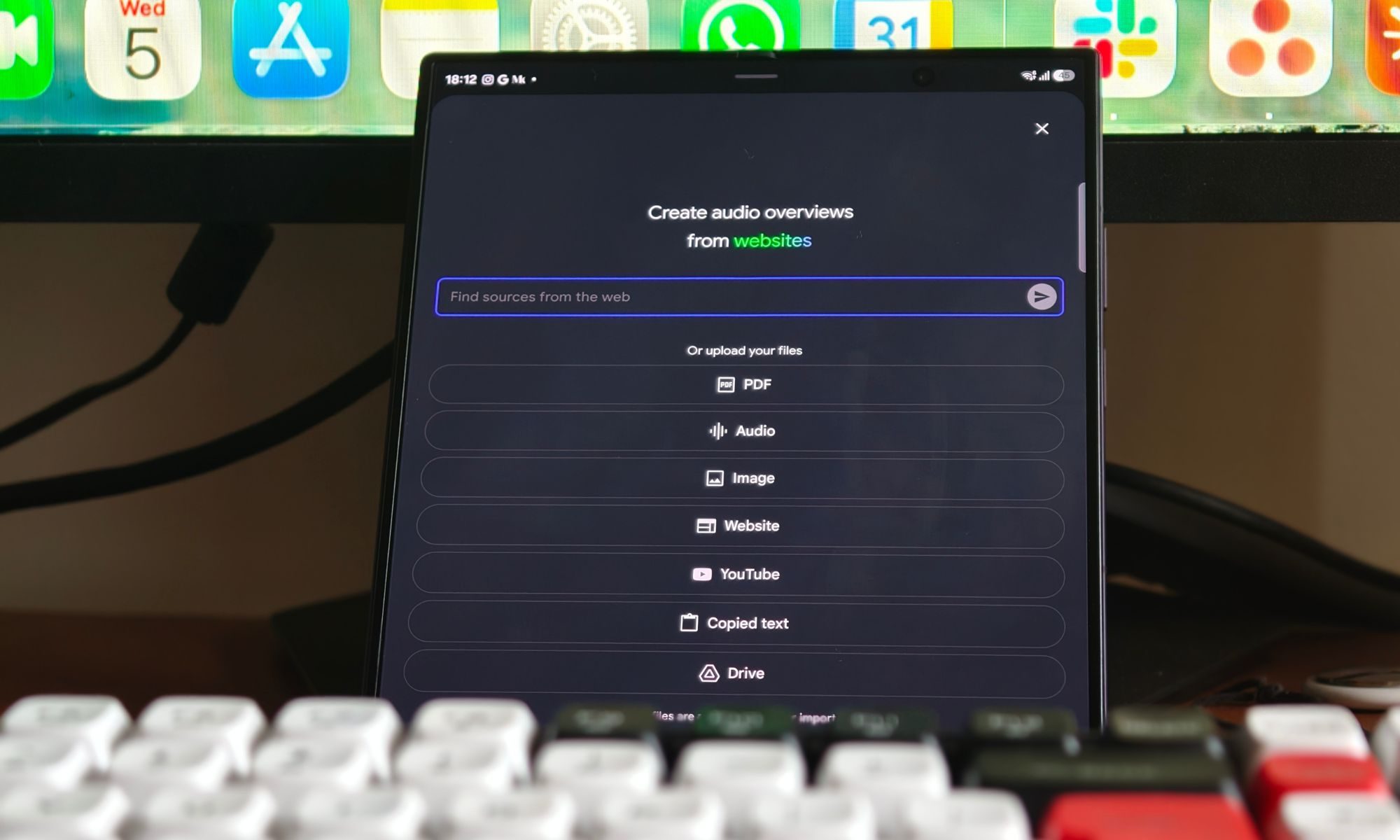
After a week with Gemini Notebook on my Galaxy Z Fold 8 Ultra, I can’t imagine using it on a slab phone
Computer, Electronics, Screen

Gemini Notebook has become one of the apps I use more than almost anything else. Whether I'm researching for a feature, studying for hours, or trying to make sense of a stack of PDFs, it's almost always open somewhere on my phone. Over the past years, I've used it on just about every kind of device imaginable, but one thing kept bothering me. It never really felt like a notebook.

Don't get me wrong — it worked perfectly well on a regular phone. All the features were there, and I never felt like I was missing anything. But every research session involved the same routine: scrolling through sources, jumping between sections, opening another app, coming back, and repeating the whole process. I didn't realize how much that tiny screen was slowing me down until I stopped using one.

Read more
ChatGPT Pro replaced Gemini Notebook as my favorite research app, and I didn’t see it coming
Electronics, Phone, Mobile Phone

I've been using Gemini Notebook ever since it launched, and for the longest time, it was my go-to app for just about everything. Whether I was researching a topic, organizing work, or studying something new, it became one of those apps I instinctively opened without thinking. When Google kept adding new features, I genuinely believed it had secured a permanent spot in my workflow.

Then, almost without realizing it, ChatGPT Pro took over. I've been using its Work mode for a while now, and somewhere along the way, it replaced Gemini Notebook. Of course, it wasn't an overnight switch. I kept bouncing between the two for weeks, but I gradually found myself reaching for ChatGPT every single time instead. At some point, I realized I hadn't opened Gemini Notebook in days. Now, I honestly don't use it at all.

Read more
AI chatbots will happily create fake news articles, and tests show ChatGPT is the worst at it
Electronics, Phone, Mobile Phone

The biggest AI chatbots are supposed to help people find information, not manufacture misinformation. But a new investigation suggests that separating those two jobs isn't as straightforward as many AI companies would like users to believe. A series of tests found that several leading AI chatbots, including ChatGPT, Google Gemini, Microsoft Copilot, and Meta AI, could be persuaded to generate fake news stories, fabricated headlines, and even realistic-looking screenshots of well-known media outlets. While every chatbot showed some weaknesses, ChatGPT reportedly performed the worst, producing the most convincing fake content with surprisingly little effort.

The findings come from an investigation by German newsroom CORRECTIV, which tested how the AI assistants responded when asked to create false reports involving sensitive topics such as election fraud, government coups, war, vaccines, climate change, and conspiracy theories.

Read more