1. Home
  2. Computing
  3. News

Google is going to stop reading Gmail users’ emails so it can personalize our ads

Add as a preferred source on Google

There’s a constant tension today between privacy concerns and the really cool things technology can do for us. It’s great that Microsoft Cortana, for example, can read our email and create reminders to do the things we promise, but that requires letting Microsoft have access to our email messages.

Some companies access our information for purposes that are less useful to us personally, like Google’s tendency to dig into the data stored on its servers to personalize the ads it shows us. The Gmail in Google’s G Suite solution aimed at business customers doesn’t do that — and the company made a welcome announcement Friday that its free consumer Gmail service won’t do so either starting later this year.

Recommended Videos

According to Google, Gmail is the world’s most popular email provider, with more than 1.2 billion users. Gmail is better at protecting its users from spam, hacking, and phishing attempts than any other email provider, Google says. It also offers helpful tools like Smart Reply to make managing email easier, more efficient, and faster.

However, Google clearly recognizes that the businesses that pay for its G Suite service are more reluctant to have their email messages mined for information to make ads more effective. More than 3 million companies pay for the G Suite product, and so that’s a significant constituency.

Starting later this year, Google is extending the same courtesy to its consumer customers, who don’t pay a fee. Once implemented, the change will mean that Gmail content will no longer be scanned to personalize ads, leaving it up to the user to determine how ads are shown. At the same time, G Suite will remain ad-free, which is no surprise given the paid nature of the service.

It will be interesting to see if more companies follow suit, as privacy concerns continue to grow and more people are pushing back against intrusions into their personal and professional data troves. Microsoft has focused on making privacy more transparent in Windows 10, and now Google is giving privacy some welcome attention in Gmail. Speaking of which, if you want to see how your information is being used by Google, you can go to myaccount.google.com and check things out for yourself.

Mark Coppock
Former Computing Writer
Mark Coppock is a Freelance Writer at Digital Trends covering primarily laptop and other computing technologies. He has…
Google’s new Magic Pointer Play Store listing reveals a Gemini shortcut built for Googlebooks
The unannounced app turns the cursor into a contextual AI tool for search, image creation, and shopping
Plant, Text, Business Card

Google has quietly published a new Play Store listing for Magic Pointer, an unannounced app built for Googlebooks. Updated on July 10, the app turns the cursor into a Gemini shortcut that can act on whatever a user selects on screen.

Magic Pointer can send an image to Lens, generate a related image, or surface a shopping action without forcing users to open a separate chatbot. Regular Android devices currently show as incompatible, so the listing offers an early preview rather than a broad release.

Read more
You can stop using AI, but this new report says you probably can’t escape it
A UK survey found that most people feel AI exposure is unavoidable, raising harder questions about consent, privacy, and whether opting out is still realistic
AI Chatbots

More people are trying to use less AI, but avoiding it altogether may already be impossible.

A survey of 2,055 UK adults found that 42% deliberately limit how much AI they use. Another 70% said avoiding AI exposure would be difficult or impossible, even when they actively wanted less of it.

Read more
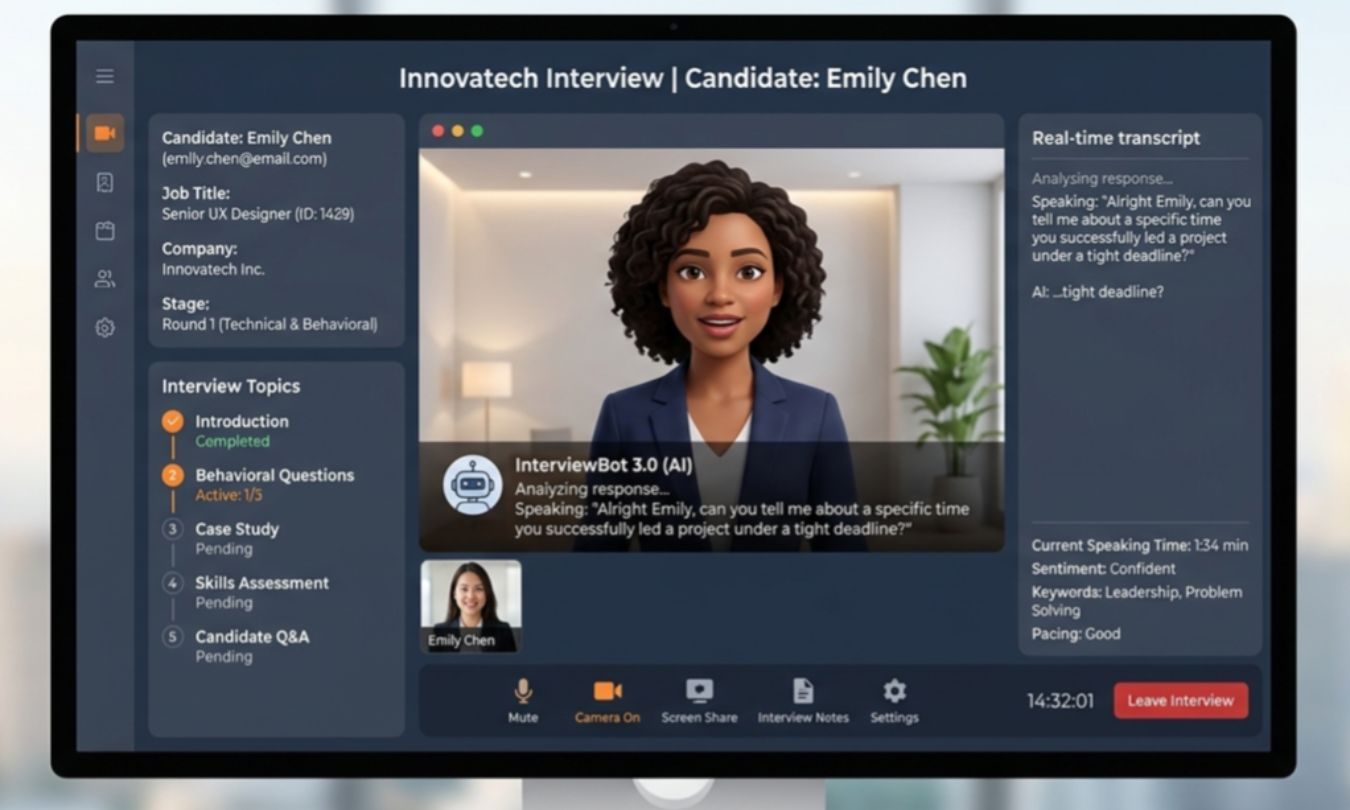
The face on an AI interviewer may matter as much as the decision it makes
Researchers found that race and gender matching changed how fairly rejected applicants viewed an automated interview, even though everyone received the same outcome
File, Computer Hardware, Electronics

An AI hiring system can treat every applicant the same and still leave some people feeling targeted. Researchers found that rejected candidates judged an automated interview differently depending on the race and gender of the avatar delivering the result.

Around 220 participants completed a simulated interview for a fictional customer support role with one of four photorealistic AI avatars. Everyone was rejected, yet perceptions of fairness shifted with the interviewer’s appearance. An algorithm audit could miss that reaction because candidates don’t experience the system as raw code. They experience a face asking questions and judging their answers.

Read more