1. Home
  2. Phones
  3. Mobile
  4. News

Google Maps navigates its way to a cleaner, more useful design

Add as a preferred source on Google

You may not have thought Google Maps was looking a bit stale or a little faded, but the relevant folks holed up inside the company’s Mountain View campus in Silicon Valley clearly thought it was time to haul the mapping tool into the workshop for a makeover.

The bright new look, unveiled on Wednesday, is supposed to reflect “your world, right now,” according to Liz Hunt, product Manager of Google Maps.

Recommended Videos

In other words, it now highlights particular information that’s relevant to what you’re doing with Maps at any given time. So gas stations will show up more prominently in Navigation, and train stations in Transit, that kind of thing.

An easy-on-the-eye color scheme has also been introduced, and you’ll notice a bunch of new icons so you can quickly make sense of different places in the vicinity. You’ll have to get familiar with them first, though, so check out the slideshow below to see what to expect.

“Places like a cafe, church, museum or hospital will have a designated color and icon, so that it’s easy to find that type of destination on the map,” Hunt wrote in a post explaining the changes. “For example, if you’re in a new neighborhood and searching for a coffee shop, you could open the map to find the nearest orange icon (which is the color for food/drink spots).”

The changes are being rolled out to all the relevant Google products over the coming weeks, including not only Maps but also Google Assistant, Search, Earth, and Android Auto.

“Over time, the new style will also appear in the apps, websites and experiences offered by companies that use Google Maps APIs as well,” Hunt said.

Launched in 2005, Google Maps has received multiple makeovers over the years, with new features being added all the time.

Most recently, it announced “wait times” for Maps (and Search) that’ll show you the estimated wait time at your favorite restaurant so you can decide if it’s worth lining up, or whether you should choose somewhere else for dinner.

But the tool hasn’t always had an easy ride, or to put it more accurately, hasn’t always given users an easy ride. Its Navigation feature, for example, has occasionally been known to give erroneous directions, sometimes sending drivers miles off course, though thankfully such occurrences are rare.

Trevor Mogg
Contributing Editor
Not so many moons ago, Trevor moved from one tea-loving island nation that drives on the left (Britain) to another (Japan)…
OnePlus is gone, and Android phones just became more boring in the US
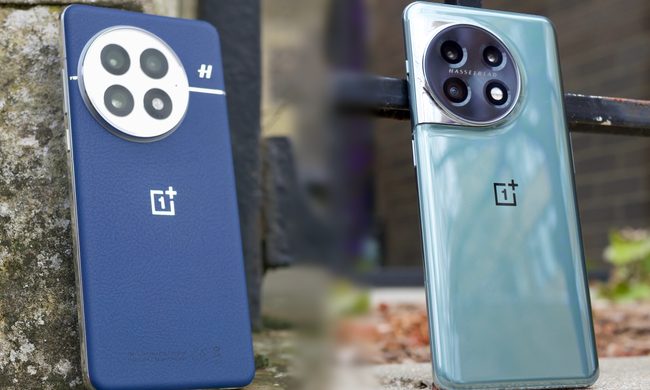
OnePlus 13 vs OnePlus 11.

I wasn't expecting a smartphone brand's exit to hit me this hard, but OnePlus leaving the US and Europe genuinely did. The company has already confirmed that it will no longer launch new products in either market, although existing customers will continue receiving software updates and after-sales support. So while OnePlus isn’t disappearing altogether, it is walking away from two of the biggest smartphone markets in the world.

To be honest, the Android market in the US already feels limited. If you’re shopping for a flagship, your realistic choices almost always begin with Samsung and end with Google. OnePlus was one of the very few brands sitting in between, offering something that didn’t quite look or feel like everything else. And that’s exactly what I’m going to miss.

Read more
A niche iPhone browser quietly fixes my biggest problem with Google Search
Quiche Browser open on iPhone

If there's a new browser, email app, or note-taking app to try, chances are I've already installed it. Like every other productivity nerd, I'm always chasing the perfect setup. That's how I stumbled upon Quiche Browser. It was already close to replacing the Arc Search for me on the iPhone, but its latest update finally pushed it over the edge, earning it a spot as my default browser.

What makes Quiche so good

Read more
Google has to play fair with AI rivals on Android, and that could be good news for your wallet
A new ruling strips Gemini of its exclusive access to deep Android integration, opening the door for cheaper AI models to offer similar functionality for less.
A person using Google Gemini on the Google Pixel 9a.

After forcing Google to open up Android to third-party app stores, the EU is back with a new target, and this time it's Gemini's home-field advantage. The European Commission ordered Google on July 16 to give rival AI apps the same deep access to Android that's currently exclusive to Gemini. The order falls under the EU's Digital Markets Act (DMA), and it directs Google to stop treating its own assistant as a first-class citizen on a platform it controls.

What Google now has to hand over

Read more