Huawei isn’t showing off a smartphone at Mobile World Congress this year, and instead has released a new tablet in its MediaPad range — the MediaPad M5. There are three distinct new models, one with an 8.4-inch screen and two with a 10.8-inch screen, one of which, the 10.8-inch Pro model, comes with a stylus. The MediaPad M5 merrily skips past a MediaPad M4 model, and succeeds the capable MediaPad M3 from 2016.
The MediaPad M5’s body looks and feels more like a massive smartphone than ever before, with Huawei choosing to use a curved 2.5D glass panel over the screens, much like it does on the Mate 10 Pro and other phones. This has the effect of making these tablets very comfortable to hold, eliminating any sharp edges, and mating perfectly with the aluminum metal unibody. Hidden inside is a U-shaped antenna for excellent Wi-Fi and 4G LTE connectivity.
Screen sizes
Regardless of whether you buy the 8.4-inch or 10.8-inch model, the screen resolution is 2560 x 1600 pixels, giving a 280 pixel-per-inch density (PPI) on the 10.8-inch version and a massive 359ppi on the 8.4-inch. Huawei has added new display technology called ClariVu to improve picture quality (it’s something like an HDR mode) and boost contrast and sharpness. There’s also an eye comfort mode for nighttime reading. The size of the screens, the resolution, sound systems, and overall design of the MediaPad M5 tablets make them ideal for watching video and playing games.
Huawei has chosen the Kirin 960 processor for the MediaPad M5, rather than the Kirin 970 and A.I.-enhancing Neural Processing Unit (NPU) found in the Mate 10 Pro. The decision for this was based on a tablet being primarily used at home, and therefore not collecting the same level of data as a constantly used smartphone. Android 8.0 Oreo is installed with Huawei’s EMUI 8.0 interface over the top. If you’ve used a modern Huawei phone, it’s an identical experience.
What are the differences between the M5 models, outside of the screen size? The speaker setup changes between them. It’s a quad speaker setup on the 10.8-inch, with the speakers laid out to produce the best audio possible in landscape orientation, which is how we all watch movies. There are dual speakers on the 8.4-inch version. Harmon Kardon has tuned the audio performance, and Huawei’s Histen technology boosts the surround sound. The battery inside the 8.4-inch model returns 11 hours of video watching, and 10 hours in the 10.8-inch M5. Neither has a 3.5mm headphone jack, but a dongle comes in the box.
MediaPad M5 Pro
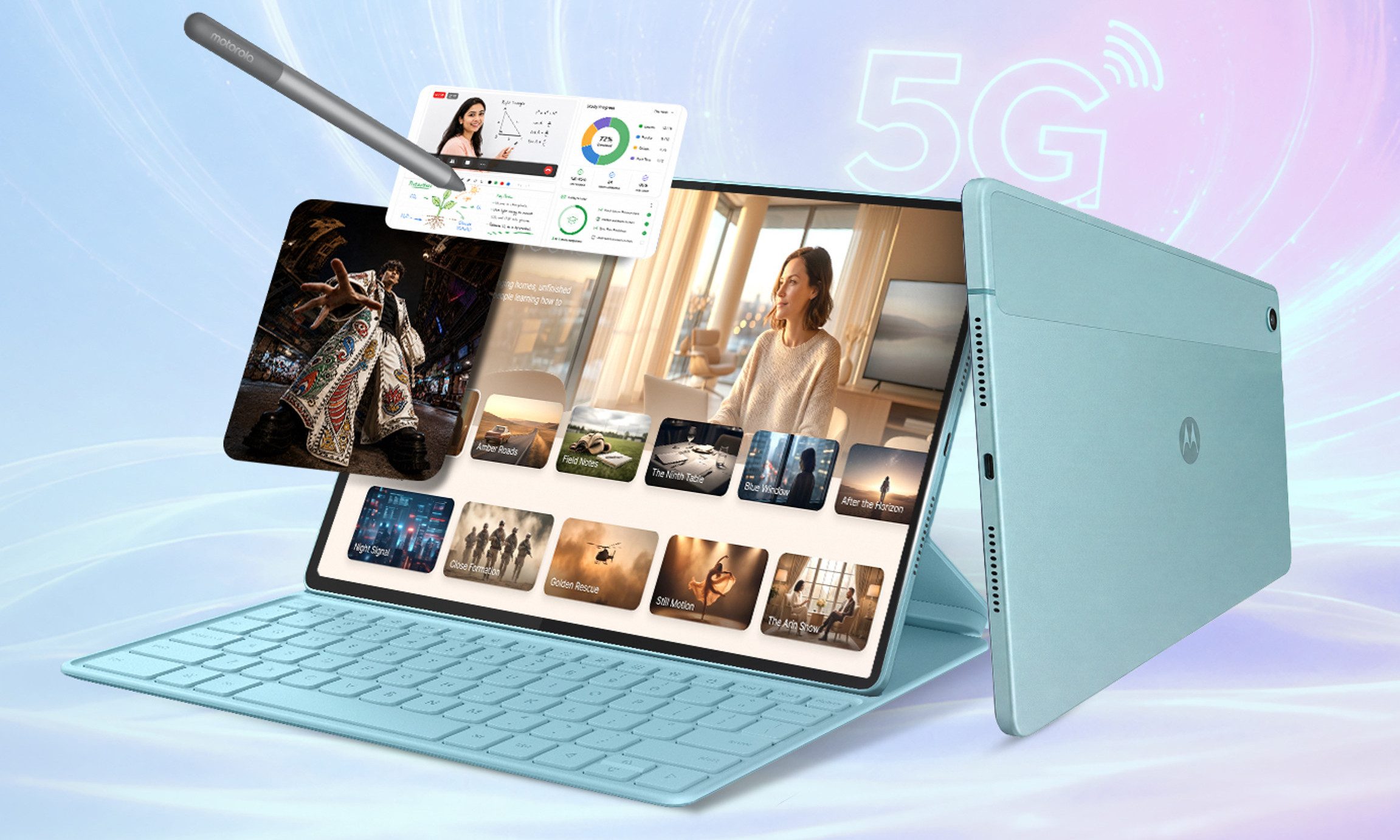
Finally, we come to the MediaPad M5 Pro. The tablet is identical to the regular MediaPad M5 outside of stylus support. Huawei includes a stylus in the box, called an M Pen, and it only works with the Pro edition tablet. The stylus is thick and smooth, with a pair of buttons near the tip for shortcuts to certain functions. It has 4,096 points of pressure sensitivity, and supports tilt and shading features. It’s charged with a USB Type-C connector and the battery lasts for 50 days.
Huawei will also produce a keyboard case for the 10.8-inch M5 and M5 Pro, and the tablet converts to a Windows-esque desktop software environment when connected. It’s similar to the software experience provided by the Mate 10 Pro when connected to an external monitor.
Huawei will announce prices of the MediaPad M5 and MediaPad M5 Pro at the Mobile World Congress press conference, along with availability, and we will update here when we know more.
Updated on February 25: Replaced rumor coverage with official launch details.