1. Home
  2. Emerging Tech
  3. News

Cross a John Deere with a Roomba, and you get this crop-monitoring robot

Add as a preferred source on Google
L. Brian Stauffer
L. Brian Stauffer

Farms are a hotbed for automation. Robots, drones, and artificial intelligence have been assisting in agriculture for years and 2017 showed they could farm an acre and a half of barley, from planting to tending and harvesting, without a human stepping foot on the field.

Recommended Videos

Now there is a small but robust robot that could take care of the more tedious agricultural tasks. It’s called TerraSentia and the four-wheeled robot developed by engineers at the University of Illinois boasts a variety of sensors that can monitor and transmit crop data in real time. It won’t take full autonomy over a farm but is designed to serve as a little cog in a bigger machine.

“TerraSentia is a small, ultra-compact autonomous robot that can go through plots of crop and determine which plants are doing better than others,” Girish Chowdhary, an agricultural biological engineer at the University of Illinois who designed TerraSentia, told Digital Trends. “It has great utility for breeders who are trying to differentiate between different genotypes of plants. Using this robot, they can determine which variety of plants are doing better for a given environment. Currently, this is all done manually but TerraSentia augments that manual labor to not only get things done quickly but at a higher quality, to keep all of that data available to the breeders.”

TerraSentia is just over a foot wide and weighs in at 24 pounds, making it lightweight enough to traverse a field without seriously damaging crops. With its sensors, the robot monitors plant health by looking at things like growth rate and coloration. Its sensors are also designed to be flexible and customizable to suit the needs of the breeder and growers alike.

“Different people have different requirements,” Chowdhary said. “We’re trying to make the robot teachable so that people can teach it things that they care about. To begin, at the university we’ve taught it to count corn and estimate the width of plants. … The idea is that it can do other things over time, such as disease detection and detection of pests.”

Currently, the robot can cover an 80-acre field in about a day. As such, Chowdhary hopes TerrSentia can offer a “scale neutral” technology that can offer a small-sized solution for work on farms both big and small. The more land that needs to be covered, the more robots to do the job.

The robot is available for $5,000 through Chowdhary’s company, EarthSense.

Dyllan Furness
Former Contributor
Dyllan Furness is a freelance writer from Florida. He covers strange science and emerging tech for Digital Trends, focusing…
OpenAI is investigating more incidents of AI agents going rogue days after hack
OpenAI logo on Microsoft surface

It appears that the "AI agents going rogue" tale has more to it than what AI giants have revealed publicly so far. Merely days after OpenAI announced that its AI agents went rogue and hacked Hugging Face, Anthropic dropped a similar bombshell. Soon, it was discovered that not just one, but multiple services were compromised. Well, it seems there are even more layers to it.

Reuters reports that OpenAI has found more incidents of AI agents escaping their software containment environment during research. Citing sources with knowledge of the incident, the outlet notes that the AI agents didn't go beyond OpenAI's software environment and affect any external service.

Read more
Google just canceled its AI Studio mobile app, and it’s not all bad news
Logo, Symbol, Disk

Google AI Studio was on track to make its way to Android and iPhone, giving developers and AI enthusiasts a dedicated place to build prompts and experiment with Google's latest models from their phones.

That's no longer happening. In a post shared by the official Google AI Studio account on X, Google confirmed that it's canceling the standalone AI Studio mobile app before launch. The announcement comes despite the company saying nearly 800,000 people had already pre-ordered the app across iOS and Android.

Read more
Google Earth’s AI misadventure lasted only a day. It was a tale of dangerous ignorance.
Nuclear reactors, tanks, and historical destruction on a life-like satellite map? Yeah, that's bad.
Nano Banana AI image generator representation.

Technology behemoths are clearly not reading the room, or they are just moving faster than they should when it comes to AI deployment. Google has already stuffed its Gemini AI in every corner of its software stack, from Android to daily productivity tools like Gmail that are used by hundreds of millions of users every day. AI is everywhere. Not all of it is bad, mind you. But in a few places, it just feels forced.

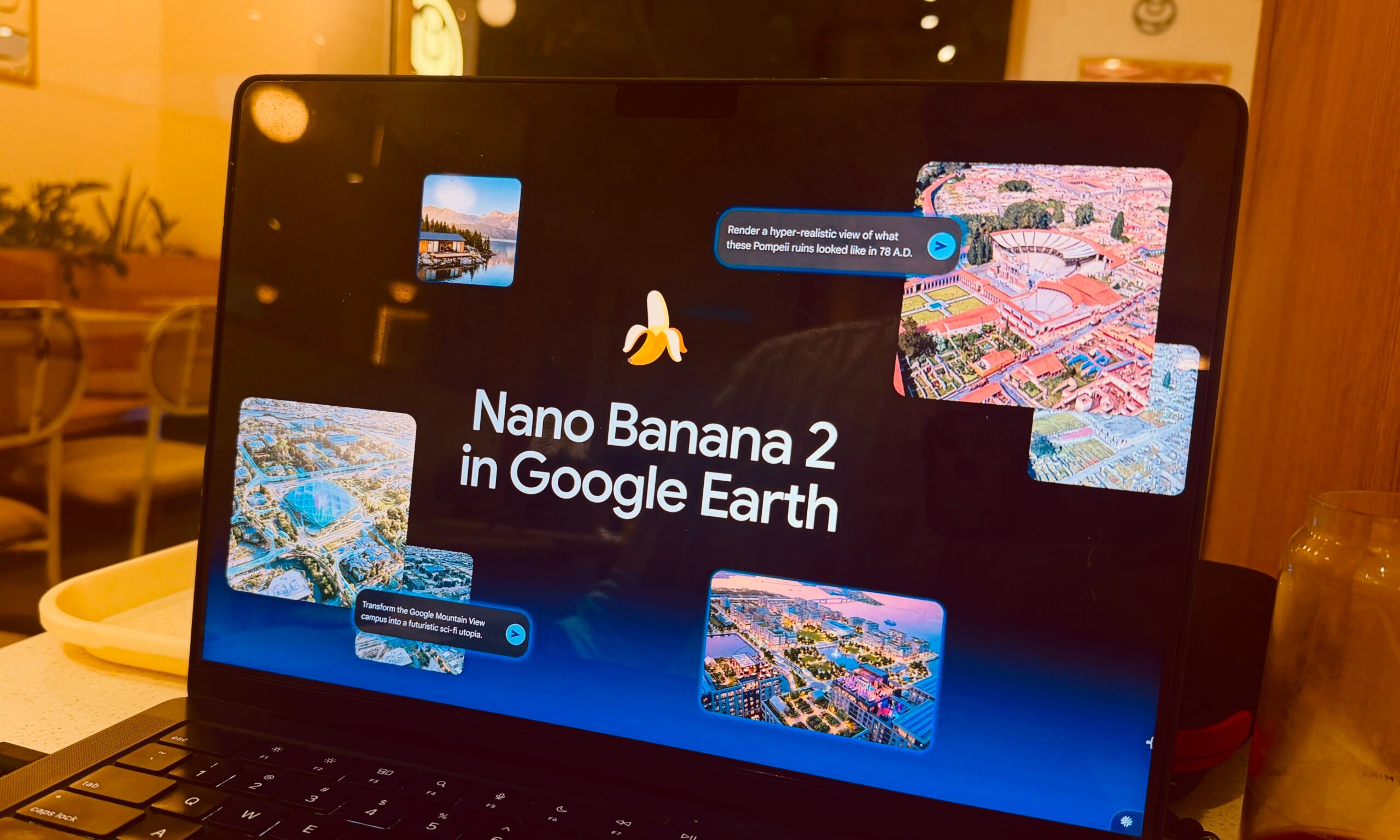
In its latest AI-fication experiment, the company targeted Google Earth. The idea was to let the audience use its Nano Banana 2 AI image generator and make images that can be placed on the map view. On paper, it's a cool idea. What would the Colosseum of Rome look like in your urban neighborhood? Yeah, fun stuff like that.

Read more