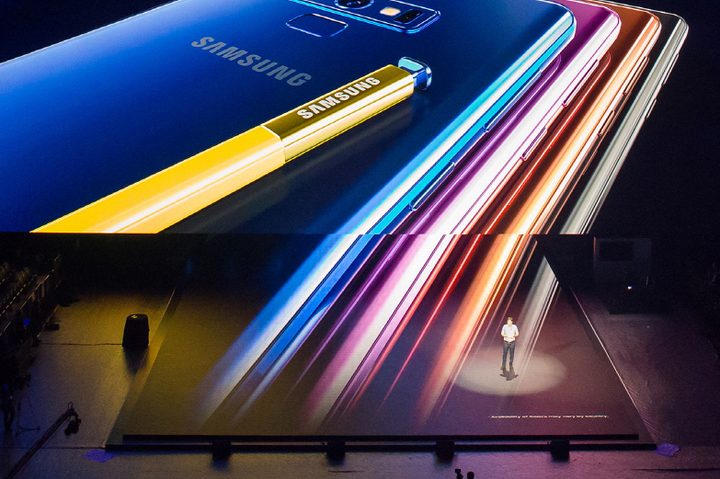
That’s all she wrote folks — Samsung’s Unpacked event for August 2018 is over, and what an event it was. We saw the new and astonishingly upgraded Note 9, the future of Samsung’s wearables in the Galaxy Watch, and — in a surprise announcement — the reveal of a Bixby-powered smart speaker, the Galaxy Home.
Expect in-depth analysis and reactions to everything we saw at Galaxy Unpacked to keep coming over the coming weeks — but for now, here’s everything we saw announced at Galaxy Unpacked 2018.
Galaxy Note 9


This one was a certainty, but that didn’t make it any more exciting when it finally appeared. While Samsung is taking a breather on redesigning the Note 9’s style — like it did with the Galaxy S9 and S9 Plus — you would be hard-pressed to find another phone released this year that had as much change on the inside as the Galaxy Note 9.
You will find the Snapdragon 845 processor inside the Note 9 — but don’t expect the same performance as we have seen in other phones this year — Samsung is upping the ante with the addition of a new cooling system that uses water to keep the Note 9’s central brain cool. As a result of this new cooling system, the Note 9 will be able to run even more intensive games and app than ever before.
Users will have a choice between two models when it comes to the other specs. The base model of the Note 9 comes with 6GB of RAM and 128GB of internal storage, while the upgraded version packs in 8GB of RAM and a massive 512GB internal hard drive. When paired with Samsung’s upcoming 512GB MicroSD card, the Note 9 has a potential terabyte of storage space open to it — more than some laptops. An enormous 4,000mAh battery should keep the phone running for over a day.
There have been some changes to the outside design. Slimmer bezels mean a larger 6.4-inch screen on the Note 9, and the fingerprint scanner has been moved to a better position underneath the camera lenses. Those camera lenses are similar to the Note 8, with two 12-megapixel lenses — one of which contains a 2x optical zoom. The variable aperture from the Galaxy S9 has been inserted as well — but it’s the new artificial intelligence that has us really excited about the Note 9’s camera.
This new A.I. has been baked into Samsung’s camera software, and it’s capable of recognizing and altering camera settings to suit up to 20 different scenes. It impressed us during our short time with it, and we look forward to seeing how it holds up over a longer period of time. Also included with the A.I. is a feature called Flaw Detection. This pops up to let you know to retake a photo if, for example, a subject blinked, or the sky was overexposed.
Samsung’s desktop DeX mode is back, and it’s now easier than ever. Note 9 users will be able to plug their phones into a monitor using just a USB-C to HDMI cable, bypassing the need for an expensive dock, and opening up the possibility of using DeX to a much wider audience.
Finally, but never least in the Note range, is the updated S Pen. While all the old features are back, the Note 9’s S Pen now comes with a Low Power Bluetooth connection and can be used as a clicker for presentations, a camera trigger, or a music controller. It does mean the S Pen needs to be charged, but thanks to a supercapacitor inside the stylus, 40 seconds docked in the Note 9 will see the S Pen charged for 30 minutes.
Read more:
Galaxy Note 9 hands-on review Galaxy Note 9 news
Galaxy Watch


The Galaxy Watch has been a long time coming and it doesn’t seem like it’s set to disappoint. Style is clearly important and the Galaxy Watch is styled to look like a normal watch. It comes in two size options and has over 60,000 watch faces to choose from — including the new My Day watch face that syncs with your calendar to provide your schedule at a glance. The rotating bezel that controls selection returns, but the Galaxy Watch also includes a high-resolution AMOLED touchscreen as well.
Samsung is putting a real emphasis on user health and fitness with the Galaxy Watch, and it includes a heart rate monitor to keep an eye on the user’s heart throughout the day. It’s not just for exercise though and Samsung showed off an app that monitors the user’s stress level, and suggests some breathing exercises if it detects the wearer getting too stressed or anxious. It’s fully kitted out for exercise too, with options to track exercises, recognize six popular workouts automatically, and comes with swim-ready water-proofing so you never need to take it off.
The Galaxy Watch is also LTE compatible, with support for more than 30 carriers in more than 15 countries. Best of all — Samsung boosted the battery life of the Galaxy Watch, tackling one of the major issues with smartwatches. Samsung claims the Galaxy Watch’s battery will last several days — and it’s also able to charge wirelessly on Samsung’s new Wireless Charger Duo pad.
Read more:
Samsung Galaxy Watch hands-on review Samsung Galaxy Watch news
Bixby improvements
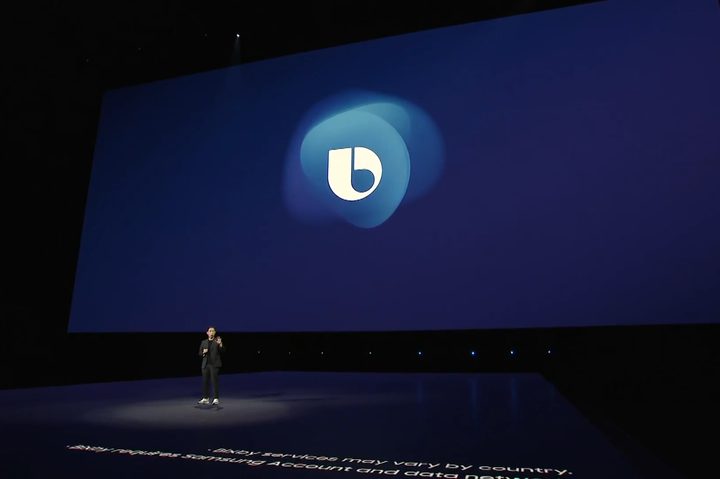
Samsung’s A.I. assistant, Bixby, has also seen a few upgrades. During the presentation, Samsung showed how Bixby has been improved to be more conversational, more personal, and more useful.
As we watched the action, Bixby was able to handle an inquiry about concerts on a specific date and was able to switch to another date without needing to be reminded of the subject. It was also able to find restaurants for the user, with a list based on the user’s preferences — and it was even able to auto-fill reservation details based on older reservation, and book with a tap.
Bixby was able to this without needing additional apps — it seamlessly used Yelp’s and TicketMaster’s databases, and even pulling up the info and price for an Uber journey.
Galaxy Home


This one came as a surprise for many, coming out of nowhere after the announcements about improvements to Bixby. Samsung is well known as a creator of smart home devices — the SmartThings brand — but it’s been holding back from entering into the smart speaker space until now.
The Galaxy Home may look like a little witch’s cauldron, but it’s seemingly got the guts to hold out against the best of the other smart speakers out there. It’s equipped with eight far-field microphones, and six speakers and a subwoofer that work together to pump out an omnidirectional sound. It also uses SoundSteer technology to make sure the sounds are pumped straight at you — just say “hey Bixby, SoundSteer”, and the Galaxy Home will optimize the sound for your location.
The Galaxy Home is also unlikely to run out of tunes to play, as Samsung also announced a partnership with Spotify, and showcased an increased drive toward device unity. It showed off how the Galaxy Home can become a part of your thriving smart home ecosystem, passing music from the Note 9, so a Samsung smart TV, and then to the Galaxy Home — all without dropping a note.
Read more:
Galaxy Home news
Updated on August 9: Added everything we saw at Galaxy Unpacked.