
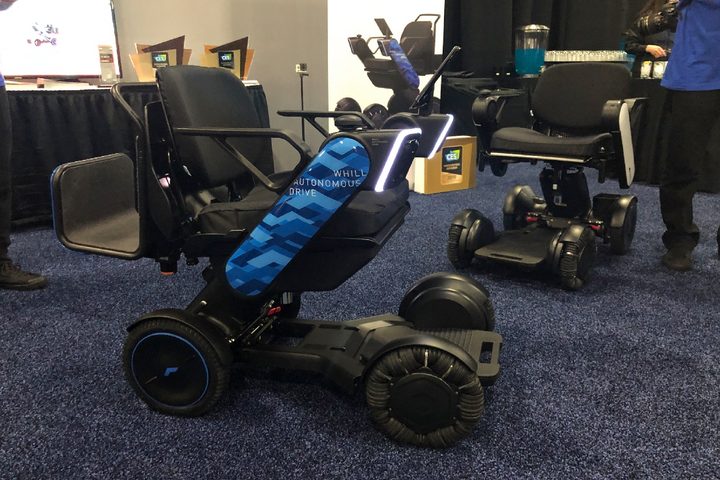
Mobility company Whill’s efforts to reinvent today’s antiquated wheelchairs as “intelligent personal electric vehicles” has made it something of a head turner at CES during its previous appearances. This year, the startup is back at CES 2019 with its new Autonomous Drive technology: a proposed plan to change the way that wheelchairs currently operate.
More CES 2019 coverage
- Our CES 2019 Hub: The latest news, hands-on reviews, and more
- This futuristic autonomous pod hotel drives you around as you sleep
- Food 2.0: Impossible Foods is back with a bloody new non-beef burger
- The coolest new gadgets and gizmos from the CES 2019 show floor
The vision laid out by Whill at CES 2019 enables people to summon its wheelchairs in locations such as theme parks, museums, hospitals, shopping malls, airports, and city centers. Like the dream of self-driving taxis from companies such as Uber, only for transporting just one person, these wheelchairs could be made quickly available to anyone needing one.
Once properly seated, the person could then tell the wheelchair where to go, and be driven there autonomously. Afterwards, the wheelchair would return to its docking station to recharge. The results could be potentially transformative for individuals who may require a wheelchair, but not on a permanent basis.
“Users will be able to summon a Whill Autonomous Drive personal electric vehicle through an app, and it will pick them up,” Satoshi Sugie, co-founder and CEO of Whill, told Digital Trends. “In manual operation, it will automatically stop when an obstacle is detected in its path, avoiding a collision. Our autonomous driving technology will improve operational efficiencies for our partners while creating memorable customer experiences. [The results will make] traveling, commuting, and exploring safe, convenient, and fun for anyone.”
Whill’s concept sounds far off, until you realize that a lot of the infrastructure is already in place. While the company was showing off a new autonomous wheelchair (currently just called the “Autonomous Drive System”) at CES, it’s already got a proven track record. Its existing Model Ci self-driving wheelchair was chosen as one of Time magazine’s “Invention of the Year” for 2018. The mobility-as-a-service model has also been successfully pursued by companies such as Lime and Mobike, which offer temporary electric scooters, e-assist bikes, and pedal bikes for sidewalk transportation.
“To start, we are aiming for commercialization at airports and commercial facilities, then integrating our technology and devices at major tourist attractions and pedestrian thoroughfares in the future,” Sugie continued. “We are already having conversations with and conducting experimental trials with major airports around the world. But at this time, the rollout of our technology depends on the progress of negotiations.”


