1. Home
  2. Cars
  3. News

Hyundai S-A1 flying taxis could take flight by 2023 for Uber elevate

Add as a preferred source on Google
 

While newcomers like Fisker, Rivian, and Faraday Future challenge traditional automakers with unconventional EV designs, the old players are looking up. Literally. At CES 2020, Hyundai announced the S-A1, a flying taxi it hopes to produce “at automotive scale” by 2023. This announcement comes alongside some of the best cars at CES we’ve seen so far.

Recommended Videos

Like rivals Ford and Toyota, Hyundai is attempting to reposition itself as a “smart urban mobility provider.” To that end, it has partnered with Uber to provide the S-A1 as the backbone of Uber Elevate, an initiative Uber announced a couple of years ago.

“We’re looking at the dawn of a completely new era that opens the skies of our cities,” said Jaiwon Shin, head of Urban Air Mobility at Hyundai. “With point-to-point air travel, we can reduce travel time drastically.”

To assuage safety concerns, the S-A1 will have a number of improvements over traditional helicopters. Redundant rotors will ensure that a single motor failure won’t crash the entire craft, and a parachute will deploy in the event of full-on emergencies. The rotors, which spin slower than a helicopter’s, should also be quieter to allay urban noise concerns. Hyundai made no mention of a human pilot, but cutaway designs showed a seat for one, and current FAA regulations wouldn’t allow fully autonomous operation.
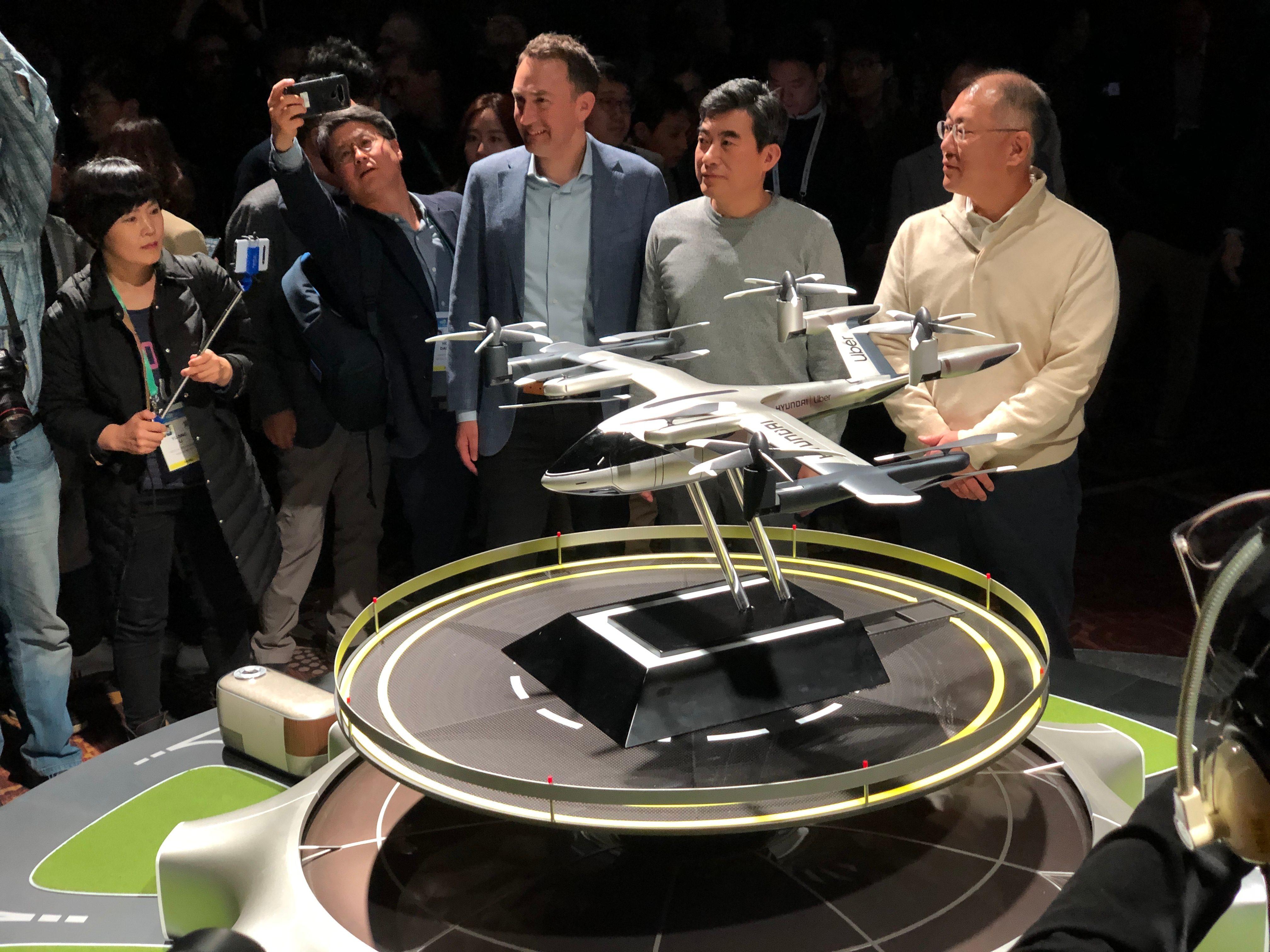
Hyundai S-A1 Flying Taxi
Image used with permission by copyright holder

Hyundai will provide the aircraft to Uber, which claims it will launch its flying taxi solution by 2023. “We’re not an aircraft manufacturing company, and we have no intention of becoming one,” explained Eric Allison, head of Uber Elevate. “Our platform is becoming the operating system of cities around the world.”

A full-scale model of the S-A1 will be on display when CES 2020 officially opens tomorrow, along with a VR-based demo of the passenger experience.

Hyundai envisions the S-A1 as just one component in a larger infrastructure play, which will also include pod cars, dubbed Purpose Built Vehicles (PBVs), and hubs. PBVs will be electric, autonomous, and modular enough to take many forms, from restaurants to medical clinics. Hyundai envisions them docking at spider-like “S-Hubs” that would transfer riders between shuttles, and also serve as the landing pads for the S-A1. No timeframe was announced for the ground-based portion of the larger transportation initiative.

Once the realm of science fiction, flying taxis have crept to the realm of possibility in recent years as electric, drone-like, multi-rotor designs have been scaled up for passenger use. Aviation mainstay Bell wowed audiences with a full-scale model of its Nexus flying car prototype at CES 2019, and Airbus already operates a potential Uber Elevate competitor dubbed Voom, though it uses traditional helicopters.

Follow our live blog for more CES news and announcements.

Nick Mokey
As Digital Trends’ Editor in Chief, Nick Mokey oversees an editorial team covering every gadget under the sun, along with…
Two Indian automakers just beat Tesla at the one thing you’d expect it to own
Two Indian automakers, Tata Motors and Mahindra, just topped a global EV efficiency ranking ahead of Tesla and BYD.
Car, Suv, Transportation

I'll admit, Tesla topping an efficiency ranking felt like a foregone conclusion until I actually saw the numbers. Turns out two Indian automakers just embarrassed both Tesla and the world's biggest EV maker at their own game. 

The first time I read the report, I couldn’t believe it, and I’ve been following the Indian automobile industry for a couple of years now.  

Read more
BYD’s new Racco is Japan’s first electric kei car with over 300 km range
The Racco also undercuts Nissan's Sakura on price before taxes and incentives, which packing in features rarely seen in the kei car segment.
BYD Racco

BYD has entered the Japanese kei car market with the Racco, an electric car built specifically for the country's compact car segment. Its top trim delivers 320 km of range, making it the first compact electric car in the market to pass 300 km, according to ITHome.

Kei cars are a Japanese vehicle class with strict size and power limits, and the segment has long been dominated by domestic automakers such as Honda, Nissan, Suzuki, and Daihatsu. The Racco is BYD's first attempt to compete in that space.

Read more
Xiaomi’s sleek seven-seater SkyNomad EREV gets a specs reveal. It’s a template US carmakers must desperately follow
Xiaomi made a sedan first. Now it's coming for your family SUV too.
Skynomad

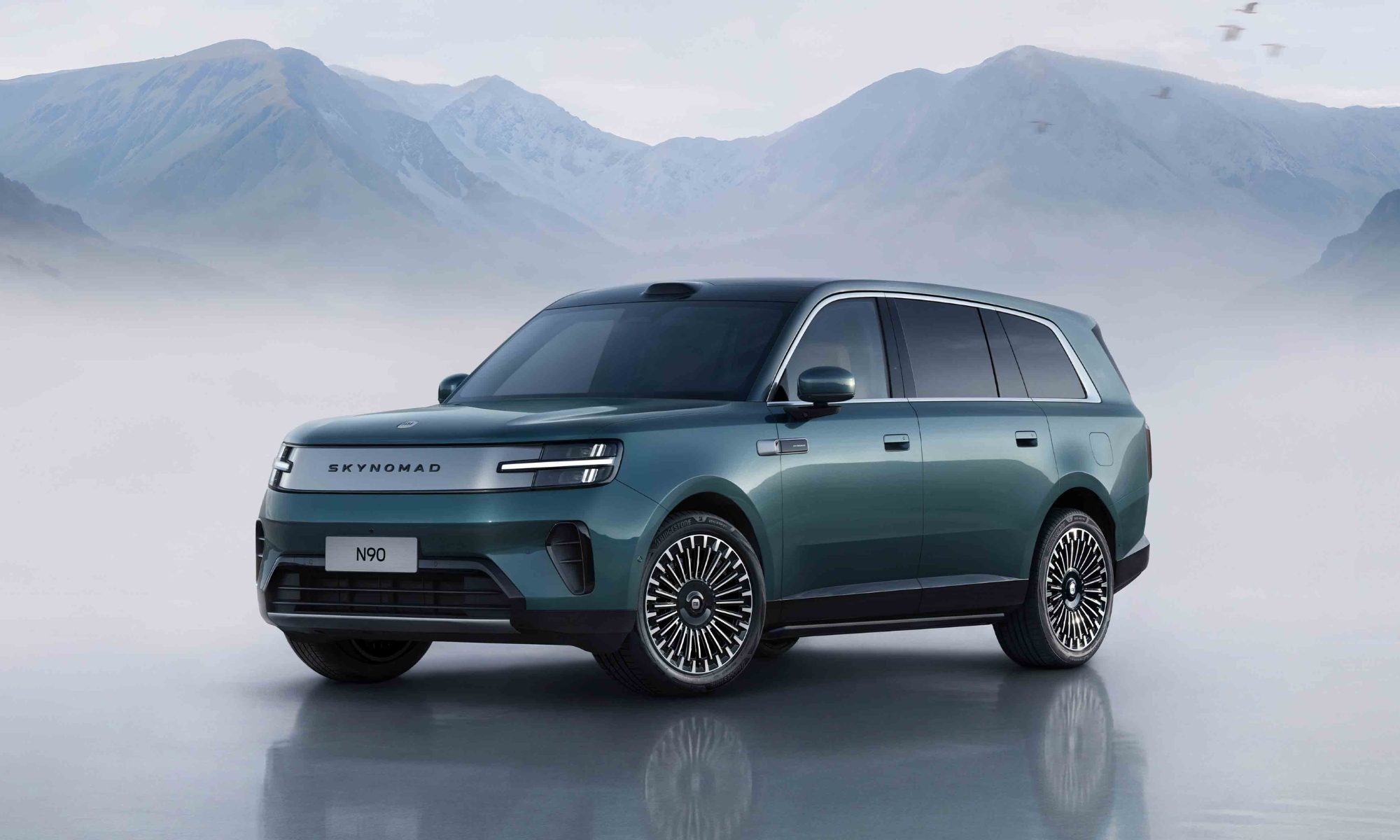
When Xiaomi entered the automotive industry, it did so with the all-electric SU7 sedan, then expanded into SUVs with the YU7. Its next move is taking the company into one of China's fastest-growing vehicle segments: extended-range electric SUVs (EREVs). Ahead of a technical presentation on July 30, Xiaomi has shared fresh details about its upcoming SkyNomad lineup via its Weibo channel, first spotted by CarNewsChina, revealing the new Kunlun range extender, fuel economy figures and testing progress.

At first glance, the SkyNomad N90's upright silhouette, squared-off proportions and premium detailing inevitably draw comparisons with the Range Rover. But mechanically, Xiaomi appears to be targeting a very different group of rivals. The company is entering a market currently dominated by Chinese brands such as Li Auto and Huawei-backed Aito, both of which have built successful businesses around extended-range SUVs that combine electric driving with the convenience of a gasoline-powered range extender.

Read more