1. Home
  2. Space
  3. Emerging Tech
  4. News

Jeff Bezos sells $4 billion in Amazon stock, and no one knows why

Add as a preferred source on Google
 

Amazon CEO Jeff Bezos sold over $4 billion worth of the company’s stock shares over the past week or so, but no one knows why. 

Recommended Videos

According to multiple Securities and Exchanges Commission (SEC) filings over the past week, Bezos sold more than $570 million in shares on Friday, February 7, alone. CNBC reports that these massive amounts of shares were sold as part of a prearranged trading plan. 

Jeff Bezos
Mark Ralston / Getty Images

The stock transactions occurred only weeks after information on Bezos’ 2018 phone hack was released to the public. Saudi Crown Prince Mohammed bin Salman (MBS) reportedly sent a malicious video file through WhatsApp that was able to infiltrate Bezos’ phone and much of his data.

Bezos was reportedly targeted because of his company, Nash Holdings, and its ownership of the Washington Post, specifically the paper’s aggressive coverage of Saudi Arabia around the time of the hack.

Aside from Amazon and the Washington Post, Bezos also owns the space exploration company, Blue Origin. CNBC previously reported that Bezos committed to selling $1 billion in Amazon stock per year to fund Blue Origin, so some of the recent stock transactions could go towards the space company. 

“My business model right now … for Blue Origin is I sell about $1 billion of Amazon stock a year and I use it to invest in Blue Origin,” Bezos told CNBC back in 2017. “It’s a long road to get there and I’m happy to invest in it.”

One of Blue Origin’s short-term goals is to use its rocket to launch space tourism services for those with enough money looking to travel to space. The company is also developing a more powerful rocket called New Glenn and is also hoping to have its Blue Moon lander selected by NASA for a future lunar mission.

This past November, NASA selected 14 commercial space companies, including Blue Origin, to work with the space agency on its Artemis program, which is seeking to establish a sustainable presence on the moon, with an eye on eventual crewed missions to Mars.

Digital Trends reached out to Amazon to comment on the stock share transactions. We will update this story when we hear back. 

Allison Matyus
Former Digital Trends Contributor
Allison Matyus is a general news reporter at Digital Trends. She covers any and all tech news, including issues around social…
Space is becoming Bezos and Musk’s next data center site, and we have every reason to worry
The AI boom is coming for the night sky
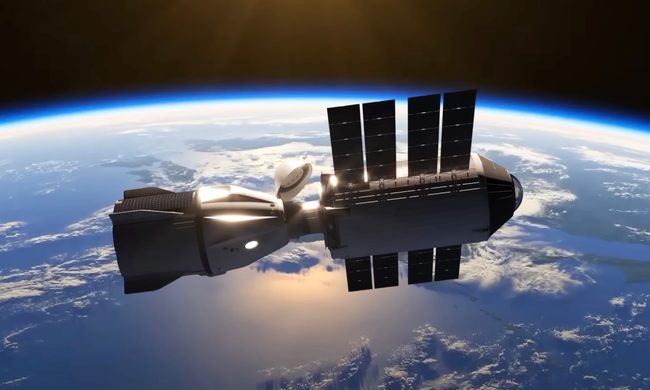
How Vast's space station will look in orbit.

AI data centers already consume vast amounts of electricity and water on Earth, so Silicon Valley has begun looking somewhere considerably more spacious... literally.

Elon Musk's SpaceX and Jeff Bezos' Blue Origin, along with several other companies, have proposed enormous constellations of satellites designed to operate as orbital data centers. However, environmental groups and former space officials are now warning that putting them into orbit at the proposed scale could have severe consequences for Earth's atmosphere and the night sky.

Read more
The first possible exomoon is here, and it makes our Moon look hilariously tiny
Scientists may have found the first exomoon, except this one is the size of Jupiter
This artist’s concept depicts a potential volcanic moon between the exoplanet WASP-49 b, left, and its parent star. New evidence indicating that a massive sodium cloud observed near WASP-49 b is produced by neither the planet nor the star has prompted researchers to ask if its origin could be an exomoon.

We have already discovered more than 6,000 planets outside of our immediate neighborhood. Yet, finding a moon orbiting one of those distant worlds has proved considerably harder. Astronomers may finally have something close to the real deal, but this particular object stretches the word “moon” almost beyond recognition.

Using the European Southern Observatory’s Very Large Telescope in Chile, researchers detected strong evidence for a moon-like object in the CD-35 2722 system. Further observations are still necessary to confirm the discovery, but it could become the first confidently detected natural satellite outside our solar system. There is still one tiny complication though. This moon is apparently massive.

Read more
China’s answer to SpaceX’s reusable rockets literally catches boosters in a net
SpaceX catches boosters on legs. China just used a net.
Ammunition, Missile, Weapon

SpaceX's playbook for recovering a rocket booster generally involves legs, a precisely controlled vertical landing, and either a concrete pad or a drone ship. 

China just managed to pull off something similar, but in a slightly different way, and on July 10, it tested the method as well.

Read more