Using widgets on your iPad enhances customization significantly. Similar to the iPhone, widgets provide quick access to information and app functions. However, iPadOS offers even greater flexibility. You can place widgets not only on your Home Screen, but also in the Today View.
Widgets work on all of our favorite iPads, including the iPad (2022), iPad mini (2024), iPad Air (2024), and iPad Pro (2024).
And iPadOS also supports larger widget sizes, allowing for a more comprehensive view of your data. Feel free to experiment with different layouts and widget combinations to create a personalized dashboard that streamlines your workflow and keeps you informed.
Here’s everything you need to know about using widgets on iPadOS.
How to add one of Apple's native widgets to your Home Screen
Apple's widgets offer a fantastic way to personalize your iPad and get important information at a glance. Whether you're keen on checking the weather, tracking your fitness goals, or keeping tabs on your calendar appointments, there's a widget for you.
Here's a step-by-step guide on how to add these handy tools to your Home Screen:
Step 1: To begin, press and hold an empty area of your iPad’s home screen. This will make your apps wiggle, and an Edit icon will appear at the top-left corner of your device. Select it.

Step 2: Next, choose Add widget to open the widget gallery.

Step 3: From there, scroll through the list of available widgets. You can also use the search bar at the top to find a specific widget (e.g., Weather or Calendar).
Step 4: Many widgets come in different sizes, offering varying levels of information. Move back and forth on a widget to preview the sizes and select your preferred option.
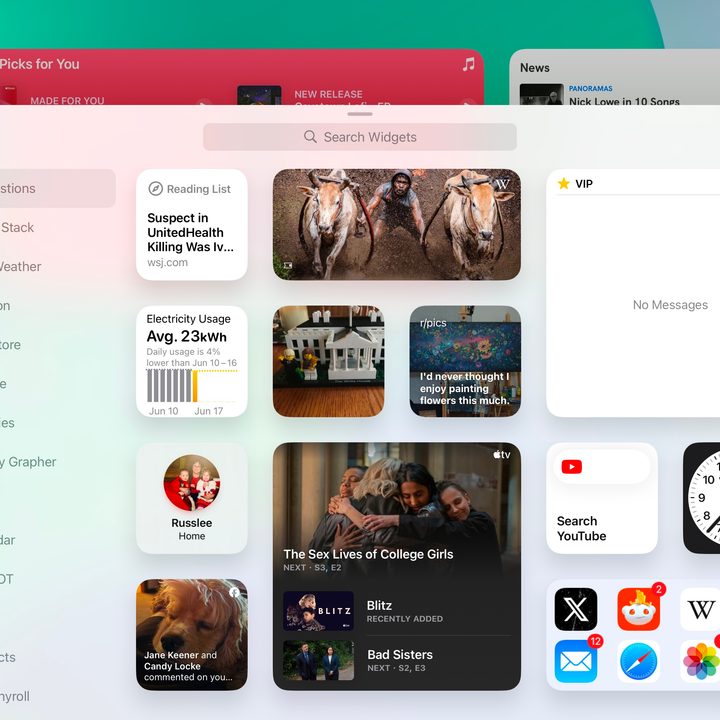
Step 5: Select the widget you'd like to add, then choose Add widget to place it on your Home Screen.

Step 6: While your apps are still jiggling, you can drag and drop the widget to your desired location on the Home Screen.
Choose Done in the top-right corner to exit the editing mode.

How to add widgets to the Today View screen
You can also add a widget to the Today View screen on your iPad. Today View is a personalized screen that provides a quick overview of useful information and app updates.
Step 1: Access Today View by moving right from the left edge of your Home Screen or Lock Screen. From there, touch and hold an empty area in the Today View until the apps jiggle.

Step 2: To add a widget, choose the “+” button in the upper-left corner, then find a widget you’d like to add.

Step 3: You can do this by choosing the widget you want or by using the search bar at the top.

Step 4: Select the widget, then choose your preferred size to add the widget.
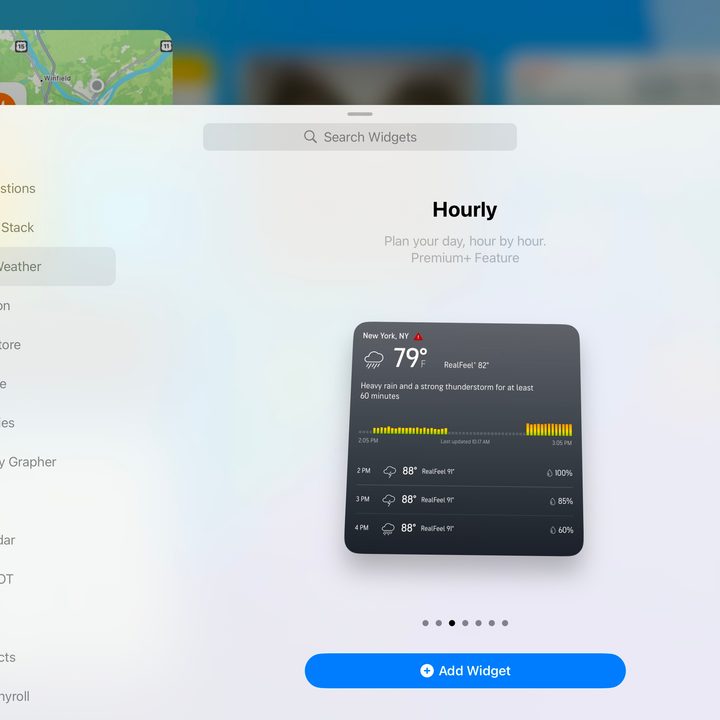
Step 5: With the apps still jiggling, you can drag and drop the widget to your desired location in the Today View.
When finished, select Done in the upper-right corner.

How to edit widgets
Adding a widget to your Home Screen or Today View is just the beginning. You can also edit the widgets you have already added. Editing could mean adjusting a setting for the widget. You might even want to remove the widget entirely.
Step 1: To adjust a widget on the iPad Home Screen, press and hold an empty area on the screen. This will make your apps wiggle. Select the widget you'd like to edit.

Step 2: Next, follow the directions on the app; these are different, depending on the type of widget. For example, you might want to change the layout on a Weather widget, adjust the settings for your Calendar widget, or do something else.
Once you're done with editing the widget, move on an empty area on the screen, then choose Done at the top right.

Step 3: To delete the widget, press and hold an empty area on the screen. This will make your widgets wiggle. Select the "-" icon at the top left of the widget.

Step 4: In the pop-up, choose Remove, then Done at the top right.

How to create a Smart Stack
You can enhance your Home Screen, Today View, or Lock Screen by using a Smart Stack. A Smart Stack consists of multiple widgets grouped together in a single box, allowing you to scroll through them as needed.
Step 1: To start using Smart Stacks, you have two options. First, you can select a premade Smart Stack directly from the widget library. Simply choose it like you would any other widget, then follow the instructions provided earlier.
This premade Smart Stack is located on the left side of the widget library and includes various native widgets. Choose it just like any other widget.
Once you add the Smart Stack to your Home Screen or Today View, you can customize it by rearranging the existing widgets inside or changing the order in which the widgets scroll.
To change the order, touch and hold the stack, and then move the widgets to reorder them within the stack. Touch and hold the stack, and then tap Edit stack to remove widgets.

Step 2: A second option is creating a custom Smart Stack. To get started, go into the Home Screen, Today View or Lock Screen widgets edit screen as explained above.

Step 3: Next, place one widget on top of an existing one, which will create a custom stack. Keep stacking however you like; you can add up to 10 widgets to a single stack.
To use Smart Stack, the widgets need to be the same size.
When finished, leave the Edit screen as you would with any other widget.