1. Home
  2. Phones
  3. Mobile
  4. News

Thanks to ARM, your next phone may have hardware-based ray tracing

Add as a preferred source on Google

ARM has been providing GPUs to smartphones for years, and today the company has announced its most ambitious piece of hardware yet: the ray tracing supporting Immortalis-G715. Ray tracing, a technology that allows gaming hardware to render realistic-looking reflections, was at the center of the marketing for the newest generation of gaming consoles in 2020. Now when playing a game using a phone with an Immortalis GPU, the visuals will attempt to mimic those found on high-end gaming PCs, the PlayStation 5, and the Xbox Series X.

The new flagship GPU will be available exclusively on Android smartphones and tablets, putting them even further ahead of the rest of the competition when it comes to making immersive gaming experiences on mobile. The big thing to note here is that the Immortalis is ARM’s first GPU to offer ray tracing on a hardware level. The Mali-G710 GPU from 2021 also supported ray tracing, but only via software. Pushing ray tracing via hardware should make it more reliable and impressive than ARM’s previous attempt.
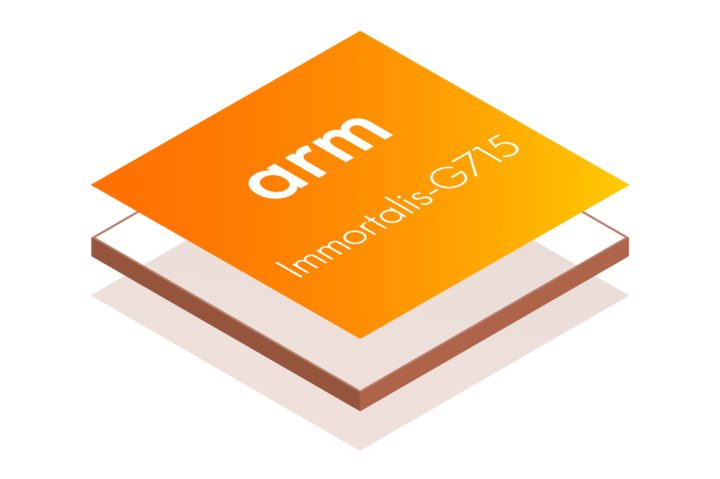
Logo for ARM's Immortalis G715 mobile GPU.
ARM

According to ARM, the Immortalis-G715 should perform 15% better than the previous generation of the company’s hardware thanks to the 10 or more cores working under the hood. While that’s a tantalizing promise, ray tracing is infamous for requiring an enormous amount of graphics processing.

Recommended Videos

In addition to the Immortalis-G715, ARM also announced updates to its premium line of Mali GPUs. The Mali-G715 is the newest addition to the line and, although it doesn’t support ray tracing like the Immortalis, it’s still a formidable GPU for mobile gaming. The Mali-G715 runs on seven to nine cores and supports variable rate shading — a technology that reduces the power required to render high-detail in-game assets. The end result is an overall faster, smoother gaming experience.

And ARM isn’t only focusing on GPUs this year. The company is also pushing new CPUs for better performance. The ARM Cortex-X3, ARM Cortex-A715, and the refreshed version of the ARM Cortex-A510 are all focusing on new ways to provide more efficient performance when compared to ARM’s previous models. As the second generation of ARM CPUs, fans can expect the new hardware to improve in plenty of areas, such as energy efficiency and performance uplift.

Peter Hunt Szpytek
A podcast host and journalist, Peter covers mobile news with Digital Trends and gaming news, reviews, and guides for sites…
Samsung may finally give the Galaxy S27 Ultra a meaningful battery boost using silicon-carbon tech
Galaxy S27 Ultra could reach 5,700mAh as Samsung explores silicon-carbon batteries
Electronics, Phone, Mobile Phone

Samsung was already rumored to be preparing a larger battery for the Galaxy S27 Ultra, while the upcoming Galaxy S27 Pro was expected to carry a 5,000mAh cell. At the time, however, there was no indication that silicon-carbon batteries were also in the works.

Samsung recently introduced the technology on the Galaxy Z Fold 8 series. A new GalaxyClub report has now revealed the alleged battery capacities of both phones, and they could represent significant upgrades by Samsung’s standards.

Read more
Spotify meets Snap Map in Snapchat’s latest update
The new Now Playing feature adds real-time music sharing with customizable privacy controls.
Now Playing on Snap Map Spotify Snapchat featured

Snapchat is giving Snap Map a musical makeover. The company has announced Now Playing, a new feature that lets users share the music they're listening to in real time directly on Snap Map. Launching first with Spotify, the integration allows friends to discover each other's favorite tracks, save songs, and jump straight into Spotify without leaving Snapchat. The feature is rolling out now in regions where both Snapchat and Spotify are available, with Canada set to receive it soon.

How Now Playing works

Read more
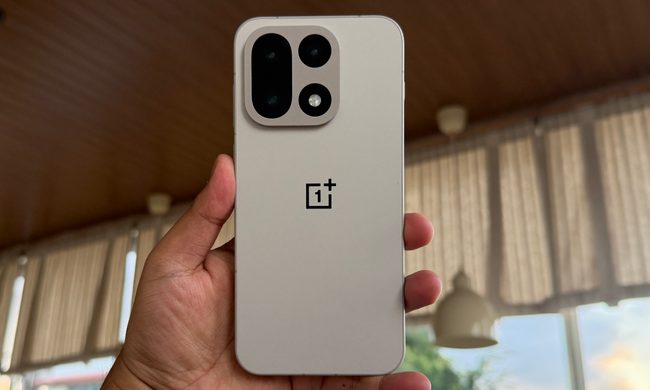
OnePlus is building another flagship monster for a shrinking audience, and its expected to launch in October
OnePlus 16 could launch in October, but it may not leave China
Rear shell of OnePlus 15.

While OnePlus may have exited the US and Europe, the brand is still alive in its home market and is already working on its next flagship smartphone. A fresh leak from Chinese tipster Digital Chat Station has now revealed more details about the OnePlus 16, including its design and a revised launch timeline.

The tipster previously claimed that the phone would arrive in September 2026, but the latest information points to an October launch in China (via Gizmochina). The global picture is far less clear, and there is now even some doubt over whether the OnePlus 16 will make it to India, which remains the company’s biggest market.

Read more