  1. Home
  2. Computing
  3. Legacy Archives

Computer programming legend Dennis Ritchie has died

Add as a preferred source on Google

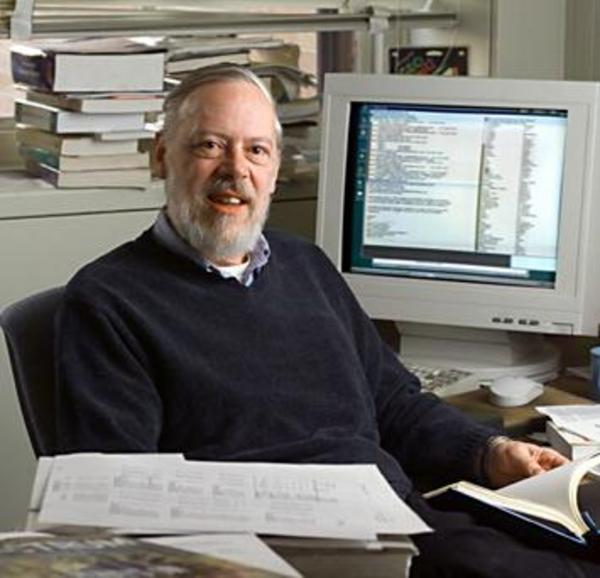
dennis-ritchieThe father of the C programming language and the UNIX operating system, Dennis Ritchie, died this past weekend at the age of 70 following a long illness

News of Ritchie’s death was publicly reported by software engineer Rob Pike, a friend and former colleague of Ritchie’s, who posted the sad news to Google+.

Recommended Videos

“[Ritchie] was a quiet and mostly private man, but he was also my friend, colleague, and collaborator, and the world has lost a truly great mind,” wrote Pike.

Known in the computer science community by his username “dmr,” Ritchie spent most of his career at Bell Labs, one of the nation’s largest phone companies, where he began working in 1967. It was at Bell where Ritchie met Ken Thompson. The two aimed to create a more efficient operating system for the fledgling minicomputer. And by 1971, Ritchie and Thompson, along with a few other Bell colleagues, released the first version of UNIX.

In 1973, Ritchie and Thompson recoded UNIX entirely in C, which greatly expanded the potential of UNIX. That version went on to have many iterations, and has since become one of the most important foundations of modern computing, and is the basis for popular operating systems, like Linux and Apple’s Mac OS X.

Ritchie is quoted as saying that, “UNIX is basically a simple operating system, but you have to be a genius to understand its simplicity.”

Currently, C is the second most-used programming language in the world, and led to the creation of the popular C++ language and Java.

Throughout his career, Ritchie won a number of prestigious awards, including the Turning Award, which he and Thompson received in 1983 for their development of generic operating system theory; and the National Medal of Technology, which the pair received in 1999 from President Bill Clinton for their invention of UNIX and C.

Andrew Couts
Features Editor for Digital Trends, Andrew Couts covers a wide swath of consumer technology topics, with particular focus on…
Android desktop mode made me miss my laptop in record time
I tried writing and publishing from Google’s phone-to-monitor setup, and the future of mobile computing immediately started sweating.
Computer, Electronics, Laptop

Android 17 desktop mode has a very simple pitch. Plug your phone into a monitor, add a keyboard and mouse, and watch the slab in your pocket pretend to be a computer. I wanted to give that pitch a fair shot, so I tried using it for an actual workday instead of a cute demo.

The goal was boring on purpose: write an article, edit it, build the page in WordPress, upload whatever needed uploading, and publish the thing without running back to my laptop like a coward.

Read more
As AI turbocharges digital abuse, UK agencies urge parents to limit who sees kids’ photos online
The National Crime Agency and Internet Watch Foundation are asking parents to tighten privacy settings as AI-generated abuse material rises.
Social Media

Parents who post pictures of their kids online are being told to rethink the habit. The UK's National Crime Agency and the Internet Watch Foundation have issued new guidance urging families to lock down their social media accounts, warning that publicly shared photos are increasingly being pulled and altered by AI tools to create child sexual abuse material.

The two organizations say most parents have no idea this is happening. Criminals no longer need to contact a child directly to generate such material. They can scrape an ordinary photo and run it through widely available nudify apps.

Read more
I used ASUS’ dual-screen laptop as a portable creative station, and my desk PC started collecting dust
The Zenbook Duo might be the creator setup I wanted in college
Computer Hardware, Electronics, Hardware

With laptops, brands are constantly in a balancing act between portability and workspace productivity. The ASUS Zenbook Duo UX8407AA tries to dodge that choice with a design that brings a whole setup in a compact form factor.

I used the Zenbook Duo as a creative machine, mainly with design apps, illustration work, writing, and multitasking. The model I tried runs on Intel’s Core Ultra 7 355, paired with 32GB of memory and a 1TB SSD. That gives it enough horsepower to handle Photoshop and Animate, for sketches and animations, and a lot more without breaking a sweat.

Read more