Lots of cooperative shooters have entered the fray over the past couple of years, and one of the most intriguing ones on the horizon is Nexon’s The First Descendant. Developed by the internal Magnum Studio at Nexon Games, this is a sci-fi shooter where players’ superpowered characters, called “Descendants,” defend humanity from an invading force. Along the way, they’ll take on hordes of enemies and giant bosses as they shoot and loot. Intrigued by this bold new franchise in one of gaming’s hottest subgenres, we spoke to Lee Beom-jun, Producer and Head of Magnum Studio to learn more about the vision behind The First Descendant ahead of its Steam beta next month.
During the interview, Lee Beom-jun discusses how this new cooperative shooter IP is trying to stand out, what Nexon wants to learn from the upcoming Steam beta, and why the team made the jump from Unreal Engine 4 to Unreal Engine 5. We also got the first details on how character customization works as well as what players can expect from The First Descendant’s evolving narrative and monetization as a free-to-play title.
Digital Trends: The cooperative shooter genre has seen a great resurgence recently. What made this genre appealing for Nexon, and how do you plan on making The First Descendant stick out from other games in the genre?
Lee Beom-jun: As you said, the co-op shooter genre has been recently drawing attention again. And I think it’s still a growing genre. We focused on the co-op shooter genre as we wanted to create an online game that is loved worldwide. I would like to highlight the two points that differentiate The First Descendant from other games of the same genre.
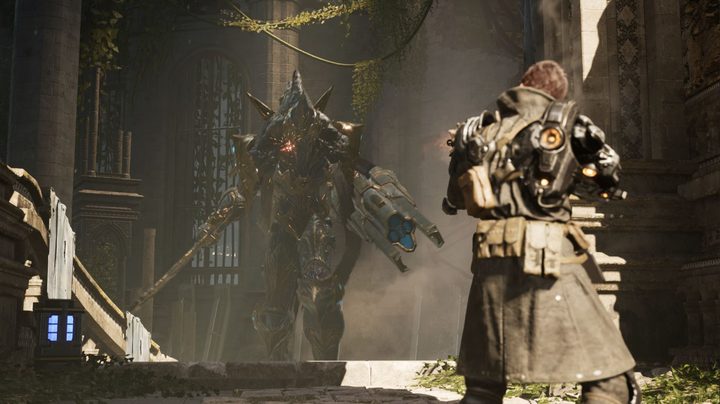
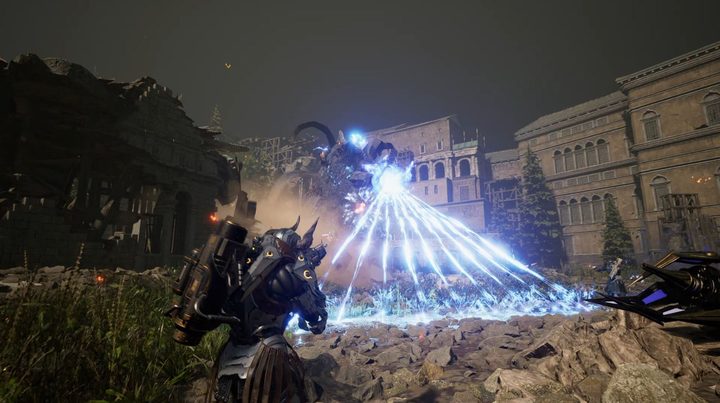
The first is our service philosophy. Our goal is to create a game that will be loved and enjoyed by players for a long time. We aspire to provide continuous updates and satisfy our players with stable online services. The second point is related to the game itself. The First Descendant has diverse, attractive characters that battle with their unique skill sets and a variety of guns. Based on this combat mechanism, we provide huge boss battles where players must defeat the bosses via co-op. There are many other differentiating points, but these are the two we think are the most crucial.
Digital Trends: How will players be able to customize their character abilities and loadouts in the game?
Lee Beom-jun: Each character’s skill set is fixed because it is an area of their unique background, personality, and strategic combat. However, players can customize their characters and weapons by attaching gear called “Runes.” Runes provide various functions, such as increasing specific stats or providing additional performance or passives. Players have limited resources to choose Runes, so they must think about the best Rune setting that suits their play style or character traits.
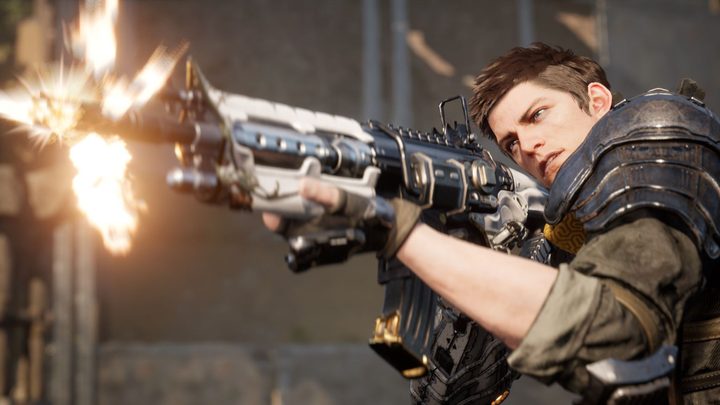
For example, if you play a character with high gunplay proportion, it would be helpful to focus on the defense stats of the gun and character. Whereas if your playstyle consists of wide-range combat based on skills, you might want to choose a Rune that will increase the range of your skills or even decrease the skill cooldown. The freedom to make all these choices will provide the fun of customizing your play.
Digital Trends: What’s the most difficult part of crafting an entirely new IP?
Lee Beom-jun: Like any team, we are experiencing difficulty and excitement in developing a new IP. Various amazing games and content are constantly being released in terms of visuals. Hence, it isn’t easy to create an outcome that successfully preserves our unique identity and meets the taste of many people. We have been focusing on what our team does best, and it’s continuously undergoing refinement.
In the process, the visual theme has shifted from fantasy to sci-fi after receiving feedback from people around us, and I am satisfied with the results at the moment. Another attractive aspect of creating a new IP is watching the creativity of various teams come together to form a whole new universe. I’m very eager to see how the world that each team contributed to will develop in the future.
Digital Trends: How will narrative content be delivered in The First Descendant?
Lee Beom-jun: We have a main story in the game, and the content is delivered through quests and in-game cinematic scenes. We will continue to add these stories with each major update. As you may have guessed, the character that appears in the Gamescom trailer is this story’s main villain. In addition to the main story, several other stories and story settings will be shown through various methods in the game. Discovering these hidden side stories and background lore will be exciting and fun.
Digital Trends: Why did the team choose Unreal Engine 5 as The First Descendant’s game engine?
Lee Beom-jun: We started developing The First Descendant with the latest version of Unreal Engine 4. Unreal Engine 5 was released during our development, and our dev team became highly interested in its visual quality. Although I was a bit concerned since the development had already progressed a lot at that point, I decided to boldly upgrade our game to Unreal Engine 5 for the best visual quality.
The main reason for the upgrade is the Nanite and Lumen of Unreal Engine 5. In particular, we believe that the lighting quality provided by Lumen, a real-time global illumination solution, is essential for next-gen projects. Now, everyone on the team is delighted with the results.
Digital Trends: How are you approaching monetization for The First Descendant as a free-to-play game? Will you charge for specific characters, stages, or gear?
Lee Beom-jun: I believe that many players are curious and concerned about this. Since we have been running on the same track and direction since the beginning of development, we were surprised to see that after our game reveal, many players were concerned about the excessive pay-to-win aspects of Nexon’s games. Ultimately, we aspire not to pursue excessive pay-to-win aspects. The monetization model will also not deviate significantly from games of the same genre. Paid products will indeed exist, but the characters, equipment, and stages that are needed for gameplay and progress in the game can be earned through gameplay.
Digital Trends: What areas of the game are you hoping to get the most feedback on with October’s beta?
Lee Beom-jun: Since it’s our first official test, we’d like to receive feedback on all aspects. However, I’m curious about the evaluation of areas that the dev team worked especially hard on to improve after the closed FGT we held at the beginning of the year.
Considering that this is a looter shooter, the most critical areas to check, in my opinion, are the battle and progression, along with the fun of co-op play. Co-op content and functions have been significantly enhanced after the closed FGT, and I hope players will be able to enjoy playing together. Other than that, I am eager to hear user opinion on the visual quality and smooth control (which has been evaluated highly before), change in the core PvE content, and UX, which has been improved as well by implementing feedback from the FGT.
The First Descendant is in development for PC, PS4, PS5, Xbox One, and Xbox Series X/S. A PC open beta will take place on Steam between October 20 and October 26.