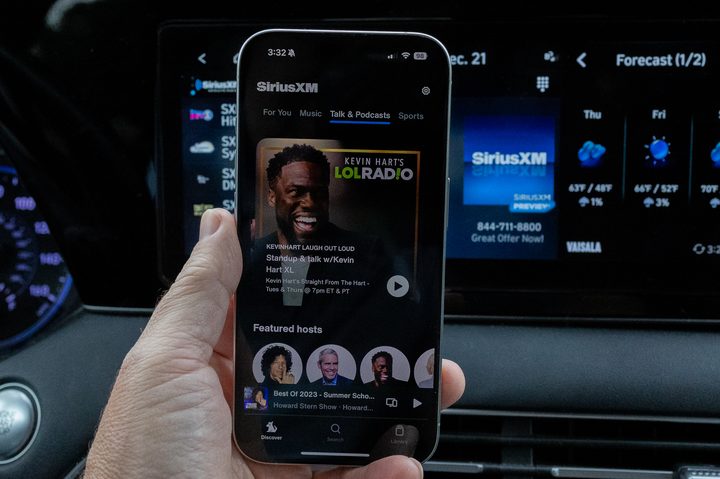
I have a love-hate relationship with SiriusXM. I love that it exists at all — and that it exists outside the prudish shackles of terrestrial radio. I love the breadth and scope of the content, from music to news to weather to comedy to live sports. I loathe the audio quality that comes with beaming sound from a satellite to a moving vehicle. I love that it’s pretty affordable. I love that SiriusXM gives you the option to stream in a mobile app, and I loathe that the app itself isn’t as quick and easy to use as pressing a button on the radio in my car. But I love that it’s transitioning into a new era of satellite/internet hybrid connectivity.
But I’m also someone who has canceled a SiriusXM subscription in the past. And so when news dropped that the State of New York has filed suit against SiriusXM for “implementing a lengthy and burdensome endurance contest that Sirius created and implemented as a strategy for keeping as many consumers from canceling as possible,” I completely understood. I’ve been there. It’s not that it was impossible to cancel. It’s not even that at the time I had to endure the relatively light annoyance that was talking to a customer service agent, who then did everything in their power to keep me as a customer.
It’s that I had to do it at all.
It should be as easy to cancel an online subscription as it is to sign up in the first place.
SiriusXM broke the unwritten law of the internet. And that law is this: It should be as easy to cancel something online as it was to sign up for it online in the first place.
That’s it. It’s that simple. It’s something many companies have gotten right — even if they want to hit me with a couple “ARE YOU SURE!?!?!” pop-ups first. It’s something that the platforms — Apple and Google — have gotten right with their own workflows. If you’re subscribed to something via the App Store or Google Play, you can see those subscriptions in a single place, and cancel them with just a few taps.
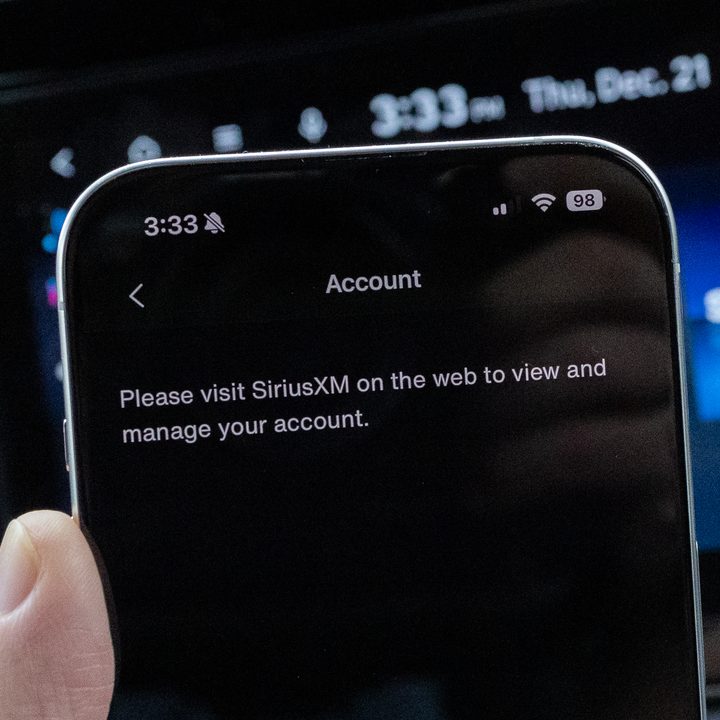
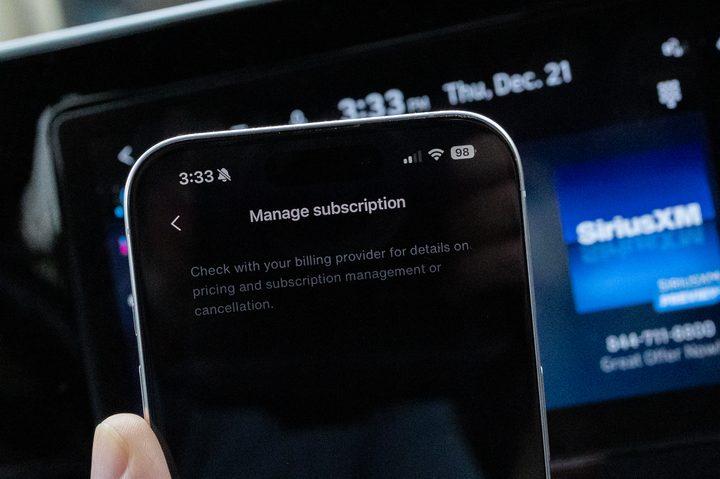
The New York suit alleges a number of things that boil down to this: “Sirius’ strategy for frustrating cancellations includes forcing most subscribers to interact with a live customer service agent, even though Sirius has the ability to process cancellations without the involvement of live agents.” That’s simply not the way things should work with digital services in late 2023, never mind the years leading up to the lawsuit.
The suit also alleges that SiriusXM basically wastes customers’ time in hopes that they won’t cancel. Consider the following, as quoted from the lawsuit:
- “Sirius’ burdensome cancellation process begins even before the consumer is connected with a live agent, including time spent waiting in the queue to be connected.”
- “Wait times regularly exceed 10 minutes to be connected with a live agent by phone, and 25 minutes to be connected with a live agent by online chat.”
- “Sirius’ representative testified to the [New York attorney general], Sirius “believe[s] strongly that a good conversation regarding cancellation requires a lot of back-and-forth with the consumer.”
- “During 2019 and 2021, more than 578,000 subscribers seeking to cancel by telephone abandoned their efforts while waiting in the queue to be connected to the live agent.”
Customer churn is a real concern for companies. And you can’t fault them for having retention strategies, by which they try to stave off cancellations by offering something in return. A lower price. Some other sweetener. But making it difficult to cancel shouldn’t be part of that strategy.
SiriusXM is hardly the first company to make it hard to cancel, but its customers deserve better.
This isn’t unique to SiriusXM. Newspapers have been bad at this, too. I can remember trying to cancel a subscription to the Sunday New York Times (I live in Florida) because it simply wasn’t being delivered. I never got the newspaper. Yet the agent on the phone (who I absolutely remember as being helpful and understanding) still had to read from his script, and I was then offered free bonus weeks of the same newspaper that I was canceling because they couldn’t actually ensure that it’d ever be delivered in the first place.
I can remember sitting in the Delta Sky Club at Tampa International Airport, attempting to cancel the online subscription to the very same newspaper whose newsroom I worked in for a decade. I’d stood in its subscriptions department. I met my wife there. And I sat on hold for a half-hour, waiting for someone — anyone — in whatever state the call center was now in, all these years after I’d left, to pick up.
To this day, those experiences have left me gun-shy. If I can’t cancel a subscription the same way I got it in the first place, I don’t want it. But do things the right way? You’ll be more likely to keep me around longer. Or get me to come back