The Roborock Qrevo Curv and Dreame L40 Ultra are two of the best robot vacuums on the market, capable of not just cleaning your home but also handling most of their own maintenance. From rinsing and drying mops to emptying dustbins, they’re both incredibly self-sufficient — making them great additions to any home. They both earned stellar reviews and carry similar price tags, so it could be a challenge to figure out which is the better choice.
Thankfully, you won’t regret either purchase. These two high-end models put most of the competition to shame, and there’s truly not a loser between the two. However, depending on the types of floors they’ll be cleaning, one might be a slightly better choice. Here’s a closer look at both to help you decide which is the better investment.
Pricing and design

The Roborock Qrevo Curv is the more expensive robot at $1,600. It employs a unique dome-shaped docking station that’s a breath of fresh air in a market filled with angular designs. The robot itself looks fairly standard, however, with a circular shape and protruding top segment.
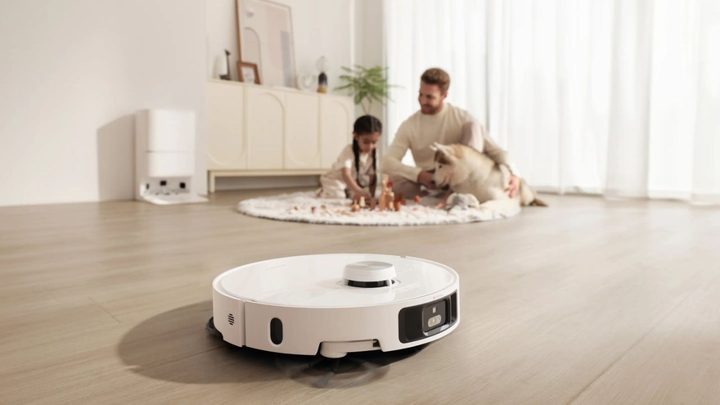
The Dreame L40 Ultra is $1,500 and uses a traditional rectangular dock. It doesn’t look bad, but it’s not as flashy as the innovative Curv. However, most folks will find the lower price more enticing, despite its less-than-thrilling dock design.
Winner: Dreame L40 Ultra
Vacuuming

When it comes to sheer vacuuming power, you can’t beat the Roborock Qrevo Curv. It produces 18,500Pa of suction to clean deep within carpets. In fact, our testing found it to be a realistic replacement for cordless vacuums, as it handled fur, hair, dirt, and dust better than any robot on the market. Coupled with its FlexiArm side brush that reaches out to clean near baseboards, it’s a powerful machine.
Roborock also reworked its main roller brush to eliminate tangles, and its side brush boasts a new bristle design that’s less prone to getting stopped up by hair and strings. The robot can lift its entire chassis 10mm and its mopping pads another 10mm — that’s enough clearance to keep low-pile carpets free from dirty mopping pads, but it’s not a perfect system for pile carpet.
It’s a different story for the Dreame L40 Ultra. It’s not quite as powerful with just 11,000Pa of suction, but it can automatically leave its mopping pads behind in the docking station to ensure your carpets don’t get wet. It too boasts a swinging side brush to clean near baseboards. You won’t get as thorough a clean for high-pile carpets, but there’s no doubt the ability to automatically detach its mopping pads is a cool feature.
Winner: Tie
Mopping
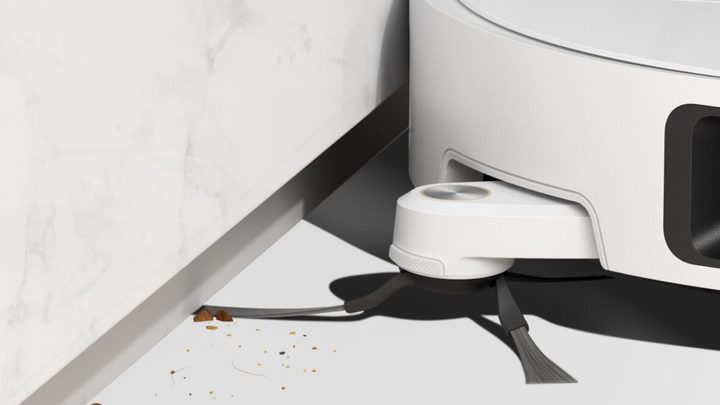
Mopping performance is largely the same across both robots. They employ two rotating mopping pads that press down on your floors to scrub out difficult stains and spills. One of the two pads can swing outward to clean around furniture and baseboards, and onboard water reservoirs ensure the mops are always saturated.
Once a cleaning cycle is complete, they’ll both head back to their docking stations to recharge, empty dustbins, wash their mops with hot water, and dry them with warm air. One minor difference is that the L40 comes with an optional cleaning solution, while the Roborock doesn’t. So if you want to clean your floors with more than just water, the Dreame L40 Ultra is a good choice.
Another minor difference is that the Roborock Qrevo Curv uses hotter water for cleaning its mops than the Dreame (167 degrees Fahrenheit versus 149 degrees Fahrenheit), which might be more capable of removing sticky debris.
Best of all, both robots will clean their docking stations with built-in scrapers, which spin around during a cleaning cycle to ensure all the debris knocked off mops is washed out of the dock.
Winner: Tie
Additional features

The Roborock Qrevo Curv can climb over thresholds up to 4 centimeters tall. Testing of this feature was a bit mixed — sometimes it would accidentally climb onto an obstacle or the leg of a desk instead of barreling over tall thresholds. It’s a nice feature, but one that you’ll want to keep an eye on during your first few cleaning sessions to ensure it’s climbing over the right objects.
Aside from that, both products are loaded with secondary features. This includes:
- Support for voice commands
- Robust companion apps
- Ability to place Restricted Zones
- Pet Mode that takes photos of your furry friends
- Impressive obstacle avoidance
If you’re interested in syncing your robot vacuum with the rest of your home, you’ll be glad to know that the Qrevo Curv supports Matter.
Winner: Roborock Qrevo Curv
Verdict
Let’s face it — neither robot vacuum is a clear winner in this comparison. Both are remarkable devices that should be welcomed into any home with open arms, as they make it easy to automate all your floor care chores.
However, there are a few scenarios in which one might be better than the other.
- If you have high-pile floors and want your robot to vacuum and mop, the Dreame L40 Ultra is a better choice because it can detach its mopping pads.
- If you have high-pile carpets and need serious firepower to remove pet fur and debris (and you can live with slightly damp floors), the Roborock Qrevo Curv is the best option.
- If you don’t have any carpet in the home, the cheaper Dreame L40 Ultra is the better choice, as its 11,000Pa of suction is adequate for hard floors.
- If you only have low-pile carpets, then the 20mm of clearance offered by the Roborock Qrevo Curv is a better choice.
When in doubt, you can safely pick up whichever one is currently on sale. The two robots regularly see discounts throughout the year, so consider waiting for a big shopping holiday to snag one at a great low price.