1. Home
  2. Cars
  3. Emerging Tech
  4. News

The UK’s Wayve brings its AI automated driving software to U.S. shores

Add as a preferred source on Google
wayve ai automated driving us driver assist2 1920x1152 1
Image used with permission by copyright holder

It might seem that the autonomous driving trend is moving at full speed and on its own accord, especially if you live in California.

Wayve, a UK startup that has received over $1 billion in funding, is now joining the crowded party by launching on-road testing of its AI learning system on the streets of San Francisco and the Bay Area.

The announcement comes just weeks after Tesla unveiled its Robotaxi at the Warner Bros Studios in Burbank, California. It was also in San Francisco that an accident last year forced General Motors’ robotaxi service Cruise to stop its operations. And it’s mostly in California that Waymo, the only functioning robotaxi service in the U.S., first deployed its fleet of self-driving cars.

As part of its move, Wayve opened a new office in Silicon Valley to support its U.S. expansion and AI development. Similarly to Tesla’s Full-Self Driving (FSD) software, the company says it’s using AI to provide automakers with a full range of driver assistance and automation features.

“We are now testing our AI software in real-world environments across two continents,” said Alex Kendall, Wayve co-founder and CEO.

The company has already conducted tests on UK roads since 2018. It received a huge boost earlier this year when it raised over $1 billion in a move led by Softbank and joined by Microsoft and Nvidia. In August, Uber also said it would invest to help the development of Wayve’s technology.

Just like Tesla’s FSD, Wayve’s software provides an advanced driver assistance system that still requires driver supervision.

Before driverless vehicles can legally hit the road, they must first pass strict safety tests.

So far, Waymo’s technology, which relies on pre-mapped roads, sensors, cameras, radar, and lidar (a laser-light radar), is the only of its kind to have received the nod from U.S. regulators.

Nick Godt
Former Freelance reporter
Nick Godt has covered global business news on three continents for over 25 years.
BMW could finally be building the electric convertible fans have always wanted
Good things come to those who wait, and apparently that means until 2028.
BMW convertible

There have been whispers about a two-door BMW i4 for years, and according to a new report from BMWBlog, at least one version is actually in the works. The outlet's sources close to BMW claim the automaker is readying an i4 Convertible under the internal codename NA3.

Why is BMW waiting until 2028 to launch it?

Read more
Waymo’s driverless cars keep getting parking tickets in Austin, and humans aren’t the only ones complaining
Waymo vehicles have collected $9,325 in Austin fines as repeated parking mistakes turn into a fleet-wide operational problem
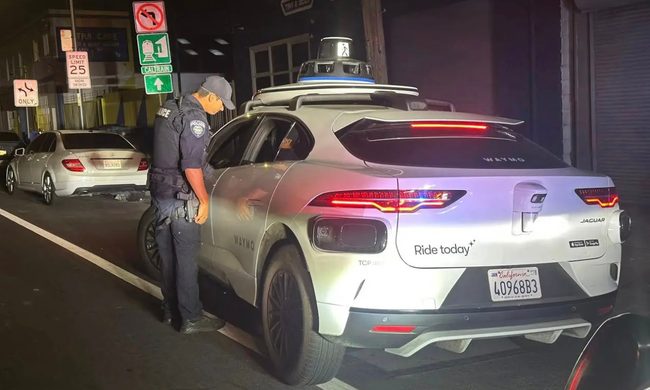
A police officer investigating an empty Waymo car.

Waymo’s 83 parking citations in Austin don’t amount to a financial crisis. They do reveal what happens when the same driving decisions are repeated across an autonomous fleet.

City records obtained by The Wall Street Journal show that Waymo vehicles have accumulated $9,325 in fines since arriving in 2024. The company has paid most of them, but the more revealing detail is how often its cars have made the same mistake.

Read more
Google Maps’ biggest Android Auto upgrade is reaching more users
Google Maps is finally giving Android Auto users directions with a little more drama.
Electronics, GPS, Car

Google is widening the rollout of two long-awaited Google Maps features for Android Auto users: Immersive Navigation and a built-in live speedometer. After months of limited availability, reports suggest both features are now reaching a broader group of users, including people running stable versions of Google Maps instead of beta builds.

The update is part of Google's ongoing effort to modernize the Android Auto navigation experience. While the company unveiled Immersive Navigation earlier this year as one of the platform's biggest upgrades in years, the feature has been trickling out slowly, leaving many users without access. That appears to be changing, with more devices now receiving the update through a server-side rollout.

Read more