Your house, with all it’s sheetrock, insulation, wood panels, and siding, would be an impenetrable fortress if it weren’t for your windows. Those thin panes of molten silica sand are a chink in your home’s armor, letting in all kinds of noise from the outside world.
Sure, if you live out in the country and the only noise pollution you deal with are songbirds and the sound of wind blowing through trees, this might not be much of an issue. But if you live in a more urban environment, under the constant drone of traffic, pedestrians, and other miscellaneous street noise, sound leaking through your windows can be a massive disturbance to the peace and quiet of your pad.
The problem is that your big, flat, windows – despite being relatively solid and sturdy – behave like big membranes when hit with vibrations, and tend to transfer sound pretty readily. It’s especially bad if you’ve only got a single-pane glass between you and the outdoors. If that’s the case, you may as well be living next door to a 24-hour karaoke bar.
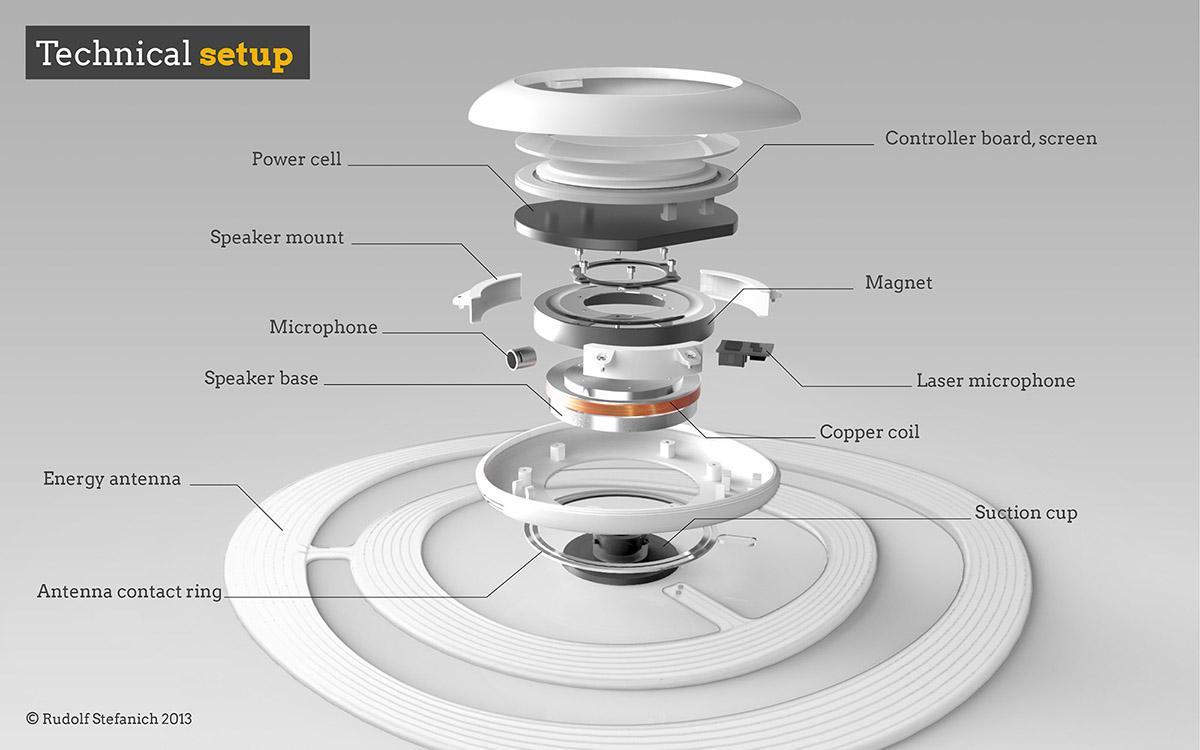 Noise pollution is everywhere, so wouldn’t it be nice if you could get rid of all that extraneous sound, much like a pair of noise-cancelling headphones nullifies the sound of a jet engine? Well good news – that’s exactly what Sono, an upcoming sound neutralizing device for you windows, does.
The device is still just a prototype at this point, but it works almost exactly like the active noise cancellation module you’d find in a pair of high-end headphones. It uses a microphone to pick up incoming sounds, and then sends out sounds of the exact same frequency and wavelength, but 180 degrees out of phase. When these outgoing sound waves collide with the incoming ones, they effectively cancel each other out, so no noise ends up reaching your window.
But it’s also a bit more sophisticated than that. Instead of just blocking out everything like a pair of noise-canceling cans, Sono allows users to isolate specific noises they want to hear while simultaneously filtering out the ones they don’t. For example, lets say you want to block out the sound of traffic and people’s voices, but still want to be able to hear the sound of birds chirping. Thanks to Sono’s ability to discern between a wide range of frequencies and selectively neutralize them, this is totally possible.
Unfortunately the product isn’t yet past the prototype stage, but the good news is that the design is currently a finalist in contention for the prestigious James Dyson award. If it wins, designer Rudolf Stefanich will be awarded prize money to help accelerate the product’s development. We’ll keep you posted on availability, but until then you can find out more about Sono here.