  1. Home
  2. Cars
  3. News

Is Audi readying a production h-tron? Brand buys fuel cell patents for $50 million

Add as a preferred source on Google

German manufacturers may be a tad behind the Japanese when it comes to the proliferation of fuel cell cars, but Volkswagen Group is investing in the hydrogen future.

Audi has announced the purchase of “a package of patents relating to fuel-cell technology” from British Columbia firm Ballard Power Systems. The brand has also signed a two-year extension with Ballard that’s effective until March 2019.

Recommended Videos

The ‘Technology Solutions contract’ is part of an $80+ million deal between the firms, which includes 800 patents relating to both automotive and stationary fuel cells. The automaker will pay $50 million for the patents themselves, and Ballard estimates the incremental value of the extension to be between $24 and $30 million.

On February 11th, the value of the Canadian company’s stock jumped over 50 percent.

“Audi is acquiring these strategically important patents for the entire group and will make them available to all the brands,” said Audi’s Head of Development Prof. Ulrich Hackenberg. “In this way, we are securing crucial expertise that will provide new impetus for the further development of this technology.”

“The entire VW Group will use these patents,” he continued, but don’t think that means a hydrogen fuel cell Lamborghini Hurácan is in store.

VW and Ballard Power Systems have collaborated before. Audi’s A7 h-tron quattro, Volkswagen’s Golf SportWagen HyMotion, and Volkswagen’s Passat HyMotion, which debuted at the 2014 LA Auto Show, used components and technology developed alongside Ballard.

This isn’t the first time a major automaker has thrown a boatload of cash at the hydrogen industry. In November, we reported that Honda had pledged $13.8 million in financial support to FirstElement Fuel to help build 12 hydrogen filling stations across California.

Before that, coinciding with the debut of its Mirai FCV, Toyota announced a partnership with Air Liquide to build 12 stations across the northeast United States.

Andrew Hard
Andrew first started writing in middle school and hasn't put the pen down since. Whether it's technology, music, sports, or…
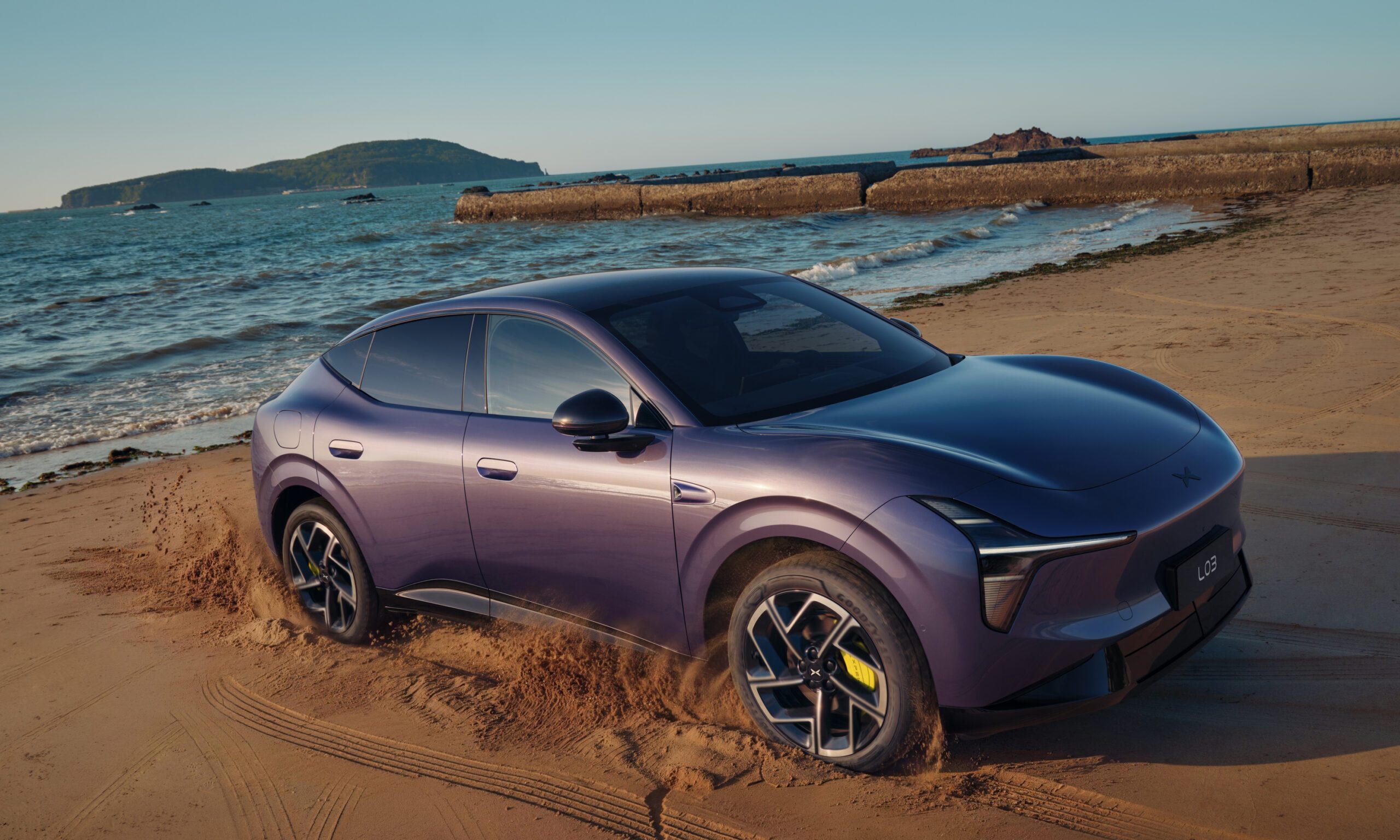
This sleek Chinese EV pairs supercar styling with three AI brains
The Xpeng L03 is an AI supercomputer disguised as a stylish family SUV
Xpeng L03

Xpeng’s latest electric vehicle carries enough processing power to make the term "smart car" actually sound more realistic than it actually is. The new Xpeng L03 debuted simultaneously in Europe and China on July 16, with the company presenting it across 65 markets. Available as a fully electric vehicle and an L03 Power X range-extender, the coupe-SUV is Xpeng’s most internationally focused model so far. Market-specific prices and sales dates remain unannounced.

Three AI chips and Google Maps built right in

Read more
A new sodium battery posts wild four-minute charging numbers, but don’t expect it in an EV yet
The breakthrough could improve fast charging and battery life, but the study hasn’t demonstrated those results in a production-sized pack
EV Charger

A new sodium-metal battery has posted a charging number that makes today’s EVs look painfully slow. In laboratory testing, the cell operated at a 15C rate, equivalent to completing a charge or discharge in roughly four minutes.

That doesn’t mean researchers plugged in an electric car and watched it fill up before the driver finished buying coffee. The result came from a small experimental cell using a new quasi-solid electrolyte, while the larger pouch-cell prototype delivered far less dramatic performance.

Read more
The Apple Car may be dead, but it became the foundation of Apple Intelligence
A decade of work on a canceled car project reportedly laid the groundwork for Apple Intelligence.
Apple Intelligence in Apple Car

The Apple Car may have never left the garage, but it apparently gave birth to Apple's AI ambitions. According to Bloomberg's Mark Gurman, Apple's canceled autonomous vehicle project, one that consumed more than a decade of work and over $10 billion before being scrapped in 2024, ended up laying the technological foundation for Apple Intelligence. In a rather ironic twist, one of Apple's most expensive failures may also become one of its most important long-term investments.

The Apple Car forced Apple to think like an AI company

Read more