  1. Home
  2. Cars
  3. Photo Galleries
  4. News

The VW Group’s new engine range keeps gas-burners relevant with power and efficiency

Add as a preferred source on Google

At this year’s Vienna engine symposium (don’t feel bad if you’ve never heard of it — it’s not the most well-publicized of automotive events), the VW Group revealed it is working on some big changes for its engine lineup.

As a broad brushstroke regarding what’s to come, Heinz-Jakob Neusser stated that TDI and TSI engines, paired with dual-clutch transmissions, will continue to be staples in the VW Group’s range for the foreseeable future.

One of the most interesting new engines will be a firecracker of a 1.0-liter three-cylinder mated to a large single turbo and an electric supercharger, which puts out 272 horsepower and 199 pound-feet of torque.

On the more efficient end of things, a new 2.0-liter TFSI will replace the current 1.8-liter, making similar power but with far better fuel economy. The new Audi A4 is slated to be the first model to use the new powertrain.

Moving up the ladder, a new 2.0-liter four-cylinder TDI with high-pressure direct injection, dual turbochargers, and variable turbine geometry develops 300 hp and 443 lb-ft of torque. Efficient low displacement engines accounted for — how about the big boys?

The next generation W-12 engine was revealed with a mashup of turbocharging and direct injection that makes 600 hp and 664 lb-ft of das torque. The W-12 TSI features cylinder deactivation tech as well, so it can function as a VR6 when you don’t need to reverse the spin of the earth.

As for where the new W-12 will reside, VW said the new engine has been optimized for off-road purposes (guess that means you, Bentley Bentayga), but it will also power models that can top 186 mph (most likely the next generation Bentley Continental, Audi A8, and VW Phaeton). In sedan bodies, VW claimed the W-12 TSI will average 22 miles per gallon on the European cycle.

The VW Group apparently still has faith in the gas-powered motivator, and this new range of powerful-yet-efficient engines looks solid.

Miles Branman
Miles Branman doesn't need sustenance; he needs cars. While the gearhead gene wasn't strong in his own family, Miles…
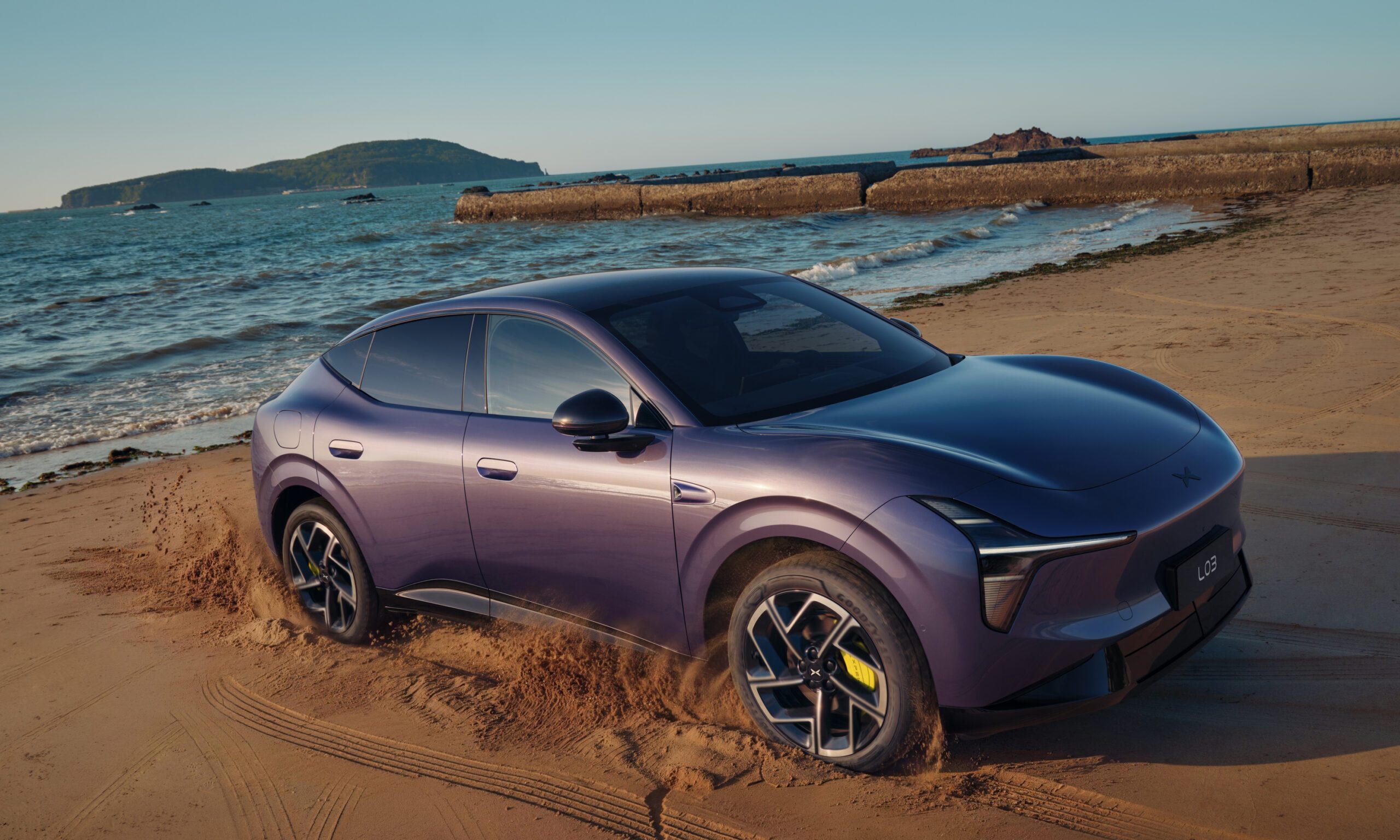
This sleek Chinese EV pairs supercar styling with three AI brains
The Xpeng L03 is an AI supercomputer disguised as a stylish family SUV
Xpeng L03

Xpeng’s latest electric vehicle carries enough processing power to make the term "smart car" actually sound more realistic than it actually is. The new Xpeng L03 debuted simultaneously in Europe and China on July 16, with the company presenting it across 65 markets. Available as a fully electric vehicle and an L03 Power X range-extender, the coupe-SUV is Xpeng’s most internationally focused model so far. Market-specific prices and sales dates remain unannounced.

Three AI chips and Google Maps built right in

Read more
A new sodium battery posts wild four-minute charging numbers, but don’t expect it in an EV yet
The breakthrough could improve fast charging and battery life, but the study hasn’t demonstrated those results in a production-sized pack
EV Charger

A new sodium-metal battery has posted a charging number that makes today’s EVs look painfully slow. In laboratory testing, the cell operated at a 15C rate, equivalent to completing a charge or discharge in roughly four minutes.

That doesn’t mean researchers plugged in an electric car and watched it fill up before the driver finished buying coffee. The result came from a small experimental cell using a new quasi-solid electrolyte, while the larger pouch-cell prototype delivered far less dramatic performance.

Read more
The Apple Car may be dead, but it became the foundation of Apple Intelligence
A decade of work on a canceled car project reportedly laid the groundwork for Apple Intelligence.
Apple Intelligence in Apple Car

The Apple Car may have never left the garage, but it apparently gave birth to Apple's AI ambitions. According to Bloomberg's Mark Gurman, Apple's canceled autonomous vehicle project, one that consumed more than a decade of work and over $10 billion before being scrapped in 2024, ended up laying the technological foundation for Apple Intelligence. In a rather ironic twist, one of Apple's most expensive failures may also become one of its most important long-term investments.

The Apple Car forced Apple to think like an AI company

Read more