1. Home
  2. Computing
  3. News

Fujitsu develops tech that turns biometric data into a cryptographic key

Add as a preferred source on Google

Fujitsu Laboratories is developing a new technology that converts biometric data into a cryptographic key to ensure that personal data is protected when traveling across a network.

The technology uses different randomized numbers that convert the biometric information, in this case the veins in the palm of the hand, into a cryptographic key for encrypting and decrypting personal data on each side of the communication.

Recommended Videos

At the end of the data transfer, a user’s randomized code representing their biometrics is compared with the number generated at the start as a means to verify the person. This would remove the need for managing encryption keys for accessing your encrypted data, according to the researchers.

Fujitsu adds that it used error-correcting codes to compensate for any minor errors, such as slight movements of the hand, during data transmission. It claims that this will be a more robust way of protecting personal information as there is a reduced chance of the biometric data being intercepted on a network and it could expand the use of biometrics to cloud services in a more secure way.

That last point is important. Currently, biometric data is generally used only for accessing local devices because the data might be intercepted in transit over a network. Fujitsu’s technology could bring this from of login to cloud storage, social networks, and other online services.

The company says it is currently working on improving the time it takes to decrypt the data and is aiming to commercialize the system by 2017 as well as exploring potential use cases such as Japan’s recently updated tax and social security number system.

Fujitsu has been working alongside Kyushu University and Saitama University in Japan to develop the technology and presented their findings at a security conference in France this week.

It’s not too surprising that Fujitsu is focusing on the security of biometrics. The Japanese company has been investing heavily in biometrics research and its use in payments and authentication, including a recent pilot with payments provider JCB.

Jonathan Keane
Jonathan is a freelance technology journalist living in Dublin, Ireland. He's previously written for publications and sites…
Google’s new Magic Pointer Play Store listing reveals a Gemini shortcut built for Googlebooks
The unannounced app turns the cursor into a contextual AI tool for search, image creation, and shopping
Plant, Text, Business Card

Google has quietly published a new Play Store listing for Magic Pointer, an unannounced app built for Googlebooks. Updated on July 10, the app turns the cursor into a Gemini shortcut that can act on whatever a user selects on screen.

Magic Pointer can send an image to Lens, generate a related image, or surface a shopping action without forcing users to open a separate chatbot. Regular Android devices currently show as incompatible, so the listing offers an early preview rather than a broad release.

Read more
You can stop using AI, but this new report says you probably can’t escape it
A UK survey found that most people feel AI exposure is unavoidable, raising harder questions about consent, privacy, and whether opting out is still realistic
AI Chatbots

More people are trying to use less AI, but avoiding it altogether may already be impossible.

A survey of 2,055 UK adults found that 42% deliberately limit how much AI they use. Another 70% said avoiding AI exposure would be difficult or impossible, even when they actively wanted less of it.

Read more
The face on an AI interviewer may matter as much as the decision it makes
Researchers found that race and gender matching changed how fairly rejected applicants viewed an automated interview, even though everyone received the same outcome
File, Computer Hardware, Electronics

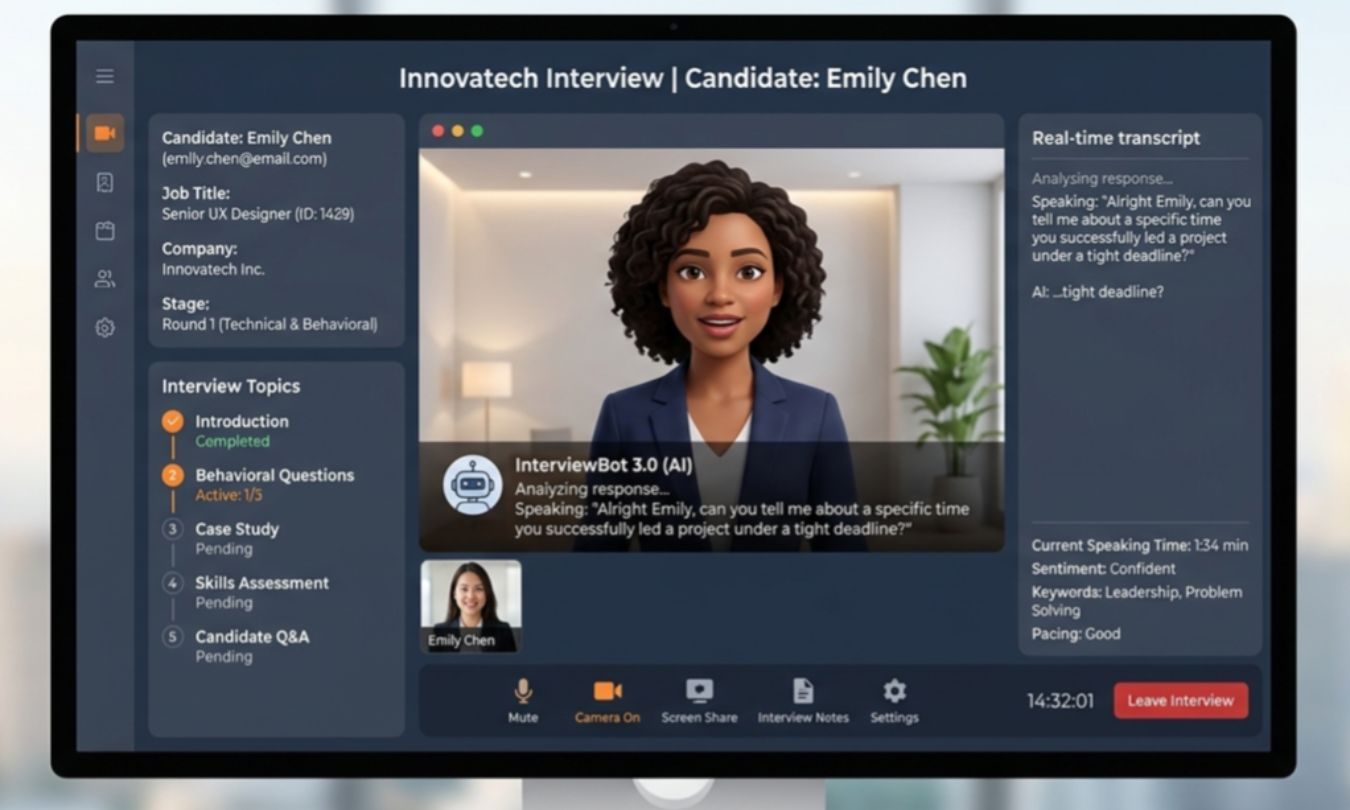
An AI hiring system can treat every applicant the same and still leave some people feeling targeted. Researchers found that rejected candidates judged an automated interview differently depending on the race and gender of the avatar delivering the result.

Around 220 participants completed a simulated interview for a fictional customer support role with one of four photorealistic AI avatars. Everyone was rejected, yet perceptions of fairness shifted with the interviewer’s appearance. An algorithm audit could miss that reaction because candidates don’t experience the system as raw code. They experience a face asking questions and judging their answers.

Read more