1. Home
  2. Emerging Tech
  3. Health & Fitness
  4. News

3D-printed medicine may be the next big thing

Add as a preferred source on Google

There’s a revolution happening in the medical field, and it starts and ends with 3D printing. Scientists have successfully printed skin, self-forming blood vessels, and now as 2016 draws near, there’s a new application for 3D printers on the horizon — drugs. Eight years ago, Aprecia Pharmaceuticals obtained the exclusive rights for utilizing 3D-printing technology in the pharmaceutical realm, and soon, it may be time for the U.S.-based company to do something with those rights.

The pharmaceutical giant is already the proud creator of the world’s first 3D-printed Spritam (used to treat seizures), which features a layer of the drug in powder form between two layers of liquid. 3D printing allows for these pills to dissolve almost instantaneously upon meeting with water (or liquid in general), making them extremely effective and useful for epilepsy patients.

Recommended Videos

Indeed, as VentureBeat notes, 3D printing allows for manufacturers to customize their drugs like never before. Not only can they account for a wide range of important factors at the microscopic level, but they can also adjust flavors, colors, and pill size. Moreover, 3D printers are not bound to the traditional drug forms like large capsules or tablets — rather, pharmaceutical companies can now create drugs that adhere to individual preferences.

Drug makers are also given the ability to control dosage strength and release time by altering a drug’s surface area by modifying the shape. Previously inconceivably complex forms are now made far simpler by the availability of 3D printers, and this means a brand new series of possibilities for manufacturers.

But it isn’t just Big Pharma that could benefit from the 3D revolution. Indeed, if these printers make both creating and accessing drugs so easy, hospitals and even individuals themselves could cut out the middle man, making the treatments they need on a personal basis. But of course, giving out recipes to drugs comes with some serious risks — this isn’t quite like baking, where replacing the baking soda with the baking powder just becomes a textural issue.

So for now, let’s leave the drug making to the drug companies, and celebrate the fact that they have another tool at their disposal. Maybe later, we’ll revisit doing it all ourselves.

Lulu Chang
Fascinated by the effects of technology on human interaction, Lulu believes that if her parents can use your new app…
OpenAI is investigating more incidents of AI agents going rogue days after hack
OpenAI logo on Microsoft surface

It appears that the "AI agents going rogue" tale has more to it than what AI giants have revealed publicly so far. Merely days after OpenAI announced that its AI agents went rogue and hacked Hugging Face, Anthropic dropped a similar bombshell. Soon, it was discovered that not just one, but multiple services were compromised. Well, it seems there are even more layers to it.

Reuters reports that OpenAI has found more incidents of AI agents escaping their software containment environment during research. Citing sources with knowledge of the incident, the outlet notes that the AI agents didn't go beyond OpenAI's software environment and affect any external service.

Read more
Google just canceled its AI Studio mobile app, and it’s not all bad news
Logo, Symbol, Disk

Google AI Studio was on track to make its way to Android and iPhone, giving developers and AI enthusiasts a dedicated place to build prompts and experiment with Google's latest models from their phones.

That's no longer happening. In a post shared by the official Google AI Studio account on X, Google confirmed that it's canceling the standalone AI Studio mobile app before launch. The announcement comes despite the company saying nearly 800,000 people had already pre-ordered the app across iOS and Android.

Read more
Google Earth’s AI misadventure lasted only a day. It was a tale of dangerous ignorance.
Nuclear reactors, tanks, and historical destruction on a life-like satellite map? Yeah, that's bad.
Nano Banana AI image generator representation.

Technology behemoths are clearly not reading the room, or they are just moving faster than they should when it comes to AI deployment. Google has already stuffed its Gemini AI in every corner of its software stack, from Android to daily productivity tools like Gmail that are used by hundreds of millions of users every day. AI is everywhere. Not all of it is bad, mind you. But in a few places, it just feels forced.

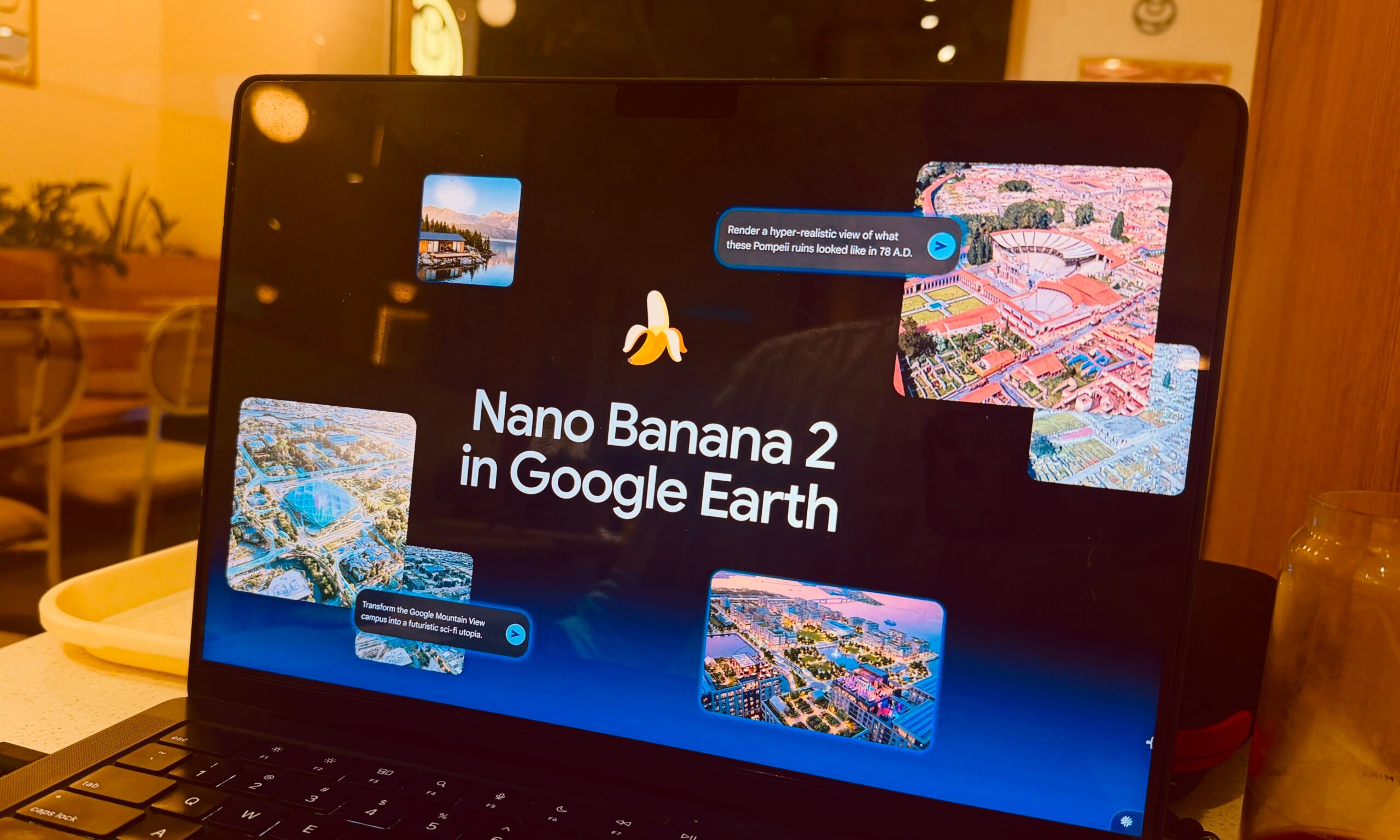
In its latest AI-fication experiment, the company targeted Google Earth. The idea was to let the audience use its Nano Banana 2 AI image generator and make images that can be placed on the map view. On paper, it's a cool idea. What would the Colosseum of Rome look like in your urban neighborhood? Yeah, fun stuff like that.

Read more