  1. Home
  2. Gaming
  3. Virtual Reality
  4. News

Frontier is now prioritizing HTC Vive over Oculus Rift with Elite: Dangerous

Add as a preferred source on Google

Ever since its Oculus Rift compatibility was announced back in December 2014, many VR enthusiasts have been excited for the arrival of space simulation game Elite: Dangerous on PC. Despite that having happened already, it has come with its fair share of problems for early adopters of Facebook’s virtual reality headset solution.

This was particularly pertinent for SDK 0.7 users, with a complicated workaround available for those on 0.8. While mending the game’s apparent optimization issues should be a priority for Elite: Dangerous creator Frontier Developments, its focus has shifted elsewhere: towards Valve’s SteamVR to be exact.

Recommended Videos

“We’ve supported VR for a few years now, and Elite: Dangerous is arguably the world’s leading VR-ready game,” said the game’s developer in a statement issued to Eurogamer. “We want to give players the best possible VR experience however they play—it’s something we talked about with Digital Foundry recently—and that means focusing our efforts. Right now, we’ve chosen to focus on SteamVR. We haven’t cut an exclusivity deal with any VR manufacturer, and we’re still working with Oculus on Rift support.”

Fortunately, despite the news that Frontier is choosing to put HTC Vive first, that doesn’t mean there’s any kind of timed exclusivity deal taking place between Valve or HTC and the developer.

“I can confirm that there is no deal to release Elite on HTC first,” wrote Frontier’s Head of Community Management Zac Antonaci. “Valve released a stable driver before Oculus but we remain in close contact with Oculus.”

Though worded confusingly, what Mr. Antonaci is saying here, put simply, is that Frontier is giving Valve/HTC priority over Oculus because it was actually issued a completed Vive dev kit. While it admittedly strikes me as a bit odd that the Rift has taken the backseat over at Frontier’s UK studio, what’s even more strange is the response given to Ars Technica from the developer when asked for further comment on the story: “We’re not offering direct comment because the story isn’t true.”

Despite verification from a number of reputable sources, this Frontier spokesperson is, for whatever reason, completely in denial.

Gabe Carey
A freelancer for Digital Trends, Gabe Carey has been covering the intersection of video games and technology since he was 16…
Ghost Recon could finally be making the comeback fans have been asking for
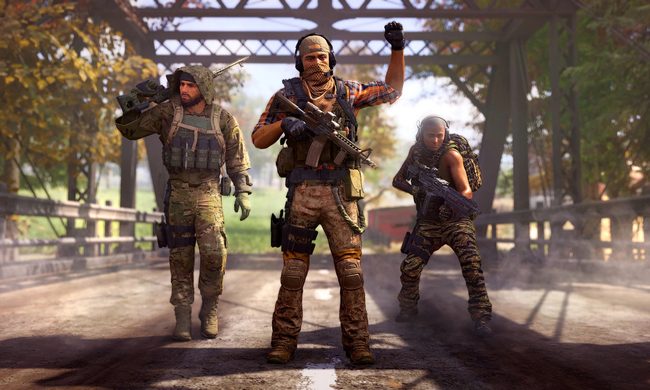
A three person squad stands on a bridge in Ghost Recon Frontline.

If you're a Ghost Recon fan, you've probably gotten used to one thing over the past few years: waiting for rumors to turn into announcements, waiting for leaks to be acknowledged, waiting for Ubisoft to say... well, anything at all about the future of one of its biggest tactical shooter franchises. Thankfully, that silence finally seems to be ending.

Ubisoft has confirmed that it will share Ghost Recon news on August 6, when the series celebrates its 25th anniversary. The announcement arrived shortly after fresh leaks began circulating online, prompting the company to post a brief message telling fans that more information is just around the corner.

Read more
The AI game-dev boom has a dark side: fewer jobs for the people starting out
Solo creators are thriving with tools like Claude Code and Copilot, but entry-level game roles are disappearing.
Man playing a video game on a desktop with glowing red and blue lights

AI is making it easier than ever for a single person to build a game. That sounds like a win for creativity, and in many ways, it absolutely is. But there is a catch. As generative AI tools help solo developers and small studios do more with fewer people, the same shift is making life tougher for writers, artists, concept creators, and junior programmers trying to break into the gaming industry.

AI is giving solo developers superpowers

Read more
ONEXPLAYER’s new handheld packs AMD Ryzen AI Max+ 388 and liquid cooling at an eye-watering price
The X2 Mini Pro is now available directly from the company with premium specs to match its premium cost.
ONEXPLAYER X2 Mini Pro Featured

Gaming handhelds have become more powerful every year, but they're also getting increasingly expensive. The new ONEXPLAYER X2 Mini Pro takes that trend to an entirely new level. Following its crowdfunding campaign, ONEXPLAYER has begun selling the X2 Mini Pro directly through its online store. The premium handheld starts at $2,499, while the fully loaded configuration with 64GB RAM, a 2TB SSD, and the optional Frost Bay liquid cooling system climbs to a staggering $3,229. Deliveries are expected to begin in August.

Desktop-class hardware in a handheld

Read more