1. Home
  2. Phones
  3. Apple
  4. Mobile
  5. News

Apple’s Tim Cook on FBI battle: ‘We will not shrink from this responsibility’

Add as a preferred source on Google

Apple kicked off its media event, where it’s expected to announce a slew of new devices, with the elephant in the room — its battle with the FBI.

“We know the iPhone is a deeply personal device,” CEO Tim Cook said to members of the media at Cupertino. “For many of us, iPhone is an extension of ourselves.”

Recommended Videos

The hearing is tomorrow, and revolves around a court order that demanded Apple to create a backdoor for the FBI, to access the iPhone of San Bernardnio shooter Syed Farook. Apple claims that doing so would harm the privacy of its customers, and would be an unreasonable “burden” for the iPhone maker.

Cook said people need to decide how much power the government will have “over our data, and over our privacy.” He said Apple didn’t expect to be in this position, “at odds with our government.”

“We owe it to our customers and we owe it to our country,” he said. “This is an issue that impacts all of us, and we will not shrink from this responsibility.” Cook received strong applause from his statements, before switching to Apple’s Lisa Jackson, who began talking about Apple’s environmental efforts.

Apple recently fired back at the Department of Justice’s brief, citing it as “reckless” and “uninformed.”

“The protections that the government now asks Apple to compromise are the most security-critical software component of the iPhone — any vulnerability or backdoor, whether introduced intentionally or unintentionally, can represent a risk to all users of Apple devices simultaneously,” Apple engineer Erik Neuenschwander said in the brief.

Even if the FBI wins the case, it may meet stiff resistance from Apple’s engineers — who have shown that they’re willing to resign, rather than having to break the encryption they designed in Apple’s software.

“It’s an independent culture and a rebellious one,” Jean-Louis Gassée, a former engineering manager at Apple, said to The New York Times. “If the government tries to compel testimony or action from these engineers, good luck with that.”

Julian Chokkattu
Former Mobile and Wearables Editor
Julian is the mobile and wearables editor at Digital Trends, covering smartphones, fitness trackers, smartwatches, and more…
OnePlus is gone, and Android phones just became more boring in the US
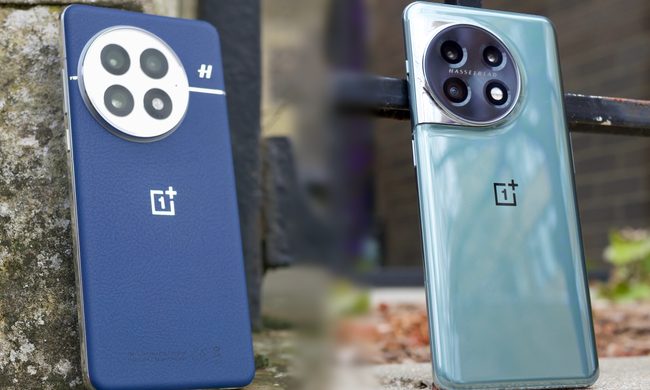
OnePlus 13 vs OnePlus 11.

I wasn't expecting a smartphone brand's exit to hit me this hard, but OnePlus leaving the US and Europe genuinely did. The company has already confirmed that it will no longer launch new products in either market, although existing customers will continue receiving software updates and after-sales support. So while OnePlus isn’t disappearing altogether, it is walking away from two of the biggest smartphone markets in the world.

To be honest, the Android market in the US already feels limited. If you’re shopping for a flagship, your realistic choices almost always begin with Samsung and end with Google. OnePlus was one of the very few brands sitting in between, offering something that didn’t quite look or feel like everything else. And that’s exactly what I’m going to miss.

Read more
A niche iPhone browser quietly fixes my biggest problem with Google Search
Quiche Browser open on iPhone

If there's a new browser, email app, or note-taking app to try, chances are I've already installed it. Like every other productivity nerd, I'm always chasing the perfect setup. That's how I stumbled upon Quiche Browser. It was already close to replacing the Arc Search for me on the iPhone, but its latest update finally pushed it over the edge, earning it a spot as my default browser.

What makes Quiche so good

Read more
Google has to play fair with AI rivals on Android, and that could be good news for your wallet
A new ruling strips Gemini of its exclusive access to deep Android integration, opening the door for cheaper AI models to offer similar functionality for less.
A person using Google Gemini on the Google Pixel 9a.

After forcing Google to open up Android to third-party app stores, the EU is back with a new target, and this time it's Gemini's home-field advantage. The European Commission ordered Google on July 16 to give rival AI apps the same deep access to Android that's currently exclusive to Gemini. The order falls under the EU's Digital Markets Act (DMA), and it directs Google to stop treating its own assistant as a first-class citizen on a platform it controls.

What Google now has to hand over

Read more