1. Home
  2. Cars
  3. News

Chevrolet cuts 4G LTE plan prices in half but still requires an active OnStar plan to qualify

Add as a preferred source on Google

As more automakers provide options for in-vehicle internet access, the pressure is on to provide connected car options at a reasonable price. Chevrolet was the first automaker to integrate 4G LTE connectivity into every one of its new vehicle models. As such, Chevrolet had the luxury of owning the market for connected cars and set rates and data limits accordingly.

However, with more automakers offering the service, pressure is on to provide 4G LTE coverage at a more reasonable price with higher data limits.

Recommended Videos

Chevrolet responded to market pressure in a big way, and made news with an announcement that it will cut prices for most in-vehicle 4G LTE data plans by half. The following plans were available immediately after the announcement:

1GB per month plan reduced to $10 a month; 4GB per month plan for $20 a month; 10GB per month plan reduced to $40 a month; 20GB plan at $150.

Chevrolet has received criticism that the data limits are small compared to what a user would need in a connected car. For example, a 90-minute video streamed on Netflix burns through between .45GB to 4.2GB of data, depending on resolution.

Even at the lowest resolution, watching two movies would use up a 1GB plan. Anyone who has kids knows that two movies a month would never be enough for to keep the little ones quiet and entertained while in a car.

Another catch not often mentioned is that car owners must pay for an OnStar plan in addition to their 4G LTE plan. OnStar plans range from $20 to $35 per month. Car owners should be sure to add that cost to whatever 4G LTE plan that they choose. Chevrolet does offer three months of free service to new car buyers.

While the concept of connected cars is an exciting one, many consumers find it less expensive to use their own hotspot for on the road connectivity. Cell phones with hotspots, or mobile Wi-Fi devices, often provide a much less costly alternative to paying for OnStar and 4G LTE plans.

Dave Palmer
Dave’s technology geek-fest began with the classic Commodore 64 computer, which started a lifelong passion for all things…
A new AI model wants self-driving cars to think before they swerve
Forget guessing games, this self-driving AI actually shows its work.
Self driving car

Self-driving cars have gotten pretty good at driving. The harder problem is teaching them to drive safely in situations nobody planned for. We have heard horror stories of self-driving cars, behaving erratically in emergency situations, often times delaying first responders from reaching the scene.

A team at Seoul National University, led by professor Jun Won Choi from the Department of Electrical and Computer Engineering, thinks they have cracked part of that puzzle with a new AI model called SafeDrive. The research was recently selected as a highlight paper at CVPR 2026, a distinction that goes only to roughly 3% of all submissions.

Read more
Your next car’s software update could become its biggest security risk
Your next car could receive updates like your smartphone. That's also becoming a cybersecurity nightmare.
OTA technology allows manufacturers to remotely deliver software updates.

Modern cars are no longer machines that stay the same after they leave the showroom. Increasingly, they're becoming software-defined vehicles that receive new features, bug fixes, and security patches wirelessly, much like smartphones. But while over-the-air (OTA) updates have made vehicle maintenance easier and cheaper, cybersecurity experts are warning that the same technology could also become one of the automotive industry's biggest security challenges.

Researchers and policymakers are now calling for stronger oversight as connected vehicles become increasingly dependent on remote software updates. Their concern isn't just about hackers stealing personal data. It's about someone potentially interfering with the operation of a moving vehicle.

Read more
This sleek Chinese EV pairs supercar styling with three AI brains
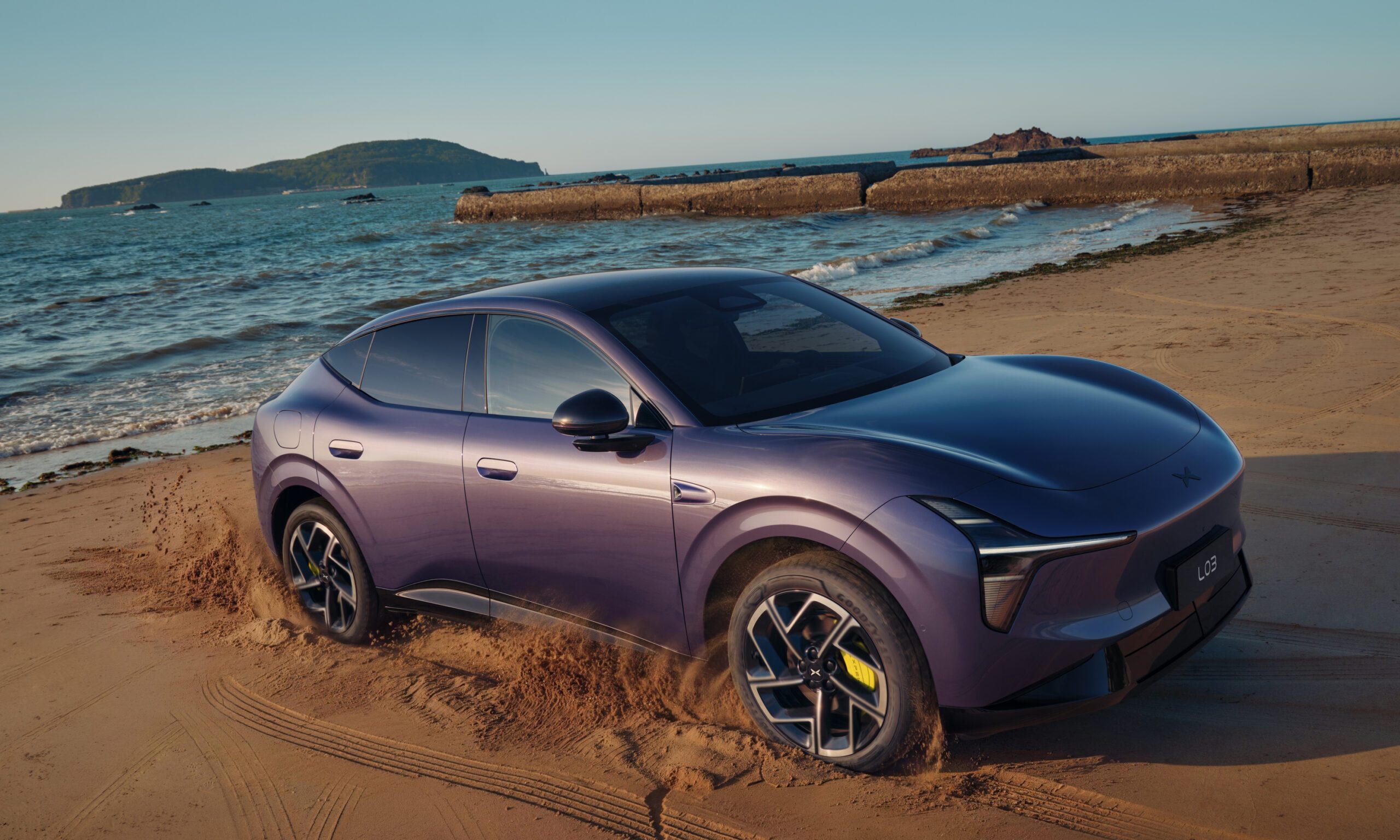
The Xpeng L03 is an AI supercomputer disguised as a stylish family SUV
Xpeng L03

Xpeng’s latest electric vehicle carries enough processing power to make the term "smart car" actually sound more realistic than it actually is. The new Xpeng L03 debuted simultaneously in Europe and China on July 16, with the company presenting it across 65 markets. Available as a fully electric vehicle and an L03 Power X range-extender, the coupe-SUV is Xpeng’s most internationally focused model so far. Market-specific prices and sales dates remain unannounced.

Three AI chips and Google Maps built right in

Read more