  1. Home
  2. Cars
  3. Emerging Tech
  4. News

California says self-driving cars need steering wheels, drivers at the ready

Add as a preferred source on Google

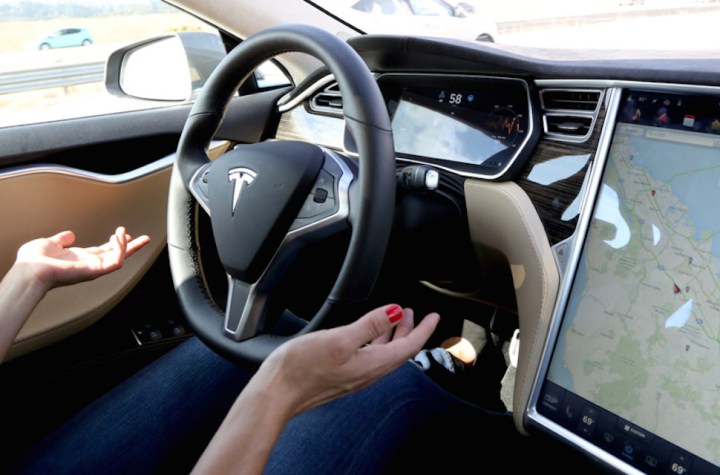
Under new draft rules proposed on Wednesday, California is set to mandate that any self-driving car must have a driver behind the wheel. The car will also need to have a steering wheel, and the driver must be ready to take control of the car if the system fails.

While it sounds almost obvious that even a autonomous vehicle would need these basic requirements, there are already companies working on prototypes without steering wheels, and daring individuals testing out these systems by sitting in the backseat while the car drives itself. This has the California Department of Motor Vehicles worried about potential misuse (or downright stupidity), so it is likely putting these rules forth in an attempt to protect both the car owners and others on the road.

Recommended Videos

California’s rules would be the first of their kind aimed directly at the consumer. Michigan, Nevada, and Texas already allow for the testing of these self-driving cars on their roads but none have provided any guidance on how consumer use of these technologies should be governed.

Under the new rules, initial permits for self-driving cars would be for three years, and the manufacturers would need to prove that their autonomous cars are safe. Consumers can lease the vehicles, however safety information must be collected and submitted to the state on a regular basis.

In addition, the lessee would be required to go through training on the vehicle’s operation provided by the manufacturer, and have a special certification added to their driver’s license. The rules are quite strict, and therefore likely to catch the ire of the manufacturer.

One potential question could be what happens to vehicles that don’t meet the state’s safety standards after the three-year period. Would these consumers be forced to give up their cars? That isn’t immediately clear, and is sure to be a point of contention from the manufacturers as they review the rules.

Google is one of those companies doing so, and had no immediate comment.

At least one consumer group is standing behind the DMV’s proposal. “Google may be in overdrive in its rush to develop robot cars, but the DMV has admirably served as traffic cop and proposed reasonable limits to protect public safety,” Consumer Watchdog Privacy Project director John Simpson said in a statement.

Public hearings are set to take place over the next two months to discuss the proposals, and the DMV says it expects final regulations to go into effect later in 2016.

Ed Oswald
For fifteen years, Ed has written about the latest and greatest in gadgets and technology trends. At Digital Trends, he's…
Google Maps on Android Auto will display speed and traffic alerts even with no destination set
The rollout is gradual, so not everyone will see it right away.
google-maps-android-auto

Android Auto is about to get a useful upgrade to its Google Maps experience. According to 9to5Google, Google has confirmed that the app will soon display your live speed, the posted speed limit, and traffic signals or stop signs, all without an active route selected. Since so much everyday driving happens on short or familiar trips where nobody bothers setting a destination, this update addresses a small but annoying limitation for Android Auto users.

What exactly is changing here?

Read more
Volkswagen Mission Efficiency sets three EV records, and the numbers are wild
Forget giant batteries for a moment. Volkswagen is showing how much range can come from simply wasting less energy.
Volkswagen Mission Efficiency Featured Charging Point

Volkswagen has built an electric car that makes the usual "how big is the battery?" conversation feel almost irrelevant. As announced in an official blog post, the Mission Efficiency is a near-production 2+2 electric prototype that has set three world records, including the lowest drag coefficient for a road-approved car and remarkably low energy consumption.

Three records, one seriously slippery Volkswagen

Read more
Hyundai delays its homegrown self-driving software by two years, calls in Nvidia to bridge the gap
Hyundai’s home-grown system is taking longer than expected, so Nvidia will handle the heavy lifting in the meantime.
Hyundai ioniq car

If you were waiting for your Hyundai car to get self-driving capabilities, you will have to wait for at least two more years. According to Reuters, Hyundai Motor Group's proprietary driver-assistance system won't launch until late 2029. Until then, the South Korean automaker is partnering with Nvidia to speed things up, and honestly, it says a lot about how hard building autonomous driving software really is.

What's coming before Hyundai's own software is ready?

Read more