Toyota recently announced the addition of three new crash test models representing children aged three, six, and ten to Version 4 of its Total Human Model for Safety software. With THUMS, injuries sustained by human bodies during vehicle crashes can be simulated and studied on computers. The new models will go on sale this fall.
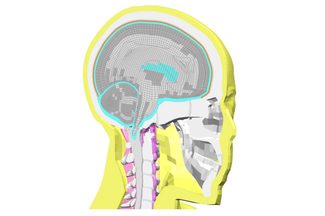 THUMS can predict the severity of damage to human bodies, making it popular for the advancement of safety devices such as airbags as well as the continued development of safety performance. NASCAR, for example, uses the software to devise regulations for seat shapes that reduce the likelihood of rib fractures during racing crashes.
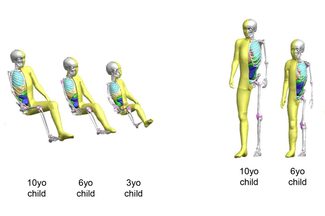 Toyota’s three new THUMS models were created with the average physiques of children in mind. They join the family that includes the large male, average-build male, and small female models that are already on the market. All the models will come in two versions — a passenger and a pedestrian.
THUMS Version 1 launched in 2000 and has seen steady improvements and refinements to the software. In 2003, Version 2 launched with the addition of faces and bone structure to the models. Version 3, released in 2008, added a brain simulation, and 2010’s Version 4 added detail to the brain model and also introduced properly situated and reactive internal organs. In 2015, Version 5 brought along simulated musculature, allowing the models to position themselves in a bracing manner, similar to what humans may do just before a crash.
The new child-spec models were created in collaboration with Wayne State University, the University of Michigan, and the Collaborative Safety Research Center.
THUMS can be purchased through the Tokyo-based JSOL Corporation and ESI Japan. The technology contributes to research at organizations all over the world, including automobile and parts manufacturers as well as universities.