
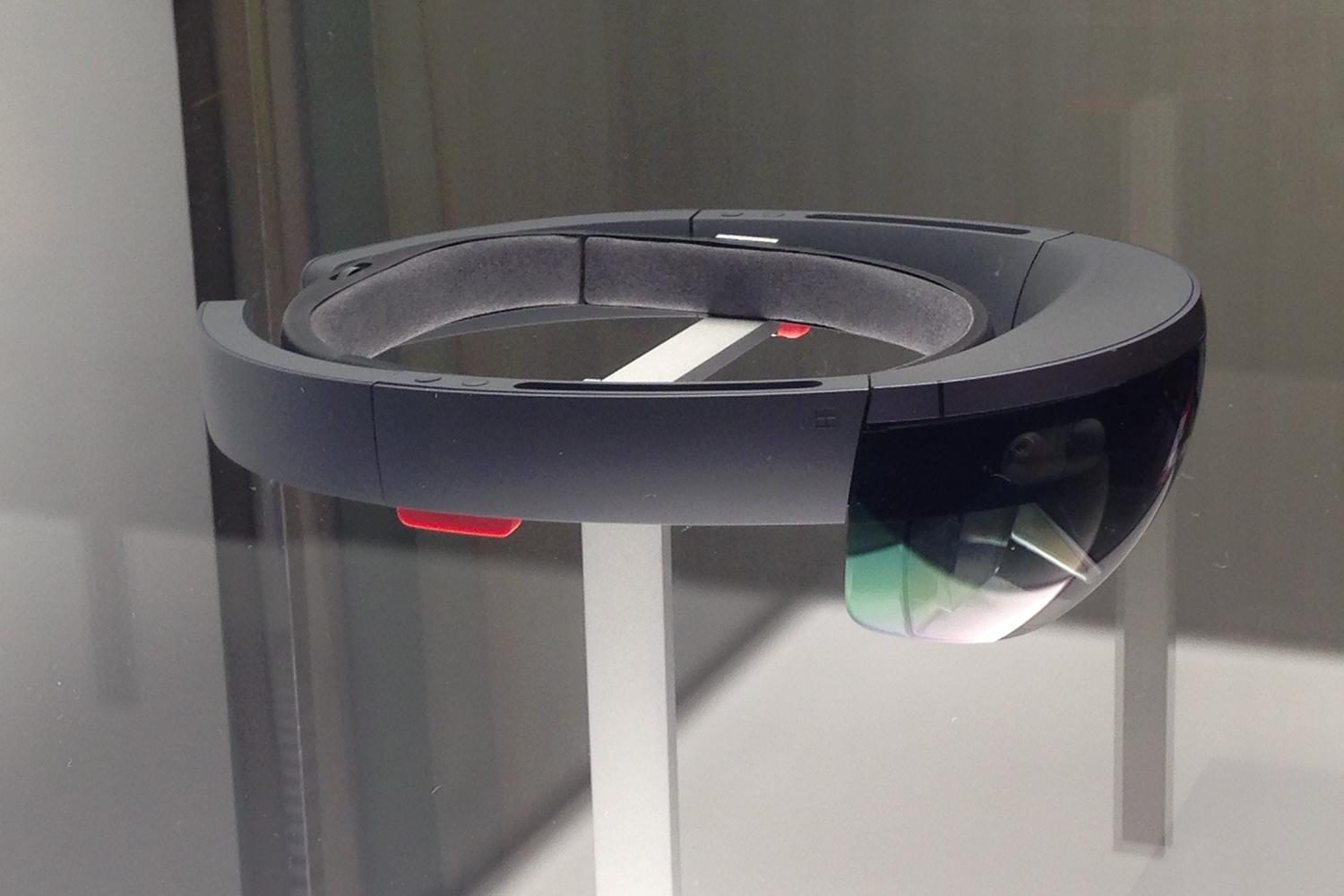
Microsoft has posted a cryptic teaser video for its next-generation HoloLens headset. Though not revealing much, the 42-second video was sent out by HoloLens inventor Alex Kipman on Twitter ahead of a planned press event at Mobile World Congress on February 24. It is believed that the video could be highlighting a new processor and carbon-fiber materials which could perhaps be found on board the new headset.
2.24.19 #MWC19 – are you excited? I know I am…https://t.co/nO8apOLrGB pic.twitter.com/JXENF2nzEq
— Alex Kipman (@akipman) February 11, 2019
The video is similar to Microsoft’s previous marketing for new Surface devices and includes animations of metal ice cubes melting and small optical fibers weaving together into one larger piece. It also ends with the simple “02 24 19” tagline, referring to the date of the press event.
Microsoft has previously confirmed that the next version of HoloLens would feature an A.I. processor for machine learning, so this teaser video is likely pointing to that capability in some way. Other rumors have also suggested that Hololens 2 could come with a Qualcomm ARM Processor on board, instead of an Intel processor. That would give the headset the functions of an Always-Connected PC, including all-day battery life, and LTE connectivity.
The next-generation HoloLens headset is currently code-named “Sydney,” and the rumors suggest it could be thinner, lighter, and come with a larger field of view. Importantly, it is also rumored to be cheaper than the current-generation HoloLens, which comes in at $3,000.
Microsoft’s Mobile World Congress Press conference is set for 11 a.m. ET on Sunday, February 24. The event will feature CEO Satya Nadella, HoloLens inventor Alex Kipman, and Corporate Vice President Julia White. This is the company’s first presence at the annual event in Barcelona, Spain in over four years.
A next-generation HoloLens headset also comes four years after the launch of the original HoloLens. That timing is just about right, as rumors have indicated that Microsoft is already working on the development of Windows Core OS, a modular version of Windows 10 which is believed to possibly be powering this headset. Microsoft is also thought to be working on folding Surface Centarus device as well as a modular Surface Studio, but those projects are not likely to be discussed or even revealed during Mobile World Congress and could come in the fall instead.


