  1. Home
  2. Computing
  3. News

Facebook unveils the Oculus Quest 2 VR headset

Add as a preferred source on Google

Facebook announced the new Oculus Quest 2 virtual reality headset during its Facebook Connect VR event on Wednesday.

The new fully wireless headset will release on October 13, with pre-orders beginning September 16. The Oculus Quest 2 Starts at $299.

Image used with permission by copyright holder

Some of the more impressive features in the new Oculus Quest include a higher resolution display with 50% more pixels at 1832 x 1920 pixels per eye. The display is a single LCD that allows for super high resolution and better visuals and is supports 90Hz. There are also improvements in the software: The Oculus Quest 2 has a Qualcomm Snapdragon XR2 platform with 6GB of memory, making it flexible to switch between all-in-one and PC VR gaming. 

Recommended Videos

On the outside, the Oculus Quest 2 is smaller and 10% lighter than the previous generation and with a soft strap and is fully wireless. There are also adjustable optics so you can fit the device to your needs. The new Touch controllers that come with the device will deliver a better feeling of hand presence by offering better ergonomics and longer battery life.

The Oculus Quest 2 has additional accessories you can purchase like the Fit Pack which has swappable facial interfaces to fit wider or narrower face shapes and the Elite Strap and Elite Strap with Battery that offers double the playtime.
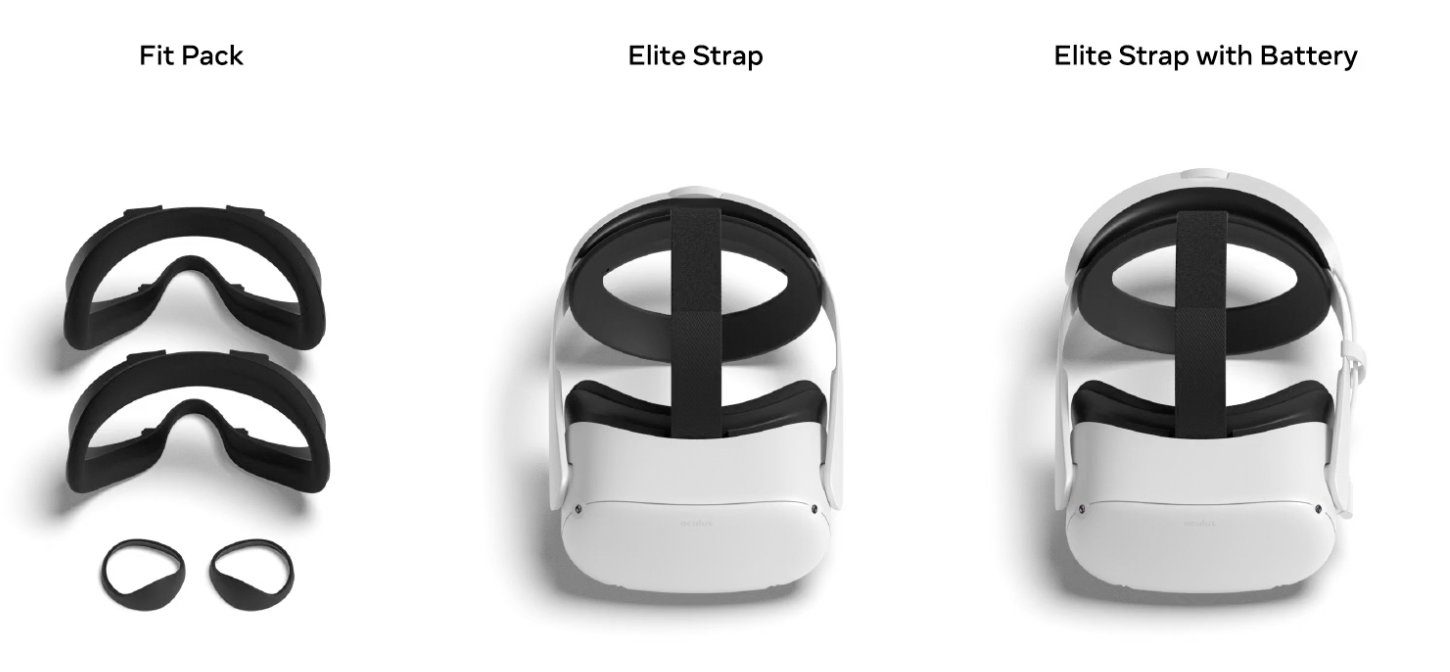
Image used with permission by copyright holder

Another new feature in the Oculus Quest 2 is a built-in system-level fitness tracker that can track how much exercise you’re getting while playing games on the Quest. An additional dashboard feature called Oculus Move will start being tested on both Quest devices later this year, which will let you set your VR fitness goals and let you track your movement and physical activity across different games and apps.

The headset replaced the old Quest, which was marked as discontinued earlier this year. Facebook CEO Mark Zuckerberg said during Wednesday’s event that people have spent more than $150 million on Quest content.

Allison Matyus
Former Digital Trends Contributor
Allison Matyus is a general news reporter at Digital Trends. She covers any and all tech news, including issues around social…
DigUp lets users find Mac files by describing them, not remembering their names
Can't remember where that screenshot, PDF or recording went? Just describe it and let AI do the digging.
DigUp App in Use screenshot

There's a particular kind of frustration that comes with knowing a file exists somewhere on a computer but having absolutely no idea what it's called. Was that screenshot saved as IMG_4837? Which PDF contained that clause? And where did that podcast recording mention the thing worth remembering? DigUp wants to end the filename guessing game, letting Mac users search for files by describing what they remember instead. The free, open-source app uses Google's EmbeddingGemma 2 to search across photos, documents, PDFs, audio recordings and videos, all without sending personal files to the cloud.

DigUp turns everyday descriptions into file searches

Read more
A new AI detector looks beyond words to check whether the ideas came from AI
This could help journals distinguish AI-written research from human work polished with AI.
ai-writing-book

Most AI detectors look for telltale signs of AI-generated text by examining word and sentence patterns. A new tool called IdeaLens takes a different route to solving this problem. It spots AI-generated research by looking at the ideas behind it instead of the wording itself (via TechXplore).

Researchers from the University of Maryland, Google DeepMind, and Simon Fraser University built IdeaLens to check whether a document's core arguments came from a human or a machine, regardless of who wrote the final draft.

Read more
Anthropic warns of imminent self-replicating AI that might even work off an oven or TV
Self-replicating AI could be merely months away, and tests show it can run on the devices sitting at your home.
Illustration of dangerous AI.

Over the past few weeks, nearly every AI lab has released frontier AI models. Earlier today, Google started rolling out Gemini 4, Argon, hot on the heels of Meta announcing its Muse Wonder frontier AI models to compete against the best from OpenAI and Anthropic's Claude. This relentless pace of AI model release comes at a time when the same AI labs are calling for development slowdown and increased regulation, following a series of concerning incidents where these AI models went rogue and broke into private, as well as government-owned, websites.

Now, Anthropic has dropped a chilling set of predictions about the capabilities of these AI models after running a series of tests. The company claims that small AI models could be merely a few months away from self-replicating and turning into a dangerous swarm. More importantly, they won't require a massive data center or an uber-powerful computer to do so. On the contrary, the lab claims that these self-replicating AI swarms will need something with as little computing power as an average Internet-connected device, like a smart oven or an Android TV box.

Read more