  1. Home
  2. Emerging Tech
  3. Smart Home
  4. News

Study shows Google Assistant is smarter than its rivals

Add as a preferred source on Google

For the second year in a row, digital marketing agency Stone Temple has found that Google Assistant is the smartest digital assistant on the market.

Stone Temple asked approximately 5,000 questions in an attempt to figure out which smart speaker made use of the most intelligent digital assistant and Google came out on top. The company asked the same questions of Amazon’s Alexa, Apple’s Siri, Microsoft’s Cortana, and Google’s Assistant. The questions for Assistant were asked with a Google Home device as well as a smartphone equipped with Assistant.

Recommended Videos

Google Assistant attempted to give the most responses and provided the most accurate of those responses. Stone Temple also noted that Google Assistant was more accurate on a smartphone than when used on Google Home. Cortana came in second place, followed by Alexa. Sadly for Apple, Siri fell behind the others in terms of attempted answers and accuracy.

While Google’s A.I. might be the smartest, it didn’t improve much upon last year’s showing. Alexa, on the other hand, saw strong improvement over last year’s results. Alexa’s attempted answers rose from 19.8 percent to 53 percent. Its accuracy did fall a bit from last year, but that isn’t necessarily a bad thing, considering it more than doubled its attempted answers.

Cortana was actually the only digital assistant which increased in accuracy over last year. In Stone Temple’s previous tests, Cortana received an accuracy score of 86 percent. That number rose to 92.1 percent in this year’s test.

“We are proud of our continued work on Cortana and we’re excited for what the future holds for continued growth, functionality, and availability across devices and platforms,” a Microsoft representative told CNET.

Another issue worth noting is that in order for Stone Temple to consider an answer 100 percent correct and complete, it must be answered “fully and directly.” It turns out there are several ways in which digital assistants can fall short.

A question could have multiple different answers, such as a query regarding the speed of a jaguar, which is both a car and an animal. In such cases, the assistant may have given a correct answer, but not necessarily the one Stone Temple was looking for. Other explanations include the assistant’s responding with a joke or choosing to answer a question it thinks is topically similar to what the user asked. There were cases where the assistant was simply wrong, but those were rare.

Aside from intelligence, there are plenty of other factors to consider when deciding on a smart speaker. If you need some help, check out our guide to the best smart speakers.

Eric Brackett
Former Digital Trends Contributor
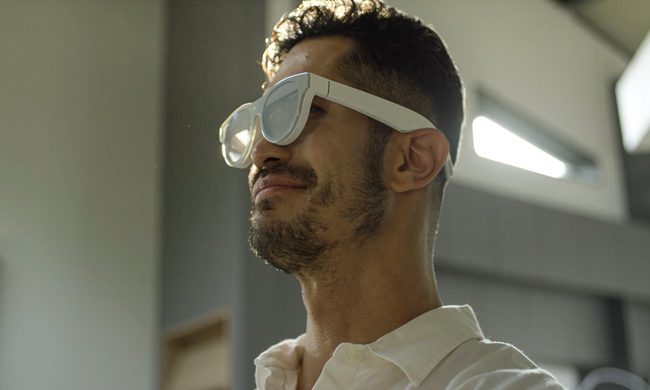
Your future AR glasses might finally stop making the real world look weird
Researchers have developed a new display technique that keeps virtual objects realistic without dimming the real world.
Samsung AR Glasses

One of the biggest promises of augmented reality is blending digital objects seamlessly into the real world. Ironically, today's AR glasses often make the real world harder to see. Researchers at the Shibaura Institute of Technology (SIT) in Japan, led by Assistant Professor Xiaodan Hu in collaboration with Dr. Yan Zhang and Professor Xubo Yang from Shanghai Jiao Tong University in China, and Professor Kiyoshi Kiyokawa from Japan's Nara Institute of Science and Technology, have developed a new AR display technique that aims to make virtual objects look realistic without reducing visibility of the real world. The study was published in IEEE Transactions on Visualization and Computer Graphics.

The biggest AR problem isn't virtual objects; it's everything around them

Read more
Anti-surveillance clothing is getting cheaper, but don’t expect an invisibility cloak
Affordable shirts now claim to confuse facial recognition, although their protection depends heavily on the camera and software watching you
Chart, Plot, Adult

Anti-surveillance clothing is starting to look less like an art-school experiment and more like something you could actually wear outside. Shirts designed to confuse facial recognition systems now cost about as much as ordinary streetwear, although buying one won’t make you disappear.

The Guardian reports that designers are using face-like prints, unusual cuts and infrared lights to interfere with computer vision. These techniques target specific weaknesses, so their success depends on what happens to be watching you.

Read more
This spinning drone hides in plain sight using a visual illusion
This drone doesn't turn invisible. It tricks your brain into thinking it has.
Phantom Twist

For decades, engineers have chased the dream of an invisible drone. The usual approaches have involved transparent materials, camouflage coatings, or complex optical systems that bend light around an object. Researchers at Northwestern University decided to take a completely different route. Instead of hiding the drone itself, they chose to fool the human eye.

The result is Phantom Twist, an experimental drone that spins so rapidly it almost disappears into the background. It's not technically invisible, but to anyone watching, it looks more like a faint blur than a flying machine.

Read more