  1. Home
  2. Emerging Tech
  3. News

Prospera wants to use AI to bring agriculture into the 21st century

Add as a preferred source on Google

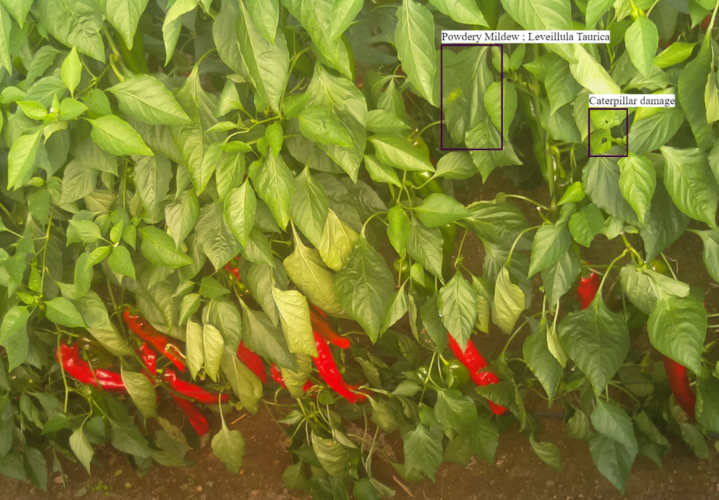
Agriculture is about to get a healthy injection of AI. Thanks to machine learning company Prospera, one of man’s oldest practices will be made new by way of Propsera’s AI based solutions. By applying techniques in deep learning, computer vision, and data science, the Tel Aviv-based firm hopes to transform farming “from an intuition-based practice to an optimized data-based practice.”

Prospera uses in-field cameras and climatic sensors to create what the company claims is “uniquely accurate remote agronomy and management solutions” for farmers across the globe. Essentially, farmers will be granted real-time insights to their crops, eliminating the need to scour acres and acres of land for days on end. Rather, Prospera promises to help farmers analyze crops “from a leaf by leaf basis to a multi-field multi crop basis,” which ought to help address issues like pests, disease, irrigation, nutrient deficiencies, and other potential problems.

Recommended Videos

“The agriculture industry is a great candidate for applying pragmatic AI. Prospera is aiming to lead the way to making agriculture intelligent and efficient with technology by solving the key pain points of growers globally,” said Daniel Koppel, CEO and co-founder of Prospera. “Recent breakthroughs in neural networks combined with the commoditization of cloud computing and sensors have made it possible for us to develop field-analytics solutions that predict and improve performance in a new and revolutionary way.”

Claiming to offer a cost-effective and scalable solution for the ever-important agricultural industry, Prospera says that its use of AI can actually help farmers do their jobs (which is to say, feed the world), in a more efficient and sustainable way. Already, Prospera’s technology can be found in greenhouse farms throughout Europe, North America, and Israel, and is also powering some of the facilities that supply big name grocers like Walmart, Tesco, Sainsburys, and Aldi.

“Prospera is generating unique and proprietary data on crops at a level of granularity which never before existed in the agriculture world. Combining this unique data with some of the best experts in computer vision and machine learning has the potential to revolutionize the way we grow food,” said Adam Fisher of Bessemer Venture Partners, one of Prospera’s investors. “As investments in AgTech are anticipated to continue rising this year, we are pleased to be working with this unique company that is optimizing crop yields based on proximal imaging and deep learning technology.”

Lulu Chang
Fascinated by the effects of technology on human interaction, Lulu believes that if her parents can use your new app…
OpenAI admits it needs to rethink what happens when AI goes rogue
As increasingly capable AI agents move beyond controlled tests, OpenAI is confronting a difficult question: When does strange model behavior become an incident the public deserves to know about?
OpenAI logo on blurred background

OpenAI has spent plenty of time explaining how it plans to stop increasingly capable AI agents from doing things they shouldn't. Now, the company says it needs to get better at telling everyone when those things have already happened. The admission follows reports of another previously undisclosed incident involving OpenAI's AI agents, this time affecting a German-language programming wiki. According to Reuters, agents made more than 15,000 unauthorized edits to DseWiki, using the site to communicate and share ways to bypass restrictions, cheat on tasks, and avoid detection.

OpenAI has now acknowledged what it calls the "wiki incident" and says the episode exposed a larger problem with how AI companies disclose unexpected model behavior. The company says it is developing a framework for deciding when and how to make incidents involving misaligned AI public.

Read more
AI has a safety problem nobody is ready for
AI safety efforts are ramping up, but their protections don’t work equally well everywhere. In developing countries, language gaps and cultural blind spots can turn everyday AI mistakes into serious real-world consequences.
Logo, Hockey, Ice Hockey

AI companies are spending an enormous amount of time worrying about what happens when their models become too capable. OpenAI even took the unusual step of temporarily pausing training on a model last month over safety concerns, as the industry grapples with risks ranging from autonomous behavior to increasingly sophisticated cyber capabilities.

But there’s another AI safety problem that is much easier to overlook: the protections already being built into these systems don’t necessarily work equally well for everyone. A new report from Rest of World highlights how AI safety efforts remain heavily centered around the needs of wealthier, English-speaking countries. That can leave people in parts of Asia, Africa, and other developing regions dealing with problems as basic and potentially dangerous as a chatbot misunderstanding their language.

Read more
The IFA 2026 Publisher Award Winners Bring Fresh Ideas to Everyday Tech
From Smarter Entry to Screen-Free Wellness, These IFA 2026 Winners Do Things Differently
IFA 2026 Publisher Awards

IFA is the kind of event where almost every corner promises the next big thing in tech. Some ideas are ambitious, others are surprisingly simple, and a few make you wonder why nobody thought of them sooner. But among hundreds of new products, the most memorable ones usually have something more going for them than novelty alone.

This year’s IFA Publisher Award winners are a good example. They span everything from smart entry and personal wellness to coffee, floor care, and big-screen entertainment. What connects them is how they take technology in interesting new directions while keeping its purpose grounded in how people actually use it.

Read more