
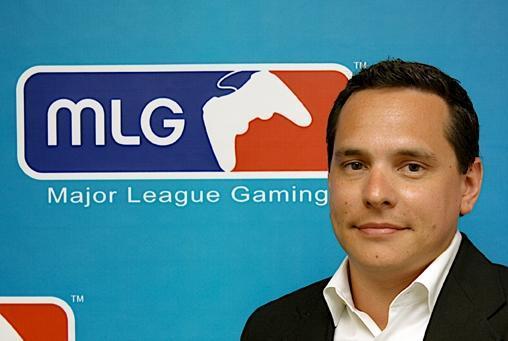
 The last time Digital Trends spoke with Major League Gaming co-founder and president Mike Sepso he said he wants MLG to be one of the top five sports in the U.S., but there’s a contradiction at work here. In another recent chat, Sepso said that he eventually wants the league to be more ESPN and less NFL. In other words, he wants MLG to broadcast, curate, host, and comment on the games, but have less day-to-day influence over the specifics of how they’re played – a less direct influence, anyway. There is still the question of how to ensure that the titles used for professional gaming are balanced for competition.
 As it stands, the league is working with developers like Treyarch on its Call of Duty games, Sony Online Entertainment on Planetside 2, and Warner Bros. Interactive on Infinite Crisis to make sure those games are in tip-top eSports shape by the time they launch. But one need look no further than League of Legends, by far the biggest draw at last month’s MLG 2013 Spring Championship, to see where Sepso wants MLG’s relationship with league games to eventually go. LoL developer Riot Games occasionally accepts MLG’s feedback, “really we don’t have to do much of anything with that game [to get it eSports-ready],” Sepso said. “The game is built for eSports.”
“The overarching kind of high-level goal is to eliminate as much chance as possible, so that the game is really one hundred percent skill”
“MLG is both of those things all the time, but to different degrees,” Sepso said. “But League of Legends … we’re really almost just ESPN at that point. And we’re moving kind of more and more toward that model because our publishing partners are kind of learning how to gear the games, out of the box, for eSports.”
That is an important change for the MLG. In the past, the league would spend huge amounts of time and effort whittling away weapons, maps, and game types that aren’t conducive to balanced, competitive play in various games. For example, the beloved Halo: Combat Evolved was a particularly egregious offender. “We spent most of our time banning weapons and maps in that game, which is not really what we want to do,” Sepso recalled, laughing. “You know, we’d rather be playing the game as it comes out of the box.” And as more of the league’s development and publishing partners realize that MLG’s core audience is important, those partners are making sure their games provide what competitive players want from the get-go.
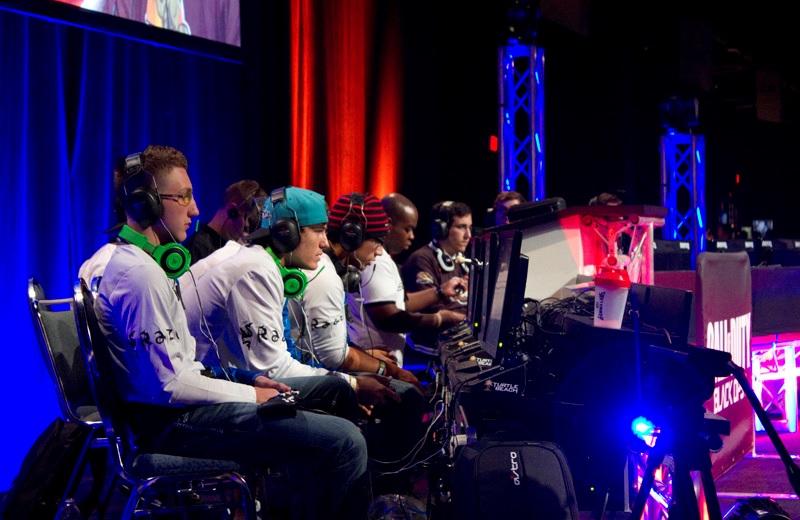 Currently MLG employs “rules teams” that, along with communities of pro players, curate league games and cull out anything that won’t work for competitive play. Some maps are too big, making them boring to watch; others give one team an unfair advantage; some weapons are just plain overpowered. Every map, weapon, and game mode in every league game is put through the ringer, and what comes out the other side is a lean eSports machine. “The overarching kind of high-level goal is to eliminate as much chance as possible, so that the game is really one hundred percent skill,” he explained. “Generally speaking it’s an easy consensus to get to.”
“What we’re trying to do is create a better kind of communication channel between our pro and amateur, highly competitive MLG community and our developer partners”
There’s a balance to strike, though, and he recognizes that CoD can’t be 100-percent competition-oriented like LoL is. “Obviously they need to cater to a much larger audience, so they have to have lots of different kind of game types and stuff, not just the MLG pro stuff, but everything that anybody would like to play,” Sepso said. “So we have to be understanding of that balance too, right? We can’t just expect Activision to shut out 90-percent of their audience and just do the pro stuff.”
But MLG does everything in its power to make sure that the games its player base wants to play are ready for competition out of the box—and that MLG doesn’t have to keep policing them after launch. That way they can focus on what the future holds. “What we’re trying to do is create a better kind of communication channel between our pro and amateur, highly competitive MLG community and our developer partners,” Sepso said. “And it allows us now to focus more on audience growth and making everything bigger, being a little bit more ESPN and a little bit less NFL.”


