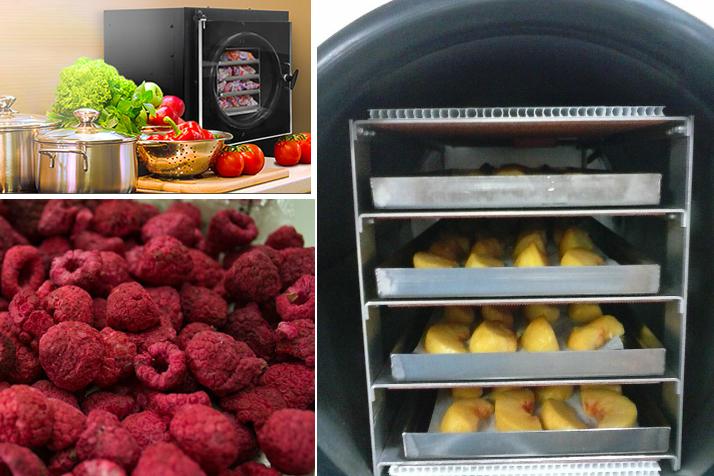
The answer is that Americans waste a lot of food — 35 million tons a year, according to the U.S. Environmental Protection Agency. Freeze drying food can make it last decades. UC-Davis food science professor Diane Barrett says freeze-drying is “one of the best ways to preserve food” because it retains nutrients so well, according to Mother Jones. Mountain House, a purveyor of freeze-dried cans of beef stew and wild rice pilaf, claims they’ve tested 30-year-old cans of their offerings and lived to tell the tale. Each can has 10 servings and retails for about $30, so it’s not a bad choice for a disaster preparedness kit. But a company called Harvest Right would prefer you make your own freeze-dried foods at home, without the additives that come along with the store-bought variety.
The In-Home Freezer Dryer preserves fruits, vegetables, herbs, casseroles, meat, desserts, just about anything. (Although one reviewer found that freeze drying butter was a bit of a disaster.)
The dryer works by first freezing the food to 40 degrees below zero, then creating a powerful vacuum. As the food warms a bit, the ice sublimates directly into a vapor, without ever transitioning to water. The berries or beef can either than be rehydrated with water for consumption or sealed in bags for the duration. The whole process takes around 24 hours and can handle about 10 pounds of food at a time. “In a year’s time, a user could easily preserve well over 400 gallons of food,” per Harvest Right’s press release.
The machine isn’t exactly apartment-friendly. At over 100 pounds, 30 inches tall, 20 inches wide, and 25 inches deep, it would take up a good deal of counter space. Based on a video of the machine freeze-drying pork chops (which, to be fair, the filmmaker says turn out pretty delicious), it’s not the quietest appliance we’ve seen.
The Freeze Dryer costs $3,899, so you have to be really dedicated to the freeze-dry movement to get back that initial investment. That’s a lot of astronaut ice cream.
Editors' Recommendations
- The 5 best smart food scales for home and travel in 2024
- How to set up HomeKit Secure Video on your devices
- Samsung Home Hub uses A.I. to make your home smarter
- How Dreametech makes cleaning your home more enjoyable than ever
- 5 ways geofencing makes your smart home smarter