
The battle of the phone screen specs is moving away from a focus on resolution and toward a focus on refresh rate, with OnePlus producing its highest-ever refresh rate display for its next device. OnePlus CEO Pete Lau spoke about the development to The Verge, confirming that the company’s next device would come with a 120Hz refresh rate screen and confidently predicting it will be “the best smartphone display in 2020.”
High refresh rate screens are popular among gamers, with displays of up to 240Hz being used primarily for playing PC games. A high refresh rate display updates its image more frequently than a standard 60Hz display, making movement on the screen look smoother. Some gamers find enemies and targets easier to track with this smoother motion, hence why high refresh rates are de rigueur among esports players.
The technology has been making its way over to phone displays in the last few years as well, especially on gaming-focused devices. Screens with 120Hz refresh rates are found on the Razer Phone 2 and the Asus ROG Phone 2, and OnePlus’s previous model, the OnePlus 7 Pro, comes with a 90Hz refresh rate screen, as does the Google Pixel 4.
As well as improving the appearance of games, having a high refresh rate screen on a phone also helps with navigating the UI, with the phones looking and feeling smoother and more responsive when scrolling.
As for information about the OnePlus device which will feature the new screen, the details are still vague. Presumably, the device will be the upcoming OnePlus 8, although this hasn’t been confirmed yet. We have seen leaked images and a possible video of a device that could be the OnePlus 8 Lite, though it seems likely that the high refresh rate screen will only be on the higher-end OnePlus 8 Pro, not the cheaper Lite version. There have been leaked diagrams purporting to show the OnePlus 8 Pro, featuring a hole-punch display with circular cutouts for the selfie sensor and a dual front-facing camera setup.
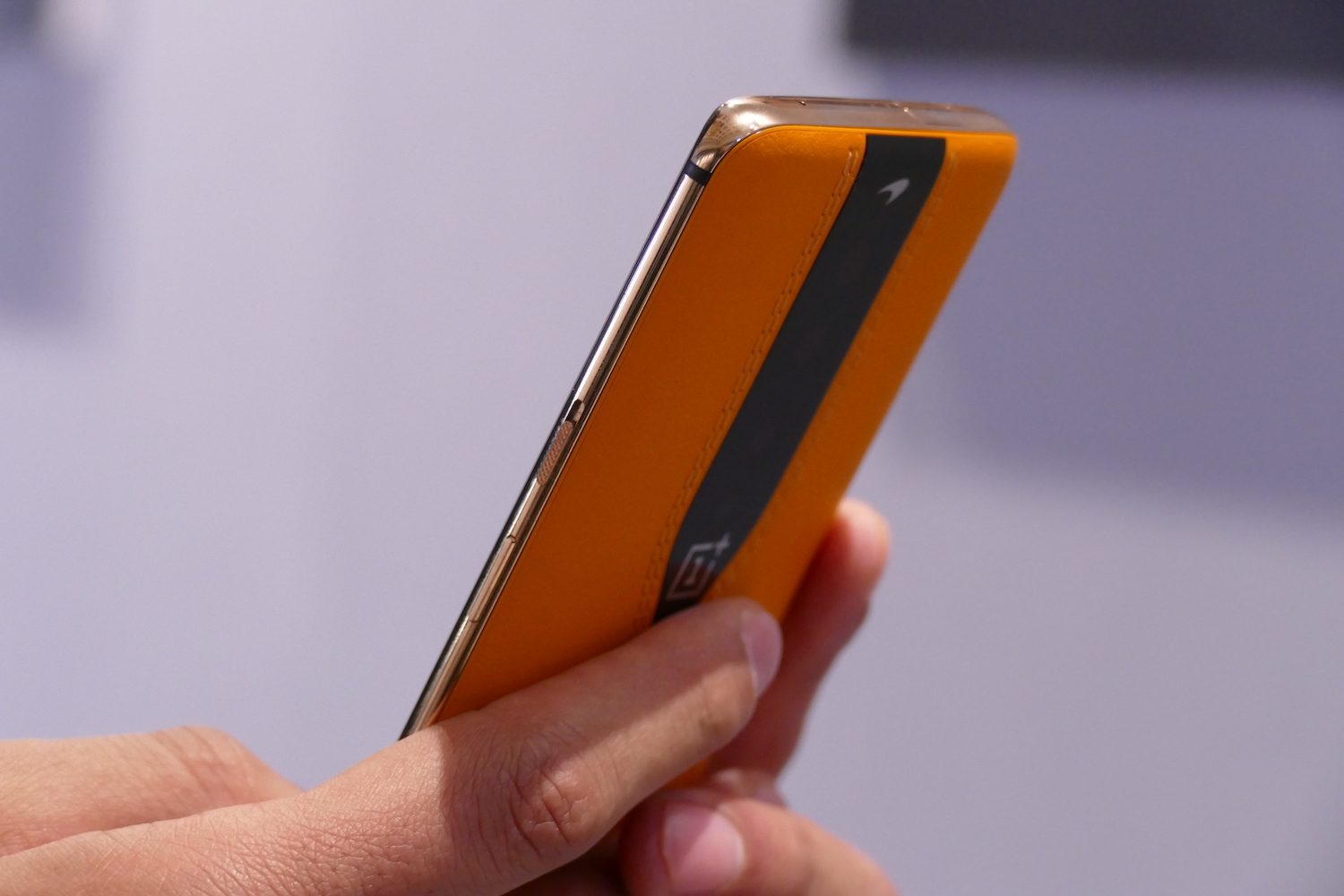
OnePlus also garnered attention at CES this year with its Concept One prototype device, shown above, which had the unique feature of disappearing cameras. The device uses electrochromic glass which can change from opaque to transparent based on the application of an electrical current, so it can hide its rear cameras when they are not in use. However, this feature isn’t expected to make its way to mainstream devices like the OnePlus 8 just yet.
The new OnePlus device with the high refresh rate screen is expected to launch in late May this year.



