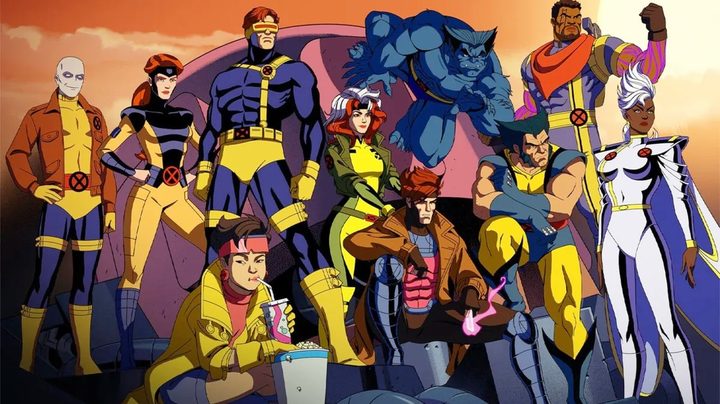
This spring, there have been three streaming series that have broken through the pop culture clutter and become “water cooler shows” — shows that are discussed obsessively across social media platforms like X and TikTok and, yes, even the last remaining water coolers left in offices across the world. The first two — Shōgun and Baby Reindeer — were mild surprises; after all, how many historical epics set in feudal Japan and shows about male sexual trauma have topped the Nielsen viewing charts?
But the third popular water cooler show of spring 2024 is perhaps the most surprising: X-Men ’97, a revival of a beloved 1990s animated series that had mixed-to-negative press before its premiere on March 20. What could the show be but yet another easy attempt to cash in on Gen-X nostalgia? The recently canceled reboot of Willow, plus the endless stream of increasingly mediocre live-action remakes of modern Disney animated classics like Aladdin and The Little Mermaid, set the bar pretty low, and with it, viewers’ expectations.
But like its namesake comics, X-Men ’97 proved to be, well, uncanny, amazing, and, yes, astonishing: a thoughtful, dynamic, complex, and fun take on a property that had aged pretty terribly over the decades. Its success, both with critics and with its increasingly engaged audience, signals not only a rare win for the beleaguered franchise but also points to a different, more thoughtful approach to the MCU. It also holds the promise that the chief architects behind Marvel’s massive cinematic universe have learned from their recent mistakes and have charted a new course for success with its next phases.
Why X-Men ’97 works (and why recent MCU movies haven’t)
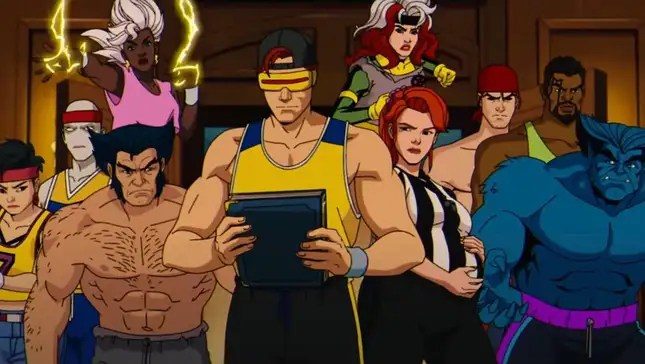
It’s not a shocking statement to claim that reboots are often lazy and not vey good, but X-Men ’97 works because it recognizes the appeal of the original show, X-Men: The Animated Series, and updated it with a modern storytelling sensibility. When it debuted in 1992, X-Men: The Animated Series became an instant hit with children and some adult comic fans because it synthesized 30 years of story into one easily digestible package. Furthermore, the visuals were bright and colorful, the voice acting distinctive and soulful (let’s all give a shout out to Alison Sealy-Smith and Lenore Zahn, who provided the voice and soul to Storm and Rogue, respectively), and the then-current costumes and looks created by Jim Lee and Marc Silvestri in the comics were popular enough to win over the devoted and the neophytes alike.
Sounds simple, right? But it’s trickier than you might think, especially with a property like this one, which has its legion of fans who have rose-colored memories of the show that defined their youth. A recent re-watch reminded me that X-Men: The Animated Series, while still effective and intermittently entertaining, was also hopelessly outdated: the animation was janky, especially in the later seasons, some storylines were smashed together with no rhyme or reason, and some of the characterizations, particularly Jean Grey’s, were borderline offensive.
X-Men ’97 corrects those mistakes while still honoring what made its parent series so powerful to a generation of viewers. Jean isn’t a whiny female caricature who constantly faints when she’s overwhelmed; instead, she’s strong when she needs to be, and introspective when the plot allows her to be. Ditto for Storm and Rogue; in the first five episodes alone, these three characters display more depth than all of The Marvels, which forced its female hero triptych down audiences’ throats with barely-there characterizations and weak attempts at bonding.
In X-Men ’97, there’s a genuine sense of family shared between not just these characters but the entire X-Men squad, and that’s crucial to the appeal of the entire X-franchise. It’s not just about one hero, or two, or three; instead, it’s about dozens, and sometimes even hundreds, of characters that have unique powers and, more importantly, different personalities.
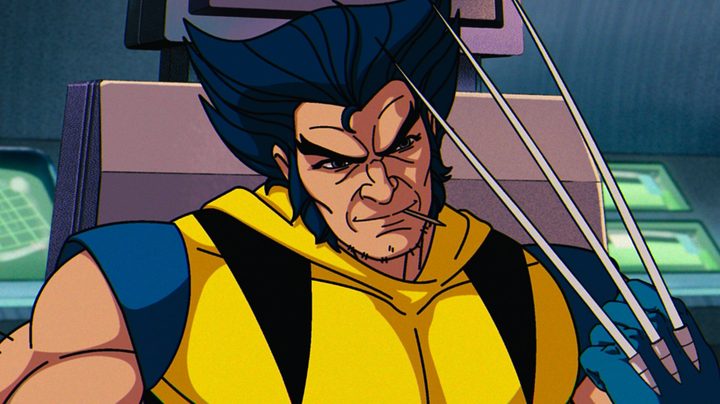
And unlike the Fox X-Men movies, and many animated adaptions since, Wolverine isn’t the lead character in X-Men ’97 (he’s barely in it). There is no lead in the X-Men, save for the concept of Xavier’s dream and the notion of a found family sticking together when the odds are stacked against them. For Marvel to recognize this now, after decades of mishandling from other studios, is a blessing and a promise; it suggests the studio knows how to use the basic appeal of X-Men and apply it for a modern audience.
X-Men ’97 takes big swings … and succeeds
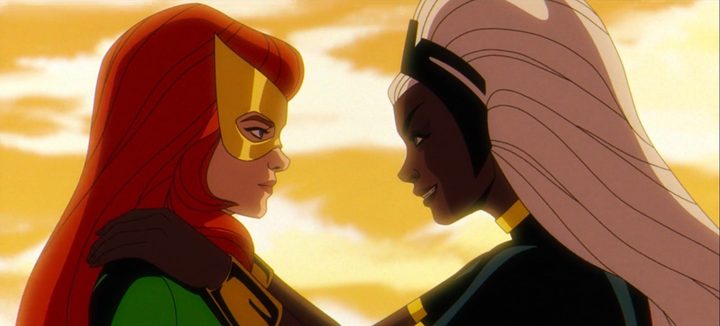
Another aspect of X-Men ’97 I think is crucial to understanding why it’s so successful, and how great Marvel is at handling the property right now, is its willingness to take big, risky narrative swings. In just its second episode, the show de-powered one if its most popular characters, Storm, and sidelined her until the season-ending story arc. The third episode weaved together increasingly complex storylines from the past like Inferno and Cable’s origin to create a genuinely touching 25 minutes addressing themes of motherhood, parental sacrifice, and split personalities.
Last, but certainly not least, the fifth episode dropped a nuclear bomb on its own show in the form of an Omega Sentinel, a massive robot that slaughtered countless mutants, including wide-eyed innocent Leech, major X-villain Sebastian Shaw, and, perhaps most surprisingly and devastatingly of all, fan-favorite Gambit, who shuffled off this mortal coil protecting the woman he loved.
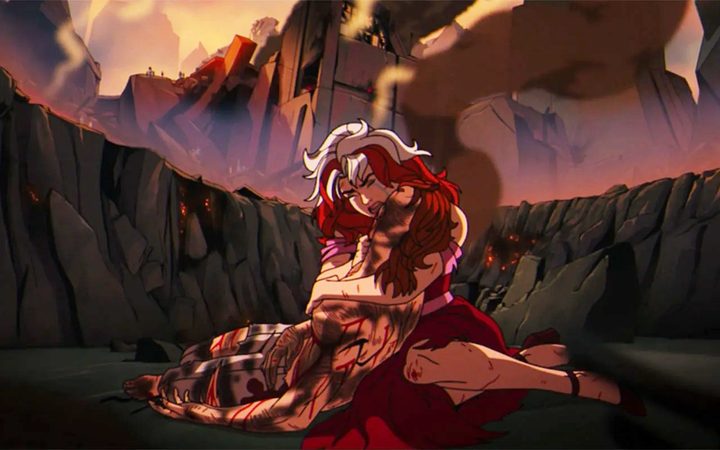
X-Men ’97 didn’t have to go that hard, but it did, and that’s why it was so effective. Its breakneck pacing and refusal to really slow down kept you tuned in to see what would happen next. The bulk of the credit goes to the show’s creator and head writer, Beau DeMayo, and his supervising director, Jake Castorena, both of whom knew intuitively that to make people care about these characters, and the show itself, is to break their hearts. After that fifth episode, titled Remember It, fans flocked to social media to register their surprise and trauma. The show went there; it pulled no punches, and if Gambit can be killed off, no one was safe, not even a Cajun himbo with a penchant for hot-pink crop tops.

This is exactly what the MCU needs to reinvigorate its flagging multiverse: big creative risks that make sense. That’s why Avengers: Endgame worked so well. What could’ve been a mess of a movie, filled with endless cameos and dangling plot threads from nearly two-dozen movies, was instead a cohesive movie that produced a genuine cultural moment, and a fitting end to the Infinity Saga.
Iron Man died a heroic death, the promise of Captain Marvel as a deus ex machina was fulfilled, and Black Widow and Steve Rogers both had their storylines come to a logical end. It also set up intriguing new storylines, from Scarlet Witch’s search for meaning after her devastating loss to Thor’s quest for a new home, that hinted at the next phase in Marvel’s evolution.
What this means for the MCU moving forward
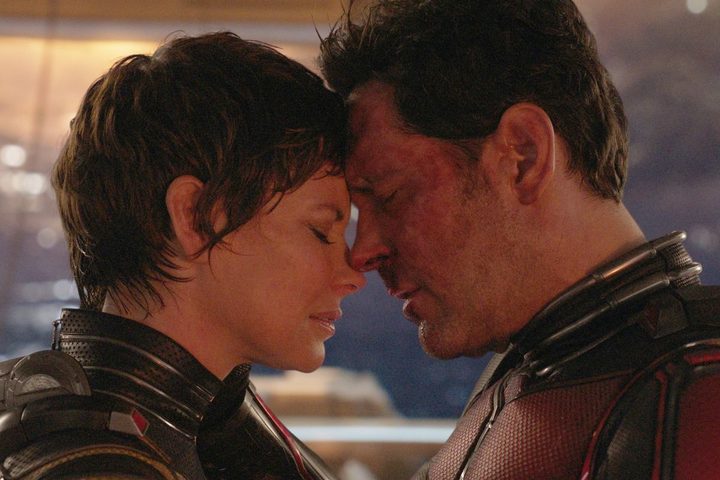
Of course, we all know now how well that went. For every success like WandaVision, which remains the best thing Marvel made for Disney+, there were a lot of disappointments, like Thor: Love and Thunder and Secret Invasion. Even the successes like Black Panther: Wakanda Forever and Guardians of the Galaxy Vol. 3 were bittersweet, as they felt like endings or wakes to past glories. Too much time and energy was devoted to forcing characters (Ironheart, Agatha Harkness) and storylines (Kang taking over the multiverse) nobody really wanted. The result was a disastrous 2023, with Ant-Man and the Wasp: Quantumania exhausting even the most die-hard Marvel fan, and The Marvels being outright rejected by pretty much everyone, becoming the biggest box office bomb in Disney’s history.
Even though it’s not directly tied to the MCU, X-Men ’97 shows the new creative direction Marvel is taking that is eschewing reliving past triumphs and building new franchises that showcase what makes them so appealing in the first place. For the X-Men, it’s embracing its insane soap opera storylines with open arms and juggling a stacked roster of characters that are all connected by a clear and common goal: the fight for mutants to be accepted by humanity that fears or loathes them. X-Men ’97 immerses you into a world filled with intrigue and danger, where you can meet a friend one minute and battle a foe the next, and it’s not content to play it safe.
That’s exactly why the X-Men comics were so popular from the ’70s and ’80s to the present, especially when Chris Claremont was steering the ship. Beloved characters can and will die, new ones will be introduced to take their own place in the homo superior pantheon, and the main narrative will take some turns you won’t see coming.
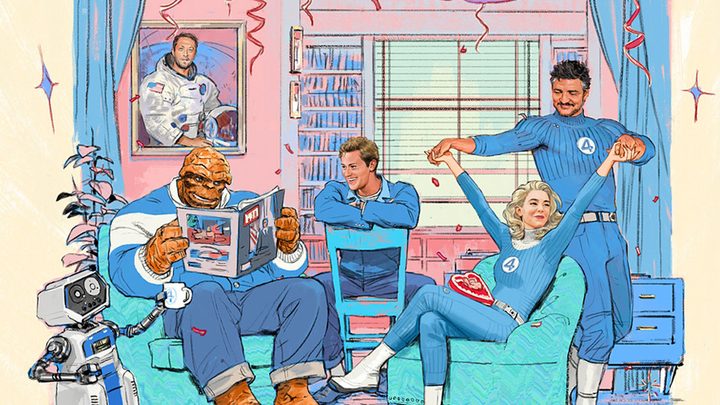
You can tell Marvel is also applying this strategy to another key property that Disney acquired from 20th Century Fox: the Fantastic Four. It hasn’t started filming yet, but its satisfying creative decisions, from Vanessa Kirby’s comic-accurate casting as Sue Storm to the outside-the-box inclusion of Ralph Ineson, John Malkovich, and Paul Walter Hauser as, respectively, Galactus and (maybe?) Puppet Master and Mole Man are signs Marvel knows what works for the FF: out-there ’60s silliness and Kennedy-era sci-fi.
Even the promo image they used to introduce its main case was charming retro, and indicative of a new approach by the studio, one that fully embraced the innocent appeal of the next big property it was setting up.
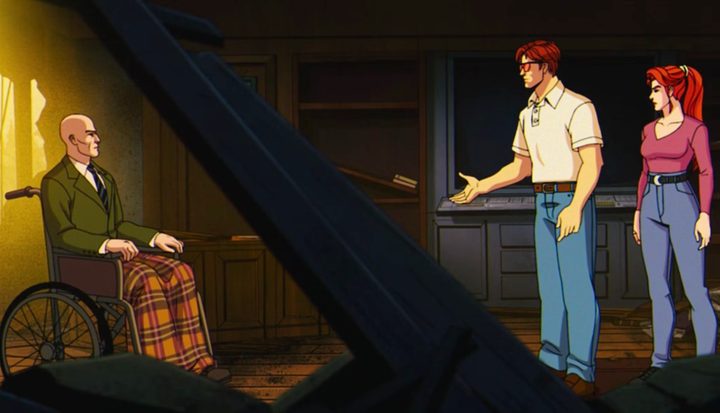
X-Men ’97 is already one of Disney+’s most-watched shows this year, and its stature will continue to grow as more people discover it. By itself, the show is an impressive achievement, utilizing the animated form to deliver something both familiar and new. But its ultimate importance perhaps lies in what it’s pointing to: a revitalized MCU that is set to deliver what fans want, rather than what the studio thinks they need. Only time will tell if X-Men ’97 truly is a harbinger of better things to come, or an isolated blip on otherwise unenthusiastic slate full of sequels and spinoffs no one really wants.
You can stream all 10 episodes of X-Men ’97 season 1 now on Disney+.