1. Home
  2. Phones
  3. Android
  4. Mobile
  5. News

Digital Trends may earn a commission when you buy through links on our site. Why trust us?

Oppo details supersmooth optical zoom and new camera sensor for future phones

Add as a preferred source on Google

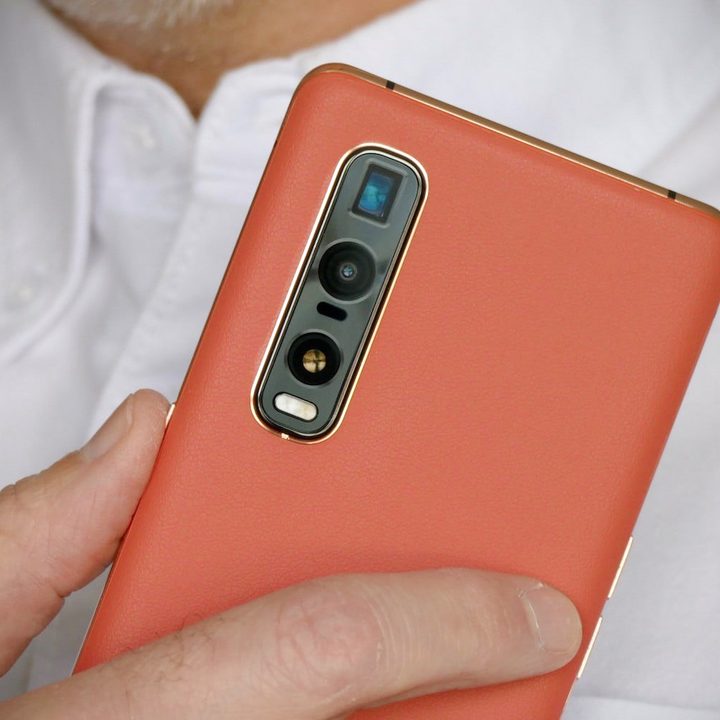
Oppo has detailed exciting new camera technology it’s working on at the moment, and some of it may hit phones we can buy before the end of the year. There are three main new developments, with the first focused on a new Red, Green, Blue, White (RGBW) camera sensor. The others concern an optical zoom telephoto camera and image stabilization technology.

The RGBW sensor promises to deliver photos with better color performance and accuracy, as well as improved lowlight ability. The sensor uses a red, green, blue, and white filter, unlike the more common red, green, green, and blue (RGGB) sensors on most other smartphones, along with 4-in-1 pixel technology to let in 60% more light. It reduces image noise by 35%, and Oppo also says the sensor will show more realistic skin tones.
Andy Boxall/Digital Trends

Oppo’s announcement of an RGBW sensor is not a first. Sony experimented with RGBW sensors in 2012, while Huawei introduced an RGBW sensor on the Huawei P8 in 2015. Camera companies have used the tech before, too. Vivo, part of the BBK Electronics empire, just like Oppo, announced it was working on an RGBW camera sensor in 2020, and indicated it would arrive on a phone during the second half of this year. Oppo says phones with its RGBW camera sensor will be released during the final three months of 2021.

Recommended Videos

This is joined by a new optical zoom telephoto camera, which Oppo says provides a “continuous supersmooth” zoom without any jumping. Most importantly, it avoids white balance and color accuracy issues. It uses a new motor, an ultrathin lens made of glass and plastic, and a new sensor that helps the module move smoothly. The sensor is referred to as having an 85-200mm focal length, which indicates an up to 4x optical zoom. Oppo has not said when this technology will arrive on a new phone.

This wide-ranging camera tech upgrade is completed with a new five-axis Optical Image Stabilization (OIS) system. Interestingly, Vivo introduced a so-called five-axis stability system on the Vivo X50’s gimbal-equipped camera. If Oppo’s works in a similar or better way, it’ll be good news, as the Vivo system works really well. It will arrive on Oppo phones at the start of 2022. News of these upgrades follows the recent announcement of a new version of its Under Display Camera.

Andy Boxall
Andy has written about mobile technology for almost a decade. From 2G to 5G and smartphone to smartwatch, Andy knows tech.
Google just made switching from iPhone to Android much easier with Android 17
Android 17 can now transfer your passwords, passkeys, eSIM, and even your home screen.
Android-17-switch-ios-to-android

Moving from an iPhone to an Android phone has never been an easy process, but Google is trying to change that. With Android 17, the company has introduced a rebuilt Android Switch that can move far more of your data than any past version ever could.

Google worked with Apple to create the new transfer system from the ground up, allowing far more information to move wirelessly than before. The upgraded experience is already rolling out to eligible Pixel devices and is also available on Samsung's new Galaxy Z Fold 8 and Galaxy Z Flip 8 through Smart Switch.

Read more
WhatsApp’s new in-car experience is built around hands-free control
CarPlay and Android Auto users can now hear and reply to messages, view call history, and reach favorite contacts without touching their phone.
WhatsApp new CarPlay experience featured

Meta is overhauling how WhatsApp works in the car, giving CarPlay and Android Auto users a lot more to do than just sending texts and making calls. The company announced the change in a newsroom post today, alongside several other updates rolling out to the messaging app.

WhatsApp finally works hands-free in the car

Read more
I tried the Samsung Galaxy Z Fold 8 and I am totally in love with this unique foldable
Samsung's Galaxy Z Fold 8 trades bulk for a genuinely pocketable design, and after holding one next to an iPhone 17 Pro, I'm convinced it's the foldable to beat this year.
Symbol, Electronics, Mobile Phone

Samsung is trying to jazz things up once again in the foldable space, and the mantra this time around is going smaller and lighter. The result of those efforts is the Galaxy Z Fold 8, and it’s the first time in years that I vocally said “wow” the moment I picked it up. It’s pocketable, light, sleek, and most importantly, oozes functional charm. 

Just take a look at how petite it is when held alongside a modern-age iPhone. In an age when smartphones are getting thicker and bulkier, the Galaxy Z Fold 8 wants to stand out in a rather unique fashion. Even in the unfolded state, it’s less than a millimeter thicker than an iPhone 17 Pro (9.7 vs 8.75 mm). If you compare the weight, the comparison flips in its favor. The Galaxy Z Fold 8 is lighter than even the smaller iPhone 17 Pro (201 grams vs 204 grams).

Read more