1. Home
  2. Space
  3. News

Apple co-founder Steve Wozniak reveals mysterious space venture

Add as a preferred source on Google

Apple co-founder Steve Wozniak is up to something. But we don’t really know what, as he’s not quite ready to reveal all.

The 71-year-old tech guy recently tweeted: “A private space company is starting up, unlike the others.” The mysterious post included an equally mysterious video that promised much but gave little away.

Privateer Space

Featuring a collection of what looks like stock footage clips and a stirring soundtrack, the earnest narrator says: “Together, we’ll go far. We’ll look out for one another, solve problems together. This isn’t a race. It isn’t a competition or a game. We are not one person, one company, one nation. We are one planet.”

Recommended Videos

Starting to sound like an ad that Apple might have dropped in decades past, the narrator warms to his theme: “We are explorers. We are dreamers, risk takers, engineers, and stargazers. We are human, and it’s up to us to work together to do what is right and what is good. So here’s to taking care of what we have so the next generation can be better together.”

The video ends with the tagline: “The sky is no longer the limit.”

Privateer Space, as the new company is called, is the brainchild of Wozniak and longtime friend/collaborator Alex Fielding of robotic digitization company Ripcord. Fielding also happens to be a former Apple engineer.

The blurb accompanying the video says Privateer Space is “working to keep space safe and accessible to all humankind,” leading some to speculate that the new venture may be geared toward cleaning up all that troublesome space junk currently orbiting Earth. We certainly can’t see it being another space tourism service along the lines of Virgin Galactic and Blue Origin.

So when will the pair spill the beans? Well, the big reveal looks set to come at the AMOS Tech 2021 conference, which runs from September 14 through 17 in Maui, Hawaii. We’ll be sure to update once we know more.

Trevor Mogg
Contributing Editor
Not so many moons ago, Trevor moved from one tea-loving island nation that drives on the left (Britain) to another (Japan)…
SpaceX Starship reaches orbit for the first time but its historic flight ends early
Starship reaches orbit for the first time and deploys 26 Starlink satellites before an early splashdown.
spacex-starship

After 13 suborbital test flights and more than $15 billion in development costs, SpaceX's Starship has finally reached orbit. The 407-foot megarocket, the most powerful ever built, lifted off from Starbase, Texas, on Monday and delivered its first real payload on it's 14th attempt. The celebration came with an asterisk, though, since SpaceX had to cut the planned 10-hour mission to roughly three hours.

https://twitter.com/SpaceX/status/2104601695711904180

Read more
Starship is finally going orbital, and SpaceX has picked September 22
Flight 14 is aiming for orbit, Starlink V3 deployment and a very long day in space.
Starship rocket.

SpaceX is finally ready to give Starship its biggest test yet. The company says the massive rocket's 14th test flight is scheduled for September 22, when it will attempt to put the upper stage into Earth orbit for the first time. The launch is currently pending regulatory approval, with a 75-minute window opening at 7:15 a.m. CT.

Starship has 26 Starlink satellites to deliver

Read more
Want a city on the Moon? Scientists say there’s not enough water
A billion tons still comes up short
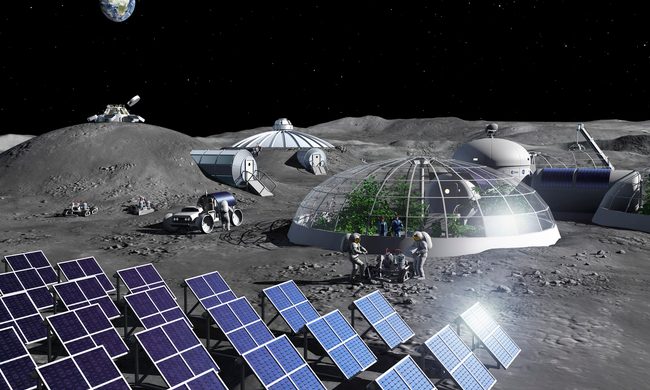
Artist impression of activities in a Moon Base.

For decades, humanity has looked up at the Moon and wondered what it would be like to live on it. Think sprawling cities, factories, research centers, and permanent human settlements. Unfortunately, there is one fairly fundamental problem with that vision.

A new study published in Frontiers in Space Technologies argues that even the Moon's potentially enormous reserves of frozen water may be nowhere near enough to support city-sized populations sustainably. Researchers Martin Elvis and Jonathan McDowell estimate that the permanently shadowed regions near the lunar poles could contain roughly one billion tons of water. It sounds like an extraordinary amount until you put a million thirsty humans next to it.

Read more