1. Home
  2. Space
  3. News

How to watch the SpaceX resupply mission to the ISS today

Add as a preferred source on Google
NASA Live: Official Stream of NASA TV

This week, a SpaceX Cargo Dragon will be launched on a resupply mission to the International Space Station (ISS). This uncrewed ship will be packed full of supplies and experiments as part of the 22nd resupply mission by SpaceX.

Recommended Videos

NASA will livestream the launch of the Cargo Dragon, and we’ve got the details on how you can watch it live.

What the resupply mission involves
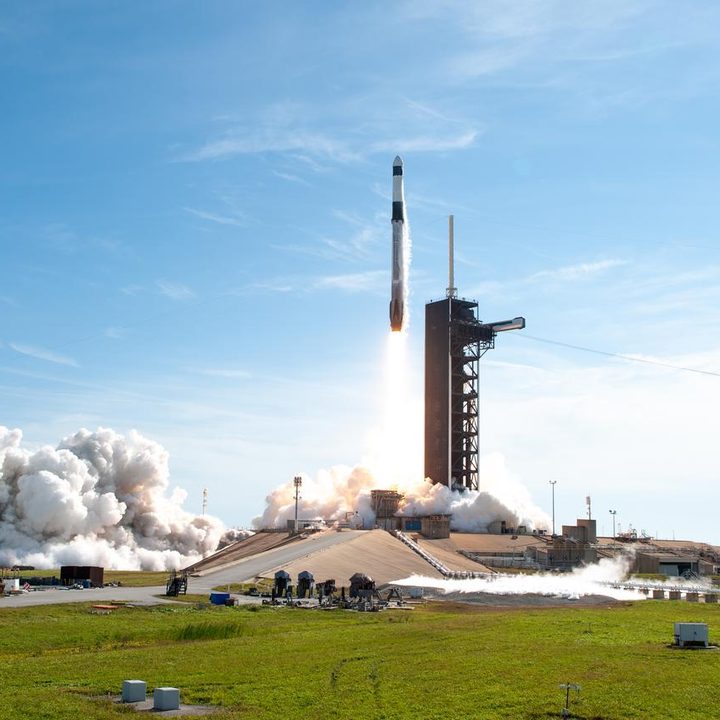
A SpaceX Falcon 9 rocket lifts off from Launch Complex 39A at Kennedy Space Center in Florida at 11:17 a.m. EST on Dec. 6, 2020, carrying the uncrewed cargo Dragon spacecraft on its journey to the International Space Station for NASA and SpaceX’s 21st Commercial Resupply Services (CRS-21) mission. Dragon will deliver more than 6,400 pounds of science investigations and cargo to the orbiting laboratory. The mission marks the first launch for SpaceX under NASA’s CRS-2 contract.
A SpaceX Falcon 9 rocket lifts off from Launch Complex 39A at Kennedy Space Center in Florida at 11:17 a.m. EST on Dec. 6, 2020, carrying the uncrewed cargo Dragon spacecraft on its journey to the International Space Station for NASA and SpaceX’s 21st Commercial Resupply Services (CRS-21) mission. Dragon will deliver more than 6,400 pounds of science investigations and cargo to the orbiting laboratory. The mission marks the first launch for SpaceX under NASA’s CRS-2 contract. NASA/Tony Gray and Kenny Allen

NASA regularly sends up uncrewed cargo ships to the ISS, carrying supplies for the crew as well as new scientific experiments for them to work on. Among the experiments included in this launch will be an experiment into how kidney health is affected by space travel and how better treatments can be developed for kidney conditions both in space and on Earth, and experiments involving some unusual animal species like water bears and bobtail squids.

The Cargo Dragon will be launched on a Falcon 9 rocket from Launch Complex 39A at NASA’s Kennedy Space Center in Florida. The launch is scheduled for Thursday, June 3, and the ship will travel to the ISS over Friday, set to arrive at the station early on Saturday morning.

How to watch the launch

The launch of the Cargo Dragon will be streamed lived by NASA. You can watch using either the video embedded at the top of this page, or by going to NASA’s website. Coverage begins at 12:30 p.m. ET (9:30 a.m. PT) on Thursday, June 3, with views of the launch pad at Kennedy Space Center.

The full coverage of the launch begins at 1 p.m. ET (10 a.m. PT), when NASA TV will host experts and commentators to discuss the launch. If you’d rather see the insider view, there is also what is called a clean feed available, which shows only mission communications. You can watch that on the NASA TV Media Channel.

NASA will also be streaming the arrival of the Dragon at the ISS and its rendezvous and docking, so you can follow the cargo ship’s entire journey. Coverage of the rendezvous will begin at 3:30 a.m. ET (12:30 a.m. PT) on Saturday, June 5. Docking is scheduled for 5 a.m. ET (2 a.m. PT).

Georgina Torbet
Georgina has been the space writer at Digital Trends space writer for six years, covering human space exploration, planetary…
China’s answer to SpaceX’s reusable rockets literally catches boosters in a net
SpaceX catches boosters on legs. China just used a net.
Ammunition, Missile, Weapon

SpaceX's playbook for recovering a rocket booster generally involves legs, a precisely controlled vertical landing, and either a concrete pad or a drone ship. 

China just managed to pull off something similar, but in a slightly different way, and on July 10, it tested the method as well.

Read more
Dimming the sun sounds unhinged, but this new study on El Niño makes a surprisingly good case for it
A natural test case, Australia's worst-ever wildfire season, suggests the idea deserves serious consideration.
Nature, Outdoors, Sky

When I first saw "scientists propose dimming the sun," I rolled my eyes. It sounds like a science fiction movie cooked up after watching many climate documentaries. But a new study, published on July 8, 2026, in the journal Science Advances, seems to have a genuinely compelling argument.

A Super El Niño is currently forming in the Pacific, feared to be the most intense in decades. It could escalate floods, wildfires, and extreme heat events worldwide. However, Researchers at UC San Diego's Scripps Institution of Oceanography, led by climate scientists Kate Ricke and Jessica Wan, are now proposing one of the most interesting solutions I’ve come across.

Read more
You can now walk through space and gaze into a black hole at this VR exhibit
Smithsonian Starstruck lets you drift past dying stars and see the origin point of the universe for as little as $18 a person.
Smithsonian Starstruck featured

Most planetarium shows ask you to sit still and look up. The Smithsonian's new VR exhibit takes a different approach, letting visitors walk through the vast expanse of the universe, drifting past stars, planets, and a black hole to get a physical sense of its true scale.

A $29 ticket to the edge of the galaxy

Read more