1. Home
  2. Space
  3. Emerging Tech
  4. News

Starman and his Tesla Roadster continue lonely journey out beyond Mars

Add as a preferred source on Google

The adventures of Starman and his car in space continue, with SpaceX’s project passing Mars this week. Space X tweeted out an image of Starman’s current location that shows him passing beyond the orbit of Mars and out toward the asteroid belt.

The Falcon Heavy rocket developed by Elon Musk’s company SpaceX was launched back in February to considerable public interest thanks to its unusual payload — a Tesla Roadster car with a chilled out mannequin called Starman in the driver’s seat. Musk described the cargo as “kinda silly and fun” but it achieved its aim of generating interest in the launch among the public.

Recommended Videos

For the first few days of its journey the public could watch a live-streamed broadcast of Starman as he floated serenely through space, but after February 14 he was no longer visible from Earth as he had travelled over a million miles away from our planet. But this hasn’t dulled the public’s interest in Starman’s journey, as unofficial websites like Where Is Roadster have popped up to compile data about the location of Starman and to plot his travels through the solar system.

The latest news shows that Starman is on his way to his furthest point from the center of the solar system, having entered an elliptical heliocentric orbit which will reach a maximum distance of 1.66 astronomical units or about 155 million miles from the Sun. The car should reach this point around November 8, at which point it will swing around and head back towards the Sun.

If you’re hoping to catch a glimpse of Starman in the night sky over Earth then you will have to watch until November 5 2020, when Starman will come his closest to Earth again at a distance of 0.346 astronomical units or about 531 million miles, according to the Where Is Roadster model. This will be after completing a full orbit of the Sun, during which he will be at his furthest from Earth on January 16 2020 at a distance of 2.336 astronomical units or 217 million miles away.

In typical nerdy fashion, the announcement tweet from SpaceX included a reference to The Hitchhiker’s Guide to the Galaxy, noting that Starman’s next stop would be the restaurant at the end of the universe. Let’s hope that he remembered to bring his towel.

Georgina Torbet
Georgina has been the space writer at Digital Trends space writer for six years, covering human space exploration, planetary…
SpaceX Starship reaches orbit for the first time but its historic flight ends early
Starship reaches orbit for the first time and deploys 26 Starlink satellites before an early splashdown.
spacex-starship

After 13 suborbital test flights and more than $15 billion in development costs, SpaceX's Starship has finally reached orbit. The 407-foot megarocket, the most powerful ever built, lifted off from Starbase, Texas, on Monday and delivered its first real payload on it's 14th attempt. The celebration came with an asterisk, though, since SpaceX had to cut the planned 10-hour mission to roughly three hours.

https://twitter.com/SpaceX/status/2104601695711904180

Read more
Starship is finally going orbital, and SpaceX has picked September 22
Flight 14 is aiming for orbit, Starlink V3 deployment and a very long day in space.
Starship rocket.

SpaceX is finally ready to give Starship its biggest test yet. The company says the massive rocket's 14th test flight is scheduled for September 22, when it will attempt to put the upper stage into Earth orbit for the first time. The launch is currently pending regulatory approval, with a 75-minute window opening at 7:15 a.m. CT.

Starship has 26 Starlink satellites to deliver

Read more
Want a city on the Moon? Scientists say there’s not enough water
A billion tons still comes up short
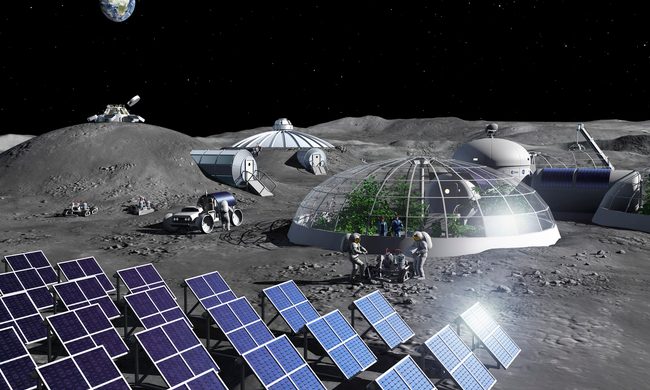
Artist impression of activities in a Moon Base.

For decades, humanity has looked up at the Moon and wondered what it would be like to live on it. Think sprawling cities, factories, research centers, and permanent human settlements. Unfortunately, there is one fairly fundamental problem with that vision.

A new study published in Frontiers in Space Technologies argues that even the Moon's potentially enormous reserves of frozen water may be nowhere near enough to support city-sized populations sustainably. Researchers Martin Elvis and Jonathan McDowell estimate that the permanently shadowed regions near the lunar poles could contain roughly one billion tons of water. It sounds like an extraordinary amount until you put a million thirsty humans next to it.

Read more