  1. Home
  2. Space
  3. News

Elon Musk shares target date for fifth test of Starship megarocket

Add as a preferred source on Google

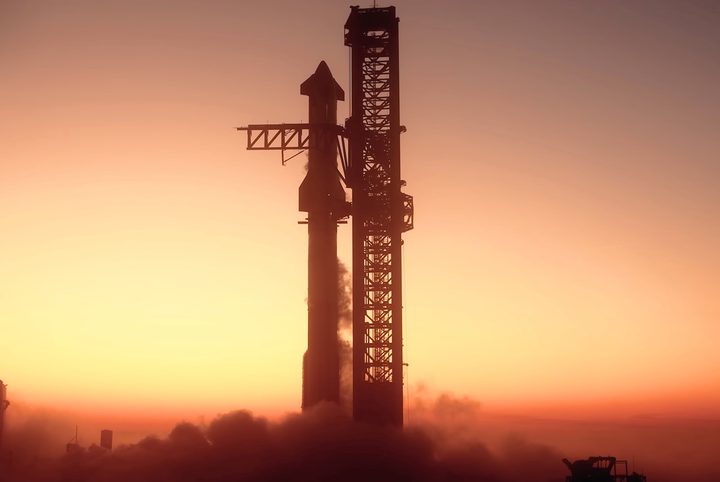
The world's most powerful rocket on the launchpad.
SpaceX’s Starship, the world’s most powerful rocket, on the launchpad. SpaceX

SpaceX chief Elon Musk has said he expects the fifth test of the mighty Starship rocket to take place “in four weeks,” suggesting the vehicle could lift off again in early August.

Recommended Videos

The world’s most powerful rocket, when fully tested and licensed, will carry crew and cargo to the moon. But more ambitiously, the vehicle could also take the first crew and cargo to Mars, and even play a role in building a permanent base there.

Musk’s long-term vision is to create a self-sustaining city on Mars. In a post on social media on Monday, the SpaceX boss insisted that “SpaceX will colonize Mars,” adding: “The fundamental question is whether Earth civilization can maintain its technology level long enough for the colony to grow on its own, even if the supply ships stop coming.”

But there’s still a lot of work to be done before any plan to send humans to the red planet can properly take shape.

SpaceX still needs to fully develop its Starship rocket, for starters. The 120-meter-tall rocket first flew in April last year, but exploded just a few minutes into flight. Three additional test flights, the most recent of which took place last month, have seen notable improvements in the rocket’s capabilities.

The next test is expected to see an attempt to “catch” the first-stage of the Starship after it has deployed the upper-stage spacecraft to orbit.

While SpaceX’s Falcon 9 uses landing legs to touch down, the Starship has no landing legs and so will have to be caught by large mechanical arms attached to the launch tower. An animation (below) shows how it will look.

Returning the booster after launch is a core capability to Starship becoming rapidly and reliably reusable pic.twitter.com/j4NSdnNiKr

— SpaceX (@SpaceX) June 27, 2024

Securing the first-stage booster will allow SpaceX to reuse it, saving it a lot of money on launch costs and enabling it to increase its flight frequency using multiple reusable boosters.

SpaceX will need permission from the Federal Aviation Administration before it can launch the Starship on its next flight. Like all of the Starship flights to date, the fifth launch will take place from SpaceX’s Starbase facility in Boca Chica, Texas. We’ll be sure to update just as soon as the launch date is confirmed.

Trevor Mogg
Contributing Editor
Not so many moons ago, Trevor moved from one tea-loving island nation that drives on the left (Britain) to another (Japan)…
SpaceX Starship reaches orbit for the first time but its historic flight ends early
Starship reaches orbit for the first time and deploys 26 Starlink satellites before an early splashdown.
spacex-starship

After 13 suborbital test flights and more than $15 billion in development costs, SpaceX's Starship has finally reached orbit. The 407-foot megarocket, the most powerful ever built, lifted off from Starbase, Texas, on Monday and delivered its first real payload on it's 14th attempt. The celebration came with an asterisk, though, since SpaceX had to cut the planned 10-hour mission to roughly three hours.

https://twitter.com/SpaceX/status/2104601695711904180

Read more
Starship is finally going orbital, and SpaceX has picked September 22
Flight 14 is aiming for orbit, Starlink V3 deployment and a very long day in space.
Starship rocket.

SpaceX is finally ready to give Starship its biggest test yet. The company says the massive rocket's 14th test flight is scheduled for September 22, when it will attempt to put the upper stage into Earth orbit for the first time. The launch is currently pending regulatory approval, with a 75-minute window opening at 7:15 a.m. CT.

Starship has 26 Starlink satellites to deliver

Read more
Want a city on the Moon? Scientists say there’s not enough water
A billion tons still comes up short
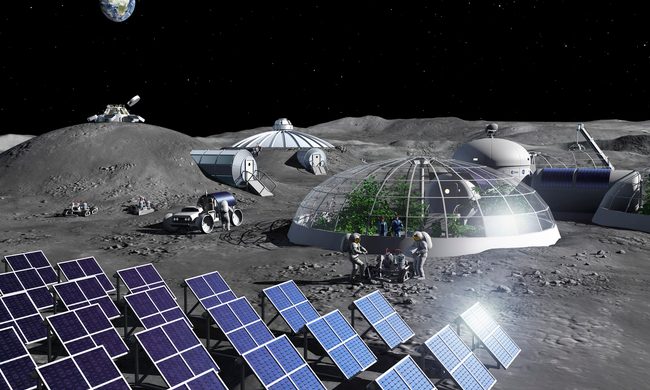
Artist impression of activities in a Moon Base.

For decades, humanity has looked up at the Moon and wondered what it would be like to live on it. Think sprawling cities, factories, research centers, and permanent human settlements. Unfortunately, there is one fairly fundamental problem with that vision.

A new study published in Frontiers in Space Technologies argues that even the Moon's potentially enormous reserves of frozen water may be nowhere near enough to support city-sized populations sustainably. Researchers Martin Elvis and Jonathan McDowell estimate that the permanently shadowed regions near the lunar poles could contain roughly one billion tons of water. It sounds like an extraordinary amount until you put a million thirsty humans next to it.

Read more