1. Home
  2. Space
  3. News

Virgin Galactic reveals how many $450K seats it’s sold for space tourism ride

Add as a preferred source on Google

Virgin Galactic has revealed that so far 100 people have each handed over $450,000 for a flight on its rocket-powered suborbital spaceplane.

That brings the total number of reservations for its upcoming space tourism service to 700, with the other 600 having paid $250,000 before the seat price was raised to $450,000 in the summer.

Recommended Videos

Virgin Galactic revealed details of the ticket sales in its latest earnings report released on Monday, November 9.

The company is aiming to launch a space tourism service toward the end of 2022 that will send passengers around 55 miles above Earth for a few moments of weightlessness, as well as awesome views of Earth, before returning to terra firma.

It had hoped to launch the service in mid-2022 but last month it said it needed more time to inspect its VSS Unity suborbital spaceplane, and also VMS Eve, which flies Unity on the first stage of its journey, to confirm the vehicles’ structural integrity.

Virgin Galactic founder Richard Branson recently demonstrated the company’s space tourism experience when he flew aboard VSS Unity, taking off and landing at Spaceport America in New Mexico.

“We are entering our fleet enhancement period with a clear roadmap for increasing the durability, reliability, and predictability of our vehicles in preparation for commercial service next year,” Michael Colglazier, CEO of Virgin Galactic, said in the company’s earnings report.

Colglazier added: “Demand for space travel is strong, and we’ve been selling seats ahead of the pace we had planned. This demonstrates the incredible market for our product and appreciation for the value of the unique experience we offer.”

Virgin Galactic is competing with Blue Origin — the company founded by Amazon boss Jeff Bezos — in the space tourism sector.

Blue Origin’s first crewed flight sent Bezos and three others to the edge of space aboard a suborbital New Shepard rocket on July 20, nine days after Branson’s flight with Virgin Galactic.

In October, Blue Origin conducted its second crewed flight, blasting Star Trek legend William Shatner and three others skyward for the 10-minute trip of a lifetime.

Blue Origin hasn’t yet revealed when it will officially launch its commercial space tourism service, nor has it said how much a ticket aboard its capsule will cost.

Trevor Mogg
Contributing Editor
Not so many moons ago, Trevor moved from one tea-loving island nation that drives on the left (Britain) to another (Japan)…
SpaceX Starship reaches orbit for the first time but its historic flight ends early
Starship reaches orbit for the first time and deploys 26 Starlink satellites before an early splashdown.
spacex-starship

After 13 suborbital test flights and more than $15 billion in development costs, SpaceX's Starship has finally reached orbit. The 407-foot megarocket, the most powerful ever built, lifted off from Starbase, Texas, on Monday and delivered its first real payload on it's 14th attempt. The celebration came with an asterisk, though, since SpaceX had to cut the planned 10-hour mission to roughly three hours.

https://twitter.com/SpaceX/status/2104601695711904180

Read more
Starship is finally going orbital, and SpaceX has picked September 22
Flight 14 is aiming for orbit, Starlink V3 deployment and a very long day in space.
Starship rocket.

SpaceX is finally ready to give Starship its biggest test yet. The company says the massive rocket's 14th test flight is scheduled for September 22, when it will attempt to put the upper stage into Earth orbit for the first time. The launch is currently pending regulatory approval, with a 75-minute window opening at 7:15 a.m. CT.

Starship has 26 Starlink satellites to deliver

Read more
Want a city on the Moon? Scientists say there’s not enough water
A billion tons still comes up short
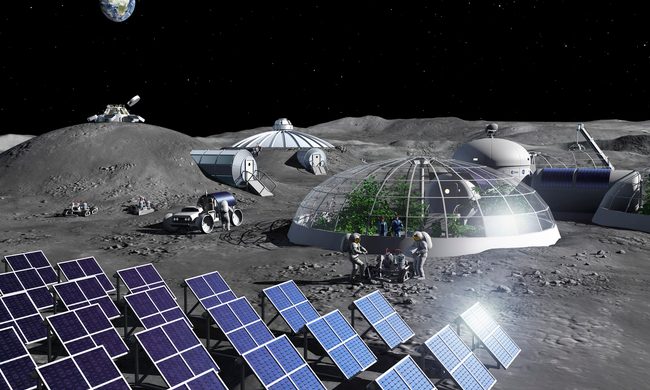
Artist impression of activities in a Moon Base.

For decades, humanity has looked up at the Moon and wondered what it would be like to live on it. Think sprawling cities, factories, research centers, and permanent human settlements. Unfortunately, there is one fairly fundamental problem with that vision.

A new study published in Frontiers in Space Technologies argues that even the Moon's potentially enormous reserves of frozen water may be nowhere near enough to support city-sized populations sustainably. Researchers Martin Elvis and Jonathan McDowell estimate that the permanently shadowed regions near the lunar poles could contain roughly one billion tons of water. It sounds like an extraordinary amount until you put a million thirsty humans next to it.

Read more