This story is part of our continuing coverage of CES 2020, including tech and gadgets from the showroom floor.
It’s all too easy to blame genetics for our body type and size — especially if we’re disappointed with it — as well as for the likelihood of developing serious health conditions in life. But what if you could leverage those same genetics to help understand how you’re affected by things you eat and your lifestyle choices in order to improve your health? That’s the concept behind DnaNudge, a company with a fascinating and high-tech, yet surprisingly simple method of making sure what you put in your body is doing you good.
Deep in your DNA


Here’s how it works, and the first step will feel like a major one: Give DnaNudge a sample of your DNA. This is done in one of two ways: Either visit the company’s flagship store in Covent Garden in London, or request a home test kit by mail. If you visit the store, the test is carried out using a purpose-built machine that examines only the aspects of your DNA that are affected by nutrition. A quick lick — yes, really — of a special pod is all it takes to deliver your DNA to the machine itself, and 40 minutes later your genetic code is extracted and analyzed, ready to change your life.
The code is then loaded into a small module that can be worn in a band on your wrist, and also prepared for use on the firm’s mobile app. Now for the clever part: DnaNudge uses the data points collected from your DNA to examine if you’re predisposed to diabetes, heart disease, and associated problems. Then the app tells you where you need to be careful with what you eat, as certain aspects will exasperate any existing conditions, or increase the likelihood of developing them later.
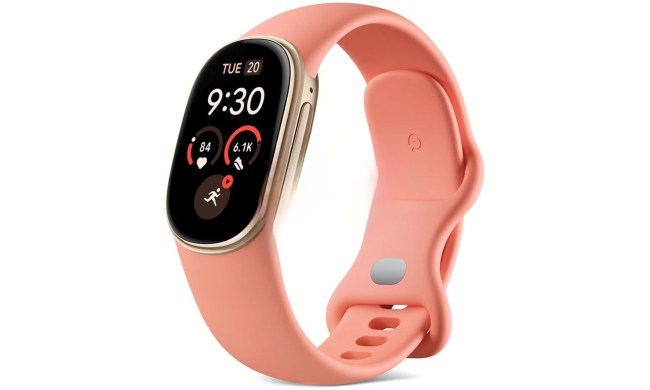
It does so in a simple to understand way. If food with a lot of salt is a problem, for example, products high in salt show up as red. If your body can cope with more salt, then it shows up as green. An amber color indicates care is needed. Everything from salt to carbs, and fat to caffeine is analyzed, and because it’s entirely individualized, you’re getting personalized advice without a dietitian or risky trial and error. The wrist band is also a fitness tracker, so the app can assess how active you are during the day, and this can affect what the app green lights for you.
Scan bar codes

Surprisingly, the DNA portion of DnaNudge’s product journey was the easy part, according to co-founder and chief science officer Dr. Maria Karvela, who spoke to Digital Trends during CES 2020. DNA has been studied for 70 years, and the field is relatively established. It was far harder to implement what is probably the most exciting part of DnaNudge’s features — a database of half a million food products you can buy at grocery stores.
This is essential to making DnaNudge useful. When you go shopping, you scan the bar code on products you wish to buy using either a scanner in the mobile app or in the wristband itself, and either get a thumbs-up or a thumbs-down. A green thumbs-up means it’s compatible with your body, and a red thumbs-down indicates it’s not going to do you much good. Making informed choices becomes much easier.

The scanning process and product recognition was instantaneous in my demonstration, and the advice is clearly laid out on the screen. If you scan using the wristband, an LED shows red or green to advise you without having to look at your phone. Look at the app and you get a nutritional breakdown, as well as advice on alternative products if the one chosen gets a thumbs-down. Unlike similar systems from apps like MyFitnessPal, this is absolutely personalized and based on helping you prevent future health issues exasperated by lifestyle and diet choices over a long period of time.
Better understanding
While DnaNudge has the potential to be transformational, and even lifesaving, it’s not a fast fix or a way to quickly lose weight. In fact, the app doesn’t even ask for your weight or your age. It works everything out using your DNA, your activity, and your food choices. It never tells you not to eat things that are bad for you either. It’s not judgmental, and doesn’t preach drastic lifestyle changes either. Instead, it wants to educate and advise, and is focused on prevention. Used diligently and in conjunction with other healthy lifestyle choices, it can help achieve weight loss or health goals, but it shouldn’t be seen as a way to speed either up.


Another example of how it can help people is based around food marketing, and the way we are conditioned to think that some food or products are “better” than others, whether it’s truw or not. Take someone who needs to minimize salt in their diet, but wants to buy peanuts. The natural reaction is to buy dry roasted rather than salted nuts, but the DnaNudge app will show you dry roasted nuts actually have more salt in them than the salted nuts. The same goes for foods labeled as healthy choices, which may have ingredients added to enhance taste that clash with your genetic balance.
As with every decision to improve our health, changes won’t come overnight, and DnaNudge needs to be used consistently if it’s going to make a difference. Because your activity levels affect what food choices you should be making, it isn’t just a “use once and forget” produc. Its recommendations will vary based on such factors as whether you were active during the day. At the moment, because it’s so new, there are no published examples of how it has helped people. Clinical trials underway in the U.K., and DnaNudge intends to publish the results once the trials are complete.
Price and availability
Currently, DnaNudge is available in the U.K. and will come to the U.S. very soon. The DNA test and wristband cost 120 British pounds, or about $160. There is no further cost involved. While the product range in most major supermarkets in the U.K. is covered, along with a growing number in the U.S. too, not all products are included, particularly seasonal ones. The database is always being improved. The searchable list also has products from cafes like Starbucks and Costa Coffee, where scanning bar codes is impossible. At this time, it requires you to see the physical product, and therefore isn’t suitable for online shoppers.
Follow our live blog for more CES news and announcements.