  1. Home
  2. Wearables
  3. Emerging Tech
  4. Health & Fitness
  5. News

Meet nuyu, the wearable that you don’t have to wear on your wrist

Add as a preferred source on Google

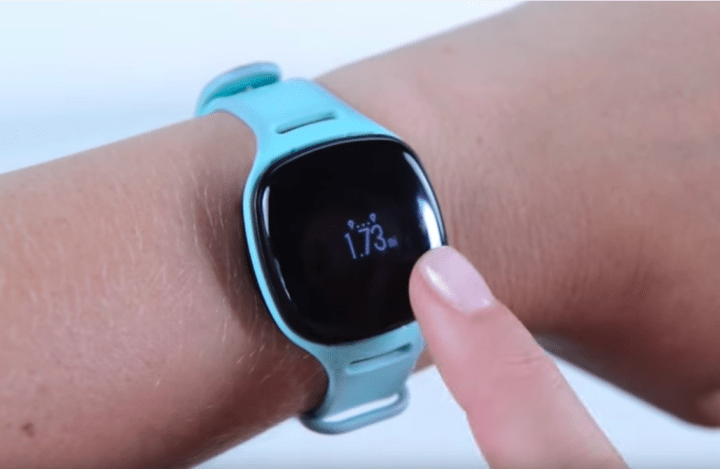
Wrist-bound wearables are so last month, which is why one company is introducing an old concept with a new twist. Launched by fitness and health company Health o meter, a new line of products called “nuyu” is a full suite of tools to help users get and stay in shape. And one of the most exciting products is their new Activity Monitor, a fitness tracker that is not only easy on the wallet at only $48, but can also be worn on places other than the wrist.

For those of you who don’t want to be weighed down by a watch-like device, try clipping nuyu’s tracker on your belt, or better yet, tie it to your shoelaces. After all, that’s where most the work is happening anyway, right?

nuyu™ Personal Activity Monitor

According to the company’s website, this latest personal activity tracker “helps you get active and stay active by tracking your steps, calories burned, distance, and your light, deep, and restless sleep.” Like most other wearables, this data is then sent to any one of your smart devices (Android, iPhone, or tablet), allowing you to keep close tabs on your progress and goals. And thanks to Nuyu’s OLED screen, you don’t have to keep referring to your phone in order to keep track of your day’s activities — this new wearable’s easy to read interface allows for quick and convenient viewing wherever you are and whatever you’re doing.

Recommended Videos

Also released Tuesday in conjunction with the Activity Monitor is Health o meter’s Wireless Scale, which “sends information via Bluetooth to the Health o meter nuyu app, easily tracking weight and BMI over time to help monitor wellness goal progression.” Because of its seamless integration with the entire Health o meter suite, the scale allows users to easily keep tabs on their fitness goals, transmitting data directly to all connected devices.

The full nuyu line is still forthcoming, with its coaching plans (customizable 12-week guides tailored to your specific needs) and sleep system (a Bluetooth enabled mat that copies your circadian rhythm for truly restful sleep) yet to be released. But even at just 50 percent complete, it looks like Health o meter is on its way to some pretty transformative fitness, and it can only get better from here.

Lulu Chang
Fascinated by the effects of technology on human interaction, Lulu believes that if her parents can use your new app…
This smart ring makes a blood pressure promise Apple and Oura still won’t
The $399 Signal Ring provides actual systolic and diastolic readings, but it’s launching as a wellness device without FDA clearance
Oura Ring 4, Galaxy Ring and RingConn Gen 2 in the palm of a hand

Vital Signals has unveiled a $399 smart ring that goes further than Apple and Oura currently dare. The Signal Ring displays numerical blood pressure readings without requiring an arm cuff for initial or recurring calibration.

Bloomberg reports that preorders open July 16, with shipping scheduled to begin in October. The ring can collect readings during the day and overnight, then display the results through an iOS or Android app.

Read more
HTC’s smart glasses are apparently coming to the US, but HTC hasn’t said so
Amazon briefly listed the VIVE Eagle for a September 1 launch, while HTC still says the $499 glasses are only available in Taiwan
A woman wearing the HTC Vive Eagle smart glasses

HTC’s VIVE Eagle smart glasses could finally be heading to the US. Apparently, Amazon got the memo before HTC was ready to share it.

Notebookcheck spotted six versions available for preorder at $499, each carrying a September 1 release date. Amazon has since pulled the pages, so new orders are closed and anyone who already placed one is left wondering whether it still counts.

Read more
Don’t expect smartwatches and fitness bands with replaceable batteries anytime soon
Turns out even the EU thinks your smartwatch is too small for a battery swap.
Wristwatch, Arm, Body Part

The EU has a habit of pushing tech companies to adopt meaningful changes in their product. It's the reason your iPhone finally has a USB-C port, and it's also why companies now have to offer spare parts and repair support for electronics for several years after launch. So naturally, many of us assumed wearables were next in line for mandatory swappable batteries. Turns out, the EU just went the other way.

So what did the EU announce?

Read more