  1. Home
  2. Wearables
  3. Mobile
  4. News

Misfit’s Flare is an intriguingly styled fitness tracker that costs only $60

Add as a preferred source on Google

While Misfit is embarking toward exciting new territory with the Vapor, its very first fully touchscreen Android Wear-powered smartwatch, it hasn’t left behind the minimalist fitness trackers that have made it relatively well known over the last several years. To prove it, the now Fossil-owned company has just launched the Flare — an “entry-level fitness and sleep monitor” that will run for just $60.

At first glance, the newest member of Misfit’s family of wearables may be its most alien-looking yet. It features a conventional aluminum frame with a touch-sensitive crystal surface where you’d typically find a watch face, but in its place is a single pulsating LED. The frequency at which the light flashes informs you how far you’ve progressed toward your daily fitness goal, which is recorded on your iOS or Android device.
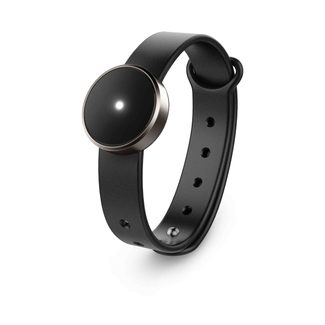
Image used with permission by copyright holder

The Flare can track steps, calories burned, and distance covered, and is intended to work comfortably all day and night. To that end, it’s water resistant at up to 50 meters depth, and, like some of Misfit’s other devices, never needs charging. The tracker’s battery lasts four months, and replacements can be had for $6.

Recommended Videos

Through Misfit’s smartphone app, you can tag different activity types, from tennis to yoga, and even swimming if you opt for a $10 in-app upgrade. Wear the device to bed, and in the morning the Flare will offer insights on the quality and duration of your sleep.

Finally, the tracker is also compatible with Misfit’s Link app that can interface with connected home devices or trigger certain commands on your smartphone. You can use Link to advance a slideshow presentation, play music or take a selfie with your phone, control Logitech’s Harmony smart home hub and Misfit’s own Bolt lightbulbs, and much more.

The Flare is available now and ready to ship from Misfit’s website. It joins the $100 Ray, which we deemed the best fitness tracker you can buy if you’re looking for the most battery life, and the Flash, our favorite $25 option.

Adam Ismail
Former Contributor
Adam’s obsession with tech began at a young age, with a Sega Dreamcast – and he’s been hooked ever since. Previously…
This smart ring makes a blood pressure promise Apple and Oura still won’t
The $399 Signal Ring provides actual systolic and diastolic readings, but it’s launching as a wellness device without FDA clearance
Oura Ring 4, Galaxy Ring and RingConn Gen 2 in the palm of a hand

Vital Signals has unveiled a $399 smart ring that goes further than Apple and Oura currently dare. The Signal Ring displays numerical blood pressure readings without requiring an arm cuff for initial or recurring calibration.

Bloomberg reports that preorders open July 16, with shipping scheduled to begin in October. The ring can collect readings during the day and overnight, then display the results through an iOS or Android app.

Read more
HTC’s smart glasses are apparently coming to the US, but HTC hasn’t said so
Amazon briefly listed the VIVE Eagle for a September 1 launch, while HTC still says the $499 glasses are only available in Taiwan
A woman wearing the HTC Vive Eagle smart glasses

HTC’s VIVE Eagle smart glasses could finally be heading to the US. Apparently, Amazon got the memo before HTC was ready to share it.

Notebookcheck spotted six versions available for preorder at $499, each carrying a September 1 release date. Amazon has since pulled the pages, so new orders are closed and anyone who already placed one is left wondering whether it still counts.

Read more
Don’t expect smartwatches and fitness bands with replaceable batteries anytime soon
Turns out even the EU thinks your smartwatch is too small for a battery swap.
Wristwatch, Arm, Body Part

The EU has a habit of pushing tech companies to adopt meaningful changes in their product. It's the reason your iPhone finally has a USB-C port, and it's also why companies now have to offer spare parts and repair support for electronics for several years after launch. So naturally, many of us assumed wearables were next in line for mandatory swappable batteries. Turns out, the EU just went the other way.

So what did the EU announce?

Read more