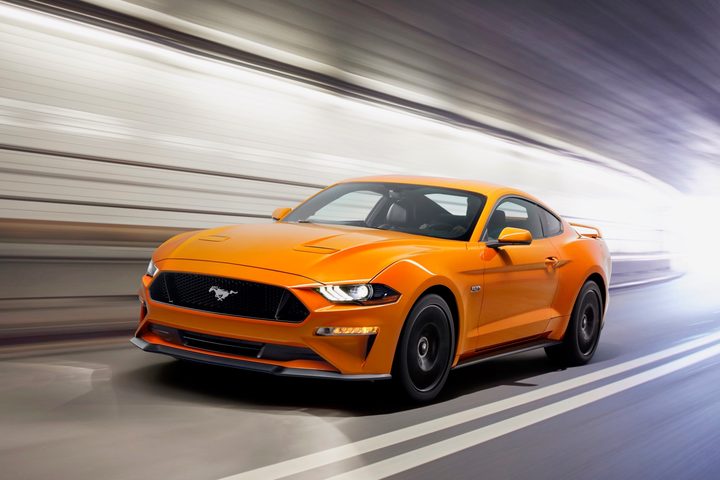
So long, Taurus and Fusion. Ford’s first-quarter 2018 financial release includes some stunning news: Sedans are no longer in the brand’s plans for the U.S. market. But the Mustang and Focus Active crossover will live on.
Ford reported 7 percent increased revenue, year over year for the quarter, with a $1.7 billion net income, a 9-percent increase. The company attributed its growth to what it calls “fitness initiatives.”
Ford president and CEO Jim Hackett explained how fitness works for the company’s future plans.
“We are committed to taking the appropriate actions to drive profitable growth and maximize the returns of our business over the long term,” Hackett said. “Where we can raise the returns of underperforming parts of our business by making them more fit, we will. If appropriate returns are not on the horizon, we will shift that capital to where we can play and win.”
Models discontinued by 2020


Hackett then laid out Ford’s strategic framework for the future with four major initiatives that relate to fitness:
- Building a winning portfolio (this is where the model cuts happen): Ford only wants to focus on products and markets where the company can win. By 2020, nearly 90 percent of Ford’s North American lineup will be trucks, utilities, and commercial vehicles.”Given declining consumer demand and product profitability, the company will not invest in next generations of traditional Ford sedans for North America. Over the next few years, the Ford car portfolio in North America will transition to two vehicles — the best-selling Mustang and the all-new Focus Active crossover coming out next year.” So, that means goodbye to the Ford Fiesta, Fusion, C-Max, and Taurus lines. The last Focus standing will be a crossover. The Mustang will stay for a long list of reasons beyond just sales numbers and profits.Note that when Hackett refers to “utilities,” he means SUVs and CUVs (crossover utility vehicles). Many people lump both vehicle types together as SUVs, but there is a difference.
- Making a full commitment to new propulsion choices: Ford will add hybrid-electric powertrains to the high-volume profitable models such as the F-150, Mustang, Explorer, Escape, and the not-yet-seen Bronco expected in 2020 or 2021. Hackett said Ford’s first battery electric vehicles (meaning not hybrid) will show up in a performance utility vehicle and 16 Ford battery-electric vehicles will be in the 2022 vehicle lineup.
- A viable and profitable autonomous technology business: No specific models, years or numbers here, but Ford plans on “offering the most trusted and human-centered ride-hailing and goods delivery experience.”
- Creating and scaling a mobility platform and experience: Ford wants to be your Transportation Mobility Cloud of choice and to be “an orchestrator of all digital connections from vehicle to street to business to home.” So, failing any hard facts, models, or numbers for the last two initiatives, what Ford knows for sure, or chose to include in this quarterly financial release are the first two points. Trucks and SUVs win, and cars lose except the popular (and profitable) Mustang and the Focus Action which because it’s a crossover most people will call it an SUV anyway. The most popular Fords will have hybrid-electric versions, focus on adding torque, extra horsepower, or economy, depending on the model. Oh, and there will be a lot of Ford battery-powered vehicles running around without drivers, picking up and dropping off riders and goods.