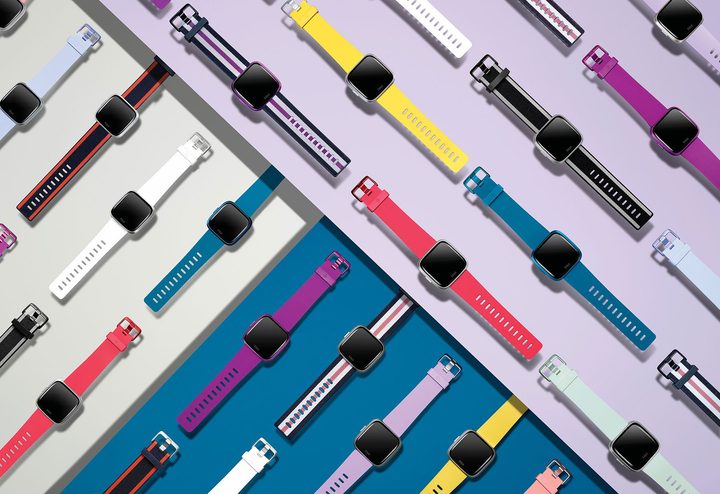
Fitbit expanded its fitness tracker lineup for 2019 with the introduction of the new $159 Versa Lite, an affordable version of the Versa smartwatch from 2018. The two watches will be sold alongside each other — the Versa is one of Fitbit’s most successful smartwatches to date after all, thanks to its robust features and relatively low $200 price tag.
The company took the best of the Versa and bundled it into the new Versa Lite, while also removing just a few features. That means you get an even more affordable, entry-level smartwatch. If you’re choosing between the two, how does the Versa Lite differ from the Versa? We break it down.
What’s the same?

Externally, the Fitbit Versa Lite and the original Versa look very similar. Both have a rectangular watch face, rounded bezel, and replaceable watch bands. Feature-wise, the Versa Lite keeps the core features of the original Versa including a touchscreen interface, 5 ATM water-resistance, third-party apps, and connected GPS. Both devices also have an optical heart rate sensor, activity tracking, sleep tracking, notifications, and even female health tracking.
What’s different?
On the outside, the most significant difference between the two watches is the button layout. The original Versa uses three buttons along with a touchscreen to navigate through the menu system, while the Versa Lite only has one button. In terms of hardware, the Versa Lite is lacking both the barometric altimeter found in the original Versa,\ and the Fitbit Pay contactless payment system, the latter of which is included on the more expensive Versa Special Edition. Fitbit also stripped out the stairs tracking, swim lap counting, Fitbit Coach guided workouts, music storage, and Wi-Fi connectivity, which was used primarily for music transfer.
Specs comparison
| Fitbit Versa Lite |
Fitbit Versa |
|
| Display size | 34 mm (1.34 inches) | 34 mm (1.34 inches) |
| Resolution |
300 × 300 pixels
|
300 × 300 pixels |
| Touchscreen | Yes | Yes |
| Color display | Yes | Yes |
| Wireless interface | Bluetooth LE | Bluetooth LE, Wi-Fi, NFC |
| Weight | 38 Grams | 38 Grams |
| Depth | 11.2mm | 11.2mm |
| Interchangeable strap | Yes | Yes |
| 3-axis accelerometer | Yes | Yes |
| 3-axis gyroscope | No | Yes |
| Altimeter | No | Yes |
| Ambient light sensor | Yes | Yes |
| Optical heart rate | Yes | Yes |
| GPS | No (connected GPS) | No (connected GPS) |
| SpO2 | Yes | Yes |
| Navigation | Yes | Yes |
| Waterproof | Yes – 50m | Yes – 50m |
| Battery life | 4-plus days | 4-plus days |
| Stair Counting | No | Yes |
| Swim Lap Counting | No | Yes |
| Guided Workouts | No | Yes |
| Music Storage | No | Yes |
| Price | $160 | $200 |
| Availability | Currently on pre-sale, will be available soon. | Now |
| Review | Coming Soon | Full Review |
Versa Lite: Who is it for?
The Versa Lite may be close to the Versa on paper, but Fitbit’s latest smartwatch targets a completely new type of user. It is designed for consumers who are hesitant to purchase a smartwatch because of the cost or the complexity of the device. To fill this niche, Fitbit lowered the price on the Versa Lite and simplified the fitness device so it will be accessible for everyone.
The Versa Lite is available now for pre-order with a price tag of $160. Color choices include white, lilac, mulberry, and marina blue.