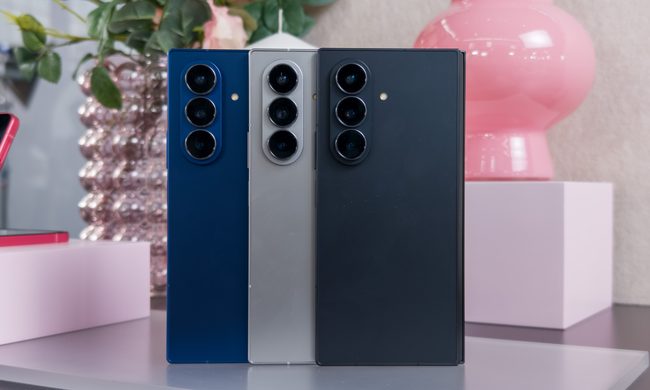
Samsung’s learned a lot of lessons from its first foldable phone, the Galaxy Fold. And some of these improvements are coming down the pipe in the company’s next foldable smartphone, which could have a so-called “Hideaway Hinge.”
LetsGoDigital reports that Samsung Electronics filed a European trademark application on Monday, December 2, for the Hideaway Hinge name. According to LetsGoDigital, the application’s description says, “smartphones; tablet computers’ hung in the form of components for smartphones and tablets.”

Critics of Samsung’s Galaxy Fold smartphone who were given the phone to review before the official launch found several hardware issues that caused Samsung to recall the phone and postpone the launch. Digital Trends never had problems with our edition of the phone, but some users were complaining about blacked-out screens.
The new Hideaway Hinge could be key to help Samsung avoid similar issues with its next foldable device. It would also further confirm earlier rumors that Samsung’s next foldable phone will fold downward like a clamshell instead of opening up sideways into a larger tablet.
In September, Bloomberg reported that Samsung was working on a foldable flip phone, in which the screen would be 6.7 inches and would fold into a compact square. The new phone is said to include a selfie camera on the inner display, as well as two cameras on the outside. Since the phone would fold downward instead of inward, it would be the same shape as any other smartphone, which would allow Android apps to run in their normal state instead of following the current Samsung Galaxy Fold’s adapted-dimension displays.
Motorola has already beaten Samsung to the flip phone smartphone design with the new Motorola Razr announced last month. Digital Trends pit Motorola’s flippable smartphone against the Galaxy Fold in a feature comparison, and while full reviews aren’t out yet, as the phone will launch in early January, it’s clear the new Razr is more physically attractive in its design, while the Samsung Galaxy Fold beat out its foldable competitor in display, camera, and special features.
Digital Trends reached out to Samsung to comment on the Hideaway Hinge trademark, and we’ll update this story if we hear back.