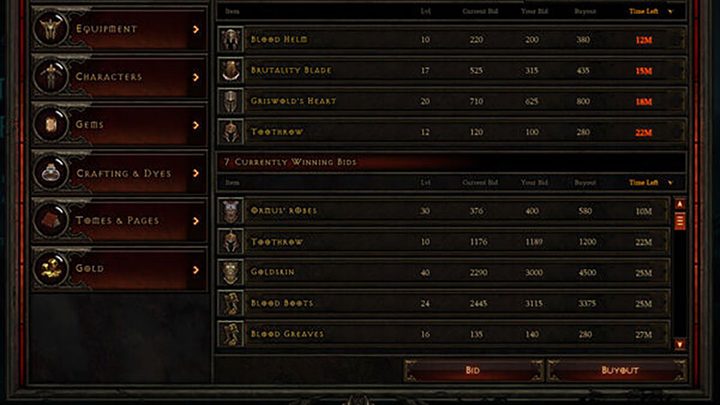
In 2012, Blizzard fired up one of its many future controversies: It wasn’t the decision to simply revive the Diablo franchise that did this, but the fact that it chose to monetize the legendary hack ‘n’ slash RPG with Diablo 3. Beyond trading items with another player, an in-game auction house meant players could buy and sell items with real money.
For some, it was a bewildering decision from a developer already battling the threat of real-money trading (RMT) in its monolithic MMORPG World of Warcraft. The idea of claiming a cut of player’s profits was seen as simple corporate greed stemming from the then-recent merger with Activision, a company known for pushing aggressive revenue streams onto consumers.
Within two years, uproar caused the feature to be ripped from the game, with a “smarter” loot system put into place to reduce the need to rely on other players for equipment. But a lot has changed since 2012, and with Diablo IV in the works, it’s time for the auction house to make a return.
A real grind
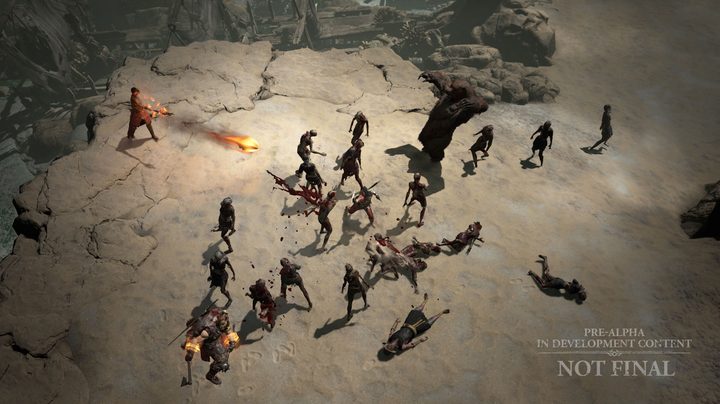
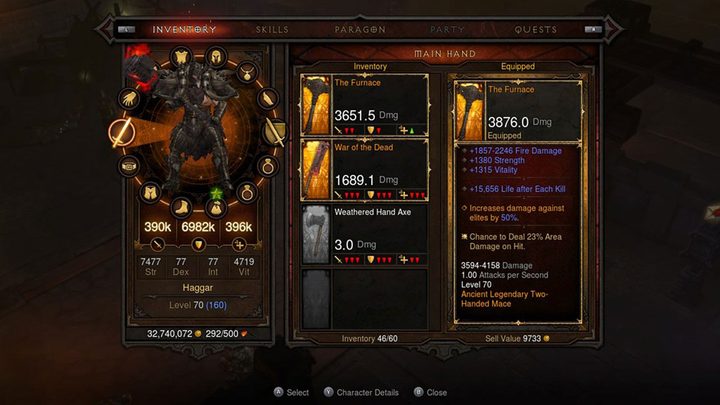
In any Diablo game, each character class relies on different equipment types, armor sets, and stats to thrive. All of these are randomly generated after slaying a monster. If an item drops and its random stat rolls aren’t perfect for your ideal build, it’s back to the grind you go. Statistically, the grind for perfect loot could go on forever. If you have the time, there’s no harm in chasing the dream. If you don’t, the game feels like a chore.
The Diablo III auction house was a faster alternative to that chase, though it was regarded as a black market by players. It just felt shady. The idea of paying real money for any in-game item rubbed players the wrong way at the time, despite the fact that the game didn’t feature the kind of “pay-to-win” mechanics that plague multiplayer games.
Those complaints feel misguided in retrospect. These days, one of the biggest complaints in gaming is when a title doesn’t respect our time. When a powerful or must-have item is locked behind menial tasks that are drawn out over weeks, sometimes months, in a bid to artificially inflate the game and have it look like a bigger value investment than it really is.
Even before the auction house, trading to get ahead was nothing new for the franchise. In its heyday, Diablo II was rife with gameplay automation software and “gold farmers” enticing players with rare items and in-game gold at a relatively low cost. As anyone who frequents an online RPG can attest, scrubbing a game of sketchy third-party services is impossible. It’s pure supply and demand. If people weren’t clearly willing to pay, the market wouldn’t exist, meaning we only have ourselves to blame for its existence — similar to the scalping situation currently driving up the prices of computer components and next-gen consoles.
On its surface, the Diablo III auction house looked like nothing more than a way for Blizzard to extract extra cash from its already paying customers. In actuality, it was a way to legitimize and moderate the in-game market, giving anyone the means to reap the rewards of continued play or circumvent the hours of farming needed to chase gear.
It’s an approach the company later adopted in a similar form in World of Warcraft with the WoW Token. Players could buy one for real cash and sell it to another player for in-game gold to cover their membership fees. They couldn’t make money from it, but they could save some. And because it was Blizzard-approved practice of RMT, it was allowed to live and thrive, with its in-game price dictated by supply and demand.
So why shouldn’t Diablo IV reintroduce the auction house? The allure of lady luck one day sending that perfect piece of loot flying out of the bloodied corpse of a goat man is what keeps Diablo players hooked. It’s what the whole looter genre is built to support. But the needs of one player won’t always match the free time of another. If you have a whole day to freely grind for items, why shouldn’t you be able to offload any gear you don’t need to a player who might not have the time to blindly grind for a specific item that has no guarantee of appearing? We expect to get paid for the hours we work, so why are we so averse to the idea of generating a little something for the time we put into a particular activity?
Win-win situation
Loot in Diablo is infinite. Someone finding what you need doesn’t mean it’s suddenly locked behind a paywall. You can still luck out and find your own. But if you’d rather not take the chance of losing dozens of hours to the gamble of the grind, why not tip someone else for their time spent? After all, there’s a chance they didn’t find what they were after, either. If their struggle can save you time and your money can ease the pain of their misfortune, it’s a win-win situation for players on either side of the hunt.
With so many forms of entertainment vying for our time, player choice matters most, and reintroducing the auction house to Diablo IV can help facilitate the ever-changing needs of the modern gamer. Where once we could pay a stranger to spend their time “boosting” our character, now we simply pay the publisher to change a number in a database. So why do we draw the line at paying someone else for their time spent farming items? People are willing to pay for things like a Double EXP boost to save time, so why villainize those who want to buy a piece of gear someone else just so happened to find before you? The focus of Diablo should be on playing with an item, not playing to acquire it.