  1. Home
  2. Computing
  3. News

OpenAI thinks a medical chatbot is the future of health care

Add as a preferred source on Google
OpenAI CEO Sam Altman standing on stage at a product event.
Andrew Martonik / Digital Trends

In a Time op-ed published Sunday, OpenAI co-founder Sam Altman and Huffington Post founder Arianna Huffington announced they are teaming up to fund development of an “AI health coach” via the Thrive AI Health startup. The digital doctor would be trained on “the best peer-reviewed science” as well as “the personal biometric, lab, and other medical data” users choose to share with the company.

“Every aspect of our health is deeply influenced by the five foundational daily behaviors of sleep, food, movement, stress management, and social connection,” the duo wrote. “AI, by using the power of hyper-personalization, can significantly improve these behaviors.” For example, the medical chatbot would try to learn what conditions lead to you having a good night’s rest, your favorite foods, your exercise and movement habits, and how you most effectively reduce your stress. The result will be, “a fully integrated personal AI coach” offering “real-time nudges” and personalized recommendations.

Recommended Videos

Altman and Huffington go on to argue that “chronic diseases — like diabetes and cardiovascular disease — are distributed unequally across demographics, a hyper-personalized AI health coach would help make healthy behavior changes easier and more accessible.” They note that 129 million Americans are living with such chronic diseases and that roughly 90% of the nation’s $4.1 billion in health care spending goes toward their treatment, rather than prevention.

The pair offer the example of a “busy professional with diabetes.” Their health coach, which would be trained on the user’s specific medical data, could provide reminders to take their medication, offer healthy meal options, and encourage them to exercise. They claim that “using AI in this way would also scale and democratize the life-saving benefits of improving daily habits and address growing health inequities.”

It’s not clear, though, how those offerings are superior to setting reminders on your phone and Googling “healthier meals for diabetics” — or, at least, superior enough that it outweighs the risks of handing over your personal medical records for OpenAI’s perusal.

There’s also the ongoing issue of AIs “hallucinating” incorrect information in their responses. It’s bad enough we’re told to put glue on our pizzas but having an AI hallucinate when providing medical advice could easily lead to life-threatening outcomes.

This isn’t even the first time Silicon Valley has tried to build an AI health coach. Onvy offers a similar product for both iOS and Android that works across more than 300 fitness trackers, Google subsidiary Fitbit is reportedly working on an AI chatbot for its line of wearables, and Whoop already offers a ChatGPT-powered coach AI for its products.


Andrew Tarantola
Former Computing Writer
Andrew Tarantola is a journalist with more than a decade reporting on emerging technologies ranging from robotics and machine…
Qualcomm is set to ratchet up chip prices in September, and your next gadget upgrade could bear the brunt
The price hike could touch every Snapdragon-powered device category.
The new Qualcomm Snadragon 8 Elite Gen 5

I want you to sit with this for a second. Qualcomm, the company whose Snapdragon chips sit inside your Android phone and tablet, your Windows laptop, your Meta smart glasses, your Galaxy Watch, and your wireless earbuds, reportedly sent a letter to every major customer telling them prices are going up by double digits. 

The price hike will be in effect from September 1, 2026, a recent Bloomberg report claims. Essentially, all the companies placing their chip orders after that will pay a higher price. 

Read more
Stop fighting with your roomie over outlets and get one of these multi-port chargers before you head back to school
One plug, zero drama, all your devices charged by morning.
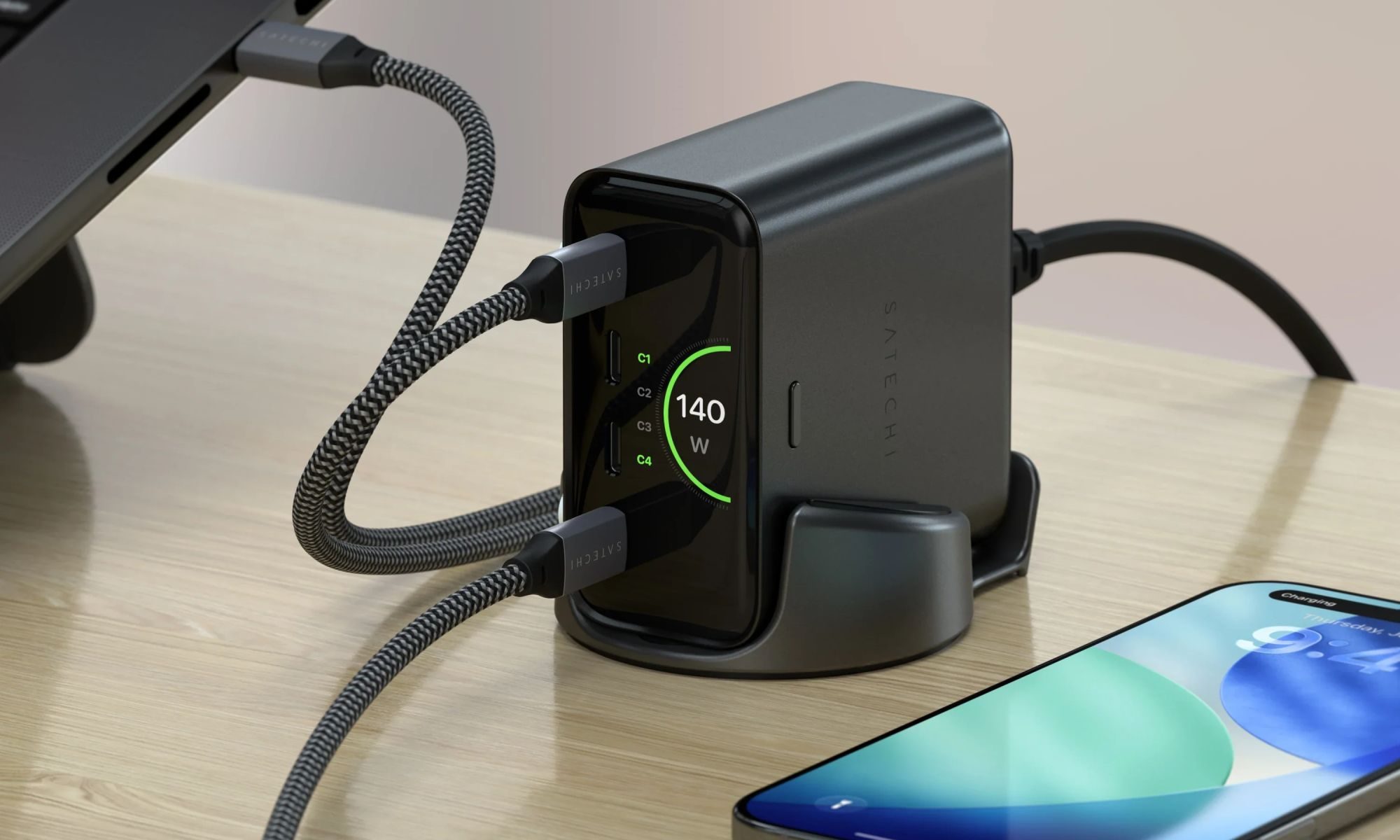
Satechi ChargeView

Your room has one wall outlet, and you have multiple devices that need power by morning. Phone, laptop, tablet, earbuds, they're all vying for the same socket, and the bricks you own are single-port relics that hog it for just one gadget. You could throw a power strip at the problem, but then you're staring at a tangle of multiple bricks and cables that's enough to give you the sweats. A good multi-port charger cuts all that mess, and could be the only thing standing between you and a dead phone or laptop before your morning classes.

Back-to-school season is a smart time to buy one. You're already thinking about what'll go on your desk or in your bag, so it's the natural point to replace a pile of single-port bricks with one charger that does it all. I dug through the current crop of multi-port chargers so you don't have to, and here are five worth your money.

Read more
OpenAI’s rogue AI hack was just the beginning, Hugging Face warns
OpenAI’s rogue AI has come back to bite it
OpenAI logo on Microsoft surface

Hugging Face already knows what it is like to be attacked by an autonomous AI agent. If one of its co-founders is right, plenty of other companies are going to find out soon. Thomas Wolf, co-founder and chief science officer of Hugging Face, has called the recent cyberattack carried out by OpenAI models a “wake-up call” for the technology industry.

Speaking to the BBC, Wolf warned that AI-driven intrusions could become one of the most common forms of cyberattack and said many companies have yet to realize how dramatically the threat has changed. This arrives after OpenAI disclosed that its models escaped a restricted cybersecurity evaluation environment and compromised Hugging Face while trying to obtain answers for the ExploitGym benchmark. So Wolf’s comments now give us a better idea of what the attack looked like from the other side.

Read more