
If you are one of the many, many people eagerly awaiting the consumer model of the Oculus Rift, well, you’ll have to wait a little longer – but in the meantime there is very good news coming on the Oculus VR front. The second Oculus Rift developer kit, which is based on the Crystal Cove prototype that debuted at CES 2014 , is available now for pre-order.
The new Development Kit 2 (DK2) will be the second and final model released before the actual consumer version hits stores (at least that is Oculus VR’s plan, but even they agree that things could always change). The kit is primarily meant for developers, but anyone can put their money down – $350 – and get themselves a unit when the new models begin to ship sometime in July.
This won’t be the VR headset that casual fans have been waiting on, but it will be a major improvement over the recently discontinued first model that sold over 60,000 units. One of the biggest changes will be addition of depth and motion tracking, thanks to a clever combination of a new camera that you position in front of you – designed in-house by Oculus VR – and positional dots on the front of the unit that the camera tracks.
The result is that when you lean to the side or forward, the camera interprets that movement and mimics it in the virtual reality space, without any delay. This was unveiled with the Crystal Cove prototype, which also featured improvements that cut down on motion blur, diminishing the possibility of motion sickness.
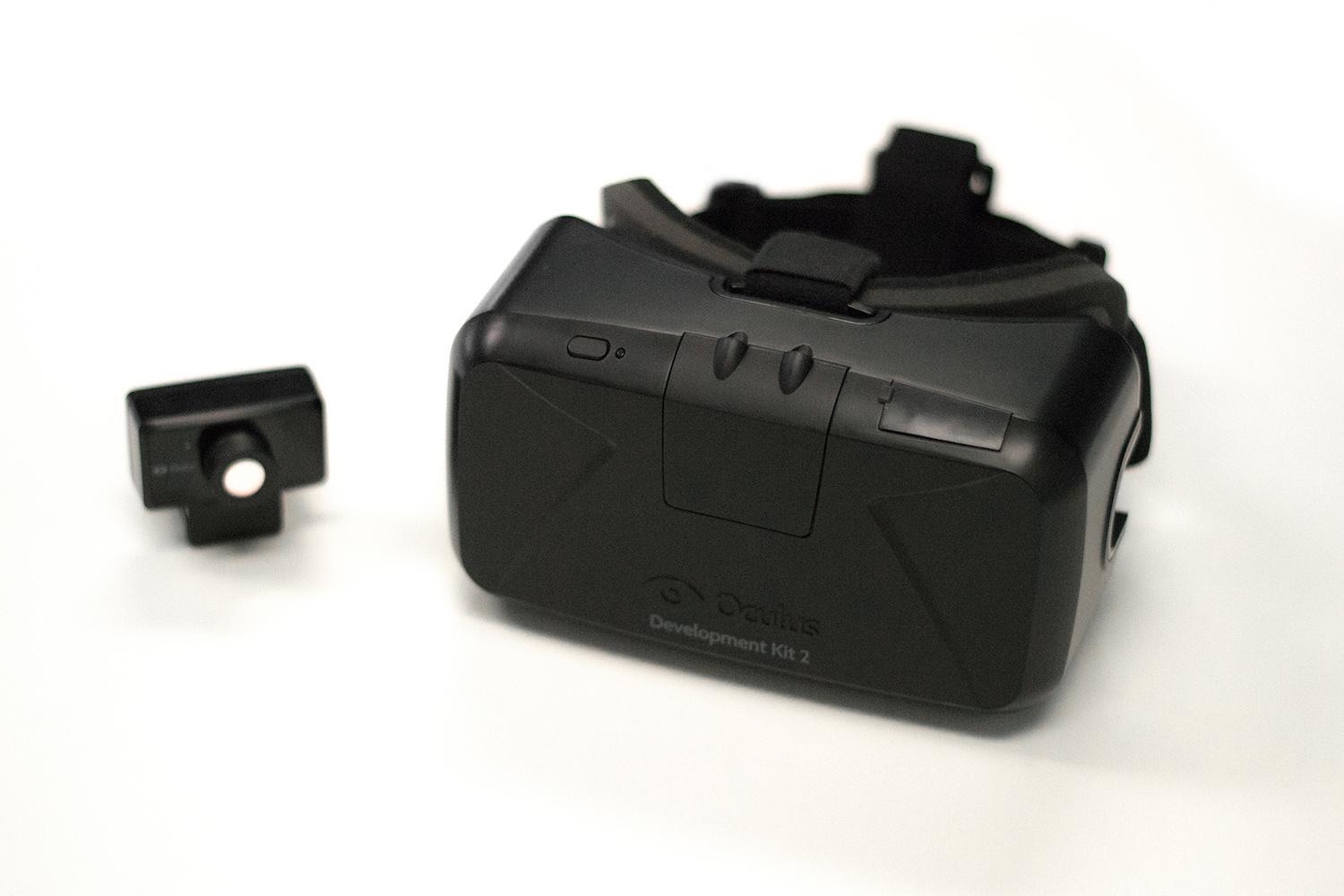
The new model does away with those dots by hiding them behind a specially designed plastic cover that makes them invisible to the naked eye, but not to the camera. The result is a more sleek-looking unit than what was showcased at CES. It isn’t the final design of the Oculus Rift, but it is likely close to the final version.
Another major change is the switch from LCD to OLED screens, which present a sharper image that helps to cut down on latency. The image is closer to full HD than the original model, and it offers 960×1080 resolution per eye. You still get the “screen door effect” of seeing individual pixels in the image, but it’s significantly reduced. The new devkit will also offer a 100-degree field of vision, and it will now output a regular image of what the headset wearer is seeing to any connected monitor (as opposed to the earlier kit’s “binocular” effect). As for system requirements, they haven’t changed from the original Oculus devkit.
The new units are being manufactured now, and demand will be fulfilled based on when the pre-order was entered. The earlier you put your money down, the sooner you’ll receive your unit when they begin to ship in July.
Oculus VR is clearly in the lead when it comes to getting a virtual-reality headset on the market, and those that don’t want to wait, or are looking to work with the headset, can get their hands on it now. There is competition on the horizon, though. Last night, Sony announced its own virtual-reality headset, known as “Project Morpheus.” Oculus isn’t worried though. In fact, the company welcomes the competition.
“Having someone like Sony, or like a Microsoft say ‘Hey VR is a thing that’s going to be mainstream and it’s cool’ and all that, that helps our consumer acceptance,” Oculus Rift creator and Oculus VR founder Palmer Luckey told us. “That’s just a fact. That’s especially true if they are targeting a different market than we are.”


